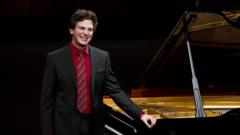
When British-Australian pianist Jayson Gillham stood in front of an audience in August 2024 to play a piece dedicated to slain Palestinian journalists, he knew he was walking a fine line. What he probably didn't expect was a multi-year legal saga that would culminate in a 2026 Federal Court ruling redrawing the lines of free speech on the Australian stage.
The Federal Court dismissed Gillham's workplace discrimination case against the Melbourne Symphony Orchestra (MSO). It's a massive blow to performers who think their political expressions are shielded by workplace laws. If you're a gig worker or an independent contractor in the arts, the hard truth of this verdict is simple. Your stage is not entirely your own.
The Illusion of Free Speech for Independent Contractors
The core of Gillham’s legal argument rested on the idea that the MSO took unlawful adverse action against him because of his political beliefs. After he told a recital audience that Israel had deliberately targeted journalists in Gaza to prevent war crime reporting, the orchestra quickly cancelled his upcoming August 15 performance.
Gillham tried to use Victoria’s Equal Opportunity Act as a shield, arguing it should act as a workplace law protecting workers from being penalised for their private or public beliefs.
Justice Graeme Hill completely dismantled that argument.
The court ruled that Gillham, as an independent contractor, simply didn't possess the relevant workplace rights under the Fair Work Act to pull off this claim. The legal reality is cold. If you don't have an employment contract, your protection under standard workplace discrimination laws drops significantly.
Reputation Over Rhetoric
The orchestra maintained that their reaction had nothing to do with the actual political stance Gillham took. They claimed they would have done the exact same thing if a performer stood up and gave an equally intense, unscripted speech supporting Israel.
Justice Hill agreed with the orchestra's logic. The decision to pull Gillham from the concert wasn't born out of ideological malice. It was a calculated move to manage the business impact, protect ticket sales, and placate corporate donors.
The court established that the MSO had a clear, unwritten custom. Classical musicians do not use the stage as a soapbox for sensitive geopolitical issues without getting prior approval from the host organization.
What Really Happened Behind the Scenes
During the trial, some telling details emerged about how much tension exists between artists and management. Gillham actually admitted in his oral evidence that he deliberately kept his management and agent in the dark about the introduction to the piece, titled Witness.
Why? Because he knew they would find a procedural excuse to kill the performance before he ever touched the keys.
- The Initial Fallout: The orchestra initially received just one written complaint and two verbal complaints immediately after the recital.
- The Backlash: Once the MSO cancelled Gillham's next appearance, the public swung hard in the opposite direction. The orchestra was flooded with 487 complaints blasting them for censorship.
- The Compromise That Failed: The MSO actually tried to walk back the cancellation on August 14, telling Gillham he could play the next day if he promised to keep his mouth shut and avoid any physical or verbal political statements. Gillham refused.
The MSO's legal counsel argued that an absolute right to free speech on stage is fundamentally unworkable for arts organizations. If a theater or orchestra cannot control what happens on its own stage, it can't protect its corporate sponsorships or guarantee what paying audiences are actually turning up to see.
The Practical Realities for Working Creatives
If you are booking gigs, playing festivals, or guest-conducting, you can't rely on abstract notions of free speech to save your contract. The Gillham verdict clarifies the power dynamic between the person writing the check and the person holding the microphone.
Know Your Contract Terms
Don't assume silence in a contract means permission. Gillham's legal team argued that nothing explicitly forbade him from speaking to the audience. The court showed that "industry custom and practice" can override that silence. If you plan to introduce political context to your work, get it written into the agreement beforehand.
Acknowledge the Contractor Trap
True employment offers deep structural protections against sudden termination over personal beliefs. Independent contractor agreements do not. If you operate through an ABN or a loan-out company, you are a business dealing with another business.
Anticipate the De-escalation Clause
When things go sideways, organizations usually offer a backdoor. The MSO offered a "no-speech" performance compromise. Turning down these corporate face-saving measures shifts the legal landscape heavily against you, as it shows the venue tried to fulfill the financial spirit of the contract.
The MSO has since stated they want to put the matter behind them and focus on the music. For the rest of the Australian arts sector, the precedent is set. When the house lights go down, the venue calls the shots.