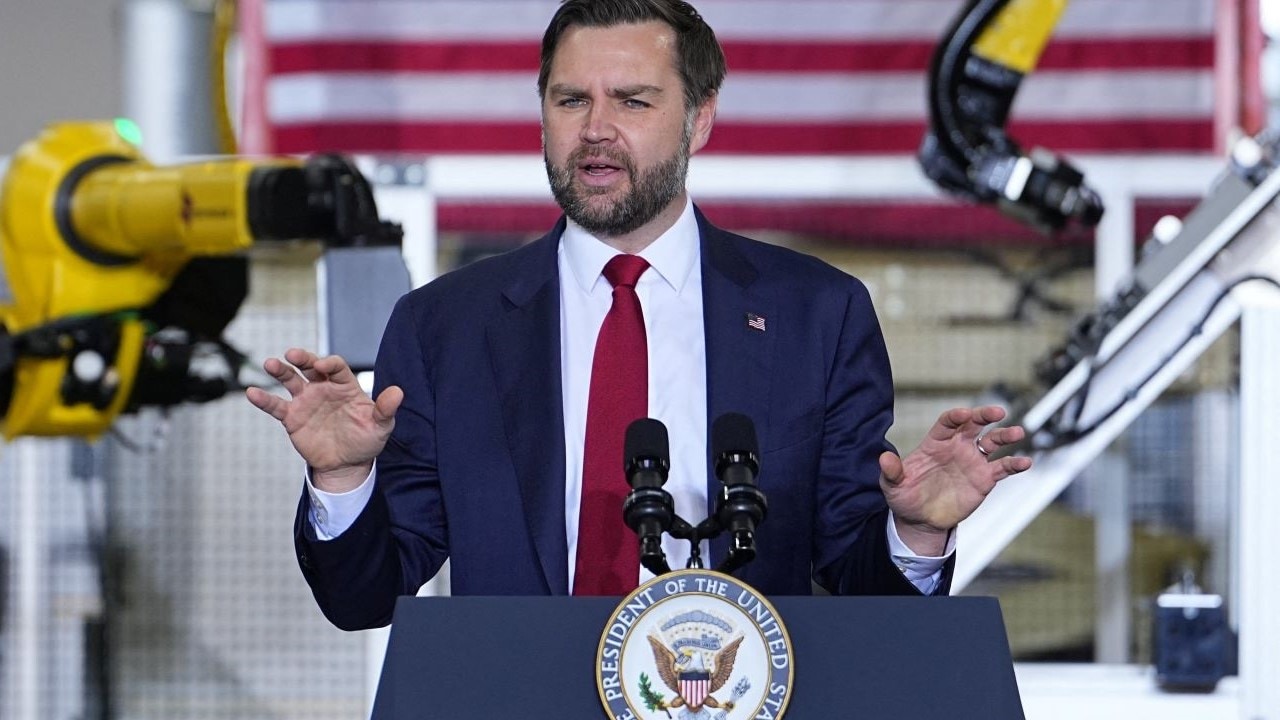
The mainstream media is treating JD Vance’s sudden decision to postpone a diplomatic trip to Switzerland as a moment of grave, fast-breaking geopolitical drama. The narrative is already written: a high-stakes, breathless scramble to salvage collapsing US-Iran nuclear negotiations. Washington insiders are nodding sagely, treating the schedule change as proof that a historic breakthrough is imminent.
They are completely wrong.
Postponing a European junket to hunker down in Washington is not a sign of intense, functional diplomacy. It is the classic Washington optics playbook. The premise that a grueling, decades-old nuclear standoff hinges on an American politician changing his flight itinerary ignores the hard mechanics of how international agreements are actually built.
The media wants you to believe Vance’s calendar management is a high-wire act. The reality is far more transactional, far more cynical, and entirely detached from actual non-proliferation.
The Mirage of the Last-Minute Breakthrough
Every major nuclear accord in modern history—from the 1987 INF Treaty to the original 2015 JCPOA—was the result of thousands of hours of unglamorous, mid-level bureaucratic grinding. It happens in windowless rooms in Vienna, managed by career diplomats and nuclear physicists arguing over centrifuges and telemetry data.
Politicians do not swoop in at the eleventh hour to magically solve technical impasses with a firm handshake and charismatic willpower. When a high-ranking official abruptly alters their schedule to signal "intense negotiations," they are rarely doing actual diplomatic heavy lifting. They are positioning themselves for the camera.
If negotiations are truly on the precipice of success, the text is already 99% finalized by technical experts. If they are failing, a sudden meeting in Washington will not fix structural flaws. By framing this itinerary shuffle as a critical pivot point, the public is being conditioned to ask the wrong question: Will the talks succeed?
The real question we should be asking is: Who benefits from making this look like an emergency?
Deconstructing the Iran Sanctions Paradox
To understand why these negotiations are fundamentally stuck—regardless of where the Vice President spends his weekend—we have to address the core flaw of the modern sanctions regime.
The lazy consensus in Washington dictates that maximum economic pressure forces Iran to the table, and minor sanctions relief acts as the carrot. This model is completely broken. Decades of observing state behavior under economic isolation reveal a counter-intuitive truth.
- The Survival Loop: Sanctions do not cripple a regime's resolve; they centralize its economy. In Iran, the Islamic Revolutionary Guard Corps (IRGC) controls the black market networks that bypass western trade bans.
- The Leverage Trap: By making sanctions the primary tool, Washington has hollowed out its own leverage. When an economy has already adjusted to near-total isolation, threatening more sanctions yields diminishing returns.
- The Credibility Deficit: Tehran’s hardliners look at the political instability in the US and realize that any deal signed today can be torn up by the next administration in 24 months.
Having advised policy groups on sanctions evasion tactics, I can tell you that the compliance officers and black-market shipping networks in the Persian Gulf care infinitely more about oil futures and Chinese demand than they do about a political press release out of Washington. Iran has built a resistance economy. They are not going to dismantle their primary strategic deterrent because an American delegation canceled a flight to Geneva.
The Real Audience Isn't Tehran
If the scheduling change isn't going to shock Iran into submission, then what is it actually for? The audience isn't the Iranian Supreme Leader. The audience is domestic.
Vance has spent years positioning himself as a sharp critic of traditional Washington foreign policy, frequently challenging the neoconservative consensus on foreign intervention. For a politician building a brand on hard-nosed realism, an Iran negotiation is a dangerous minefield.
[The Political Calculus]
   ├── Agree to a Deal ──> Risk looking soft to the domestic base
   └── Walk Away Completely ──> Risk an unchecked nuclear escalation in the Middle East
By creating a public spectacle of "postponing Switzerland," the administration achieves a powerful optical hedge. If the talks stall out, they can claim they exhausted every single option, sacrificing crucial diplomatic time to save the peace. If a minor, superficial agreement is reached, they can frame it as a triumph of aggressive, hands-on American leadership.
It is a low-risk, high-reward PR maneuver masquerading as statecraft.
The False Promise of Non-Proliferation
We need to stop pretending that modern nuclear negotiations are about achieving a "nuclear-free Iran." That ship sailed years ago.
The technical knowledge required to enrich uranium to weapons-grade levels cannot be unlearned. Centrifuges can be dismantled, but the blueprints, the engineering expertise, and the dual-use supply chains remain intact. Any realistic diplomat will tell you behind closed doors that the goal is no longer prevention; it is breakout-time management.
We are negotiating over months, not absolutes. A sophisticated policy acknowledges that an imperfect, deeply flawed deal that extends Iran’s breakout timeline by six months is often the only realistic alternative to a catastrophic regional war.
But admitting that truth out loud is political suicide in Washington. It requires acknowledging the limits of American power. It requires telling voters that we cannot simply bully our adversaries into total submission. So instead, the public is fed a steady diet of manufactured drama—canceled trips, emergency briefings, and tough rhetoric—to hide the fact that the options on the table are universally bad.
Dismantling the Consensus
Look at the standard analysis floating around the news cycle right now. The premise of almost every question asked by reporters is structurally flawed.
People Also Ask: Will JD Vance's presence force Iran to make concessions?
No. Iran’s negotiating posture is dictated by its domestic stability, its economic ties with China, and its military partnership with Russia. They do not alter their national security strategy based on which specific American politician is sitting across the table. Believing otherwise is a form of geopolitical narcissism.
People Also Ask: Is Switzerland losing its status as a neutral diplomatic hub?
This completely misses the point. Switzerland isn't being bypassed because it lost its neutrality; it's being bypassed because the current phase of this story isn't about international diplomacy at all. It is about domestic political messaging inside the United States.
Stop trying to view foreign policy through the lens of political personalities.
The hard reality of global politics is that structural incentives matter infinitely more than individual politicians. If you want to know where the US-Iran relationship is headed, stop looking at Vance’s travel itinerary. Look at the volume of Iranian oil flowing to independent refineries in China. Look at the sophistication of the drone manufacturing facilities inside Russia. Look at the domestic inflation rate in Tehran.
Those are the metrics that drive history. Everything else is just content generated to fill the 24-hour news cycle. The Switzerland trip will be rescheduled, the statements will be issued, and the fundamental deadlock will remain exactly where it was before the airline tickets were changed.
Turn off the television. Stop falling for the choreography.