Two thousand years is a long time to plan a birthday party. But Jordan is already laying the groundwork for 2030, aiming to transform its sacred riverbanks into a global pilgrimage stage.
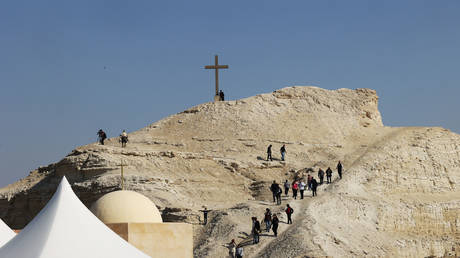
If you think a Muslim-majority kingdom investing heavily in a Christian historical milestone is unusual, you're missing how religious coexistence actually functions in the Hashemite Kingdom. Prime Minister Jafar Hassan recently signed official agreements to launch a massive $120 million development project surrounding Al-Maghtas, also known as Bethany Beyond the Jordan. This UNESCO World Heritage site sits on the eastern bank of the Jordan River and is recognized by major Christian denominations as the actual location where John the Baptist baptized Jesus. You might also find this related story interesting: Inside the Shadow War Over Syria As Airbases Burn Under Retaliatory Strikes.
King Abdullah II isn't just treating this as a local heritage project. He's mobilized the government, religious leaders, and international church authorities to get ready for millions of visitors.
What the 120 Million Dollar Master Plan Actually Includes
Throwing money at a historical site usually results in concrete parking lots and tacky souvenir shops. Jordan is taking a different route, guided strictly by UNESCO conservation recommendations. As extensively documented in detailed coverage by The Guardian, the implications are worth noting.
The budget breaks down into specific, heavy-lifting infrastructure projects scheduled to kick off construction phases soon:
- A dedicated $50 million museum showcasing the history and artifacts of the baptism site.
- A $40 million integrated visitor and pilgrim village designed to handle international crowds without destroying the local ecosystem.
- $27 million earmarked strictly for regional infrastructure upgrades and modern utility integration.
- A $3 million green corridor featuring ecological walking trails across roughly 140 hectares of protected land.
Work on the museum and pilgrim village is slated to start soon, with completion targets set for early 2029. That gives the country a full year of breathing room before the massive influx expected for the 2030 millennium milestone.
The Politics of Faith and Tourism
Let's be honest. Mega-projects like this are rarely just about spiritual reflection. They are calculated economic moves. Jordan relies heavily on tourism, and positioning itself as the undisputed capital for biblical history gives it a massive edge in the region.
Competition over holy sites is fierce. Just across the narrow river channel, Israel manages Qasr el-Yahud on the western bank, which draws its own massive share of Christian pilgrims. By pouring $120 million into the eastern shore infrastructure, Jordan is aggressively staking its claim as the authentic, environmentally preserved setting of the gospel narrative.
Yet, reducing this to mere competition ignores the genuine cultural fabric of Jordan. The country holds a unique distinction: it is the only nation on earth to have hosted four separate reigning popes—Paul VI, John Paul II, Benedict XVI, and Francis—each of whom officially affirmed the spiritual gravity of Al-Maghtas.
Cardinal Pierbattista Pizzaballa, the Latin Patriarch of Jerusalem, has worked closely alongside King Abdullah and local Jordanian church leaders like Auxiliary Bishop Iyad Twal to shape these plans. During recent strategy sessions, organizers emphasized that the 2030 event shouldn't feel like a temporary tourist trap. They want it to function as a permanent upgrade to Jordan's hospitality network, training local guides, upgrading transport links, and streamlining international travel routes.
What This Means for Future Travelers
If you plan on visiting the Jordan River baptism site anytime soon, expect construction zones. The next few years will see heavy development across the 140-hectare buffer zone.
However, visiting before 2030 lets you witness the transformation firsthand. Independent travelers should fly into Amman, rent a car, and drive down to the Dead Sea area, where Bethany Beyond the Jordan sits just a short distance away. Plan your trip during the shoulder seasons of spring or autumn to avoid the punishing desert heat. Dress modestly, respect the fragile ecological rules enforced by local authorities, and give yourself at least half a day to walk the trails where centuries of monks, hermits, and pilgrims have walked before you.