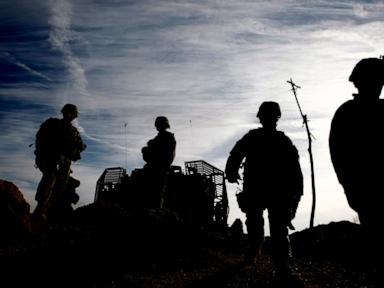
The dust in Kabul does not settle; it simply waits for the next boot to kick it up.
If you have ever stood near the perimeter of a fortified compound in southern Afghanistan at dusk, you know the specific, metallic taste of that air. It smells of diesel exhaust, scorched earth, and the lingering, sweet rot of stagnant water in concrete drainage ditches. You hear the low, rhythmic thump of generators humming behind blast walls, and somewhere far off, the high, thin whine of a surveillance drone circling in the darkening violet sky. For twenty years, that soundscape was the background noise to a million ordinary lives. People baked bread. Children walked to school along unpaved roads. Farmers tended pomegranate orchards in Kandahar. And in the shadows of those same orchards, men with clipboards, rifles, and badges committed atrocities that no human being should ever have to survive.
Now, picture a wooden table in a quiet, climate-controlled courtroom in The Hague, thousands of miles away from the dust.
In September 2021, just weeks after the frantic, chaotic collapse of the Afghan government and the final evacuation flights out of Hamid Karzai International Airport, the Chief Prosecutor of the International Criminal Court, Karim Khan, made an announcement that echoed through the corridors of international law like a slammed iron door. He requested authorization to resume the court's long-stalled investigation into war crimes and crimes against humanity in Afghanistan. On the surface, it sounded like a triumph for accountability. After years of diplomatic gridlock, the world’s permanent war crimes tribunal was finally going back to work.
Except there was a catch. A massive, quiet, devastating catch.
Khan announced that his office would "deprioritize" allegations against American military personnel, Central Intelligence Agency operatives, and former Afghan government forces. Instead, the International Criminal Court would focus its resources almost exclusively on crimes committed by the Taliban and the Islamic State Khorasan Province.
Silence.
That is what followed in the living rooms of survivors who had spent years gathering medical records, buried photographs, and sworn testimonies in the hope that a judge in Europe might one day read their names aloud. To understand why this single prosecutorial decision feels less like a legal strategy and more like an erasure, we have to step away from the sanitized language of diplomatic press releases and look at the human beings left standing in the wreckage.
The Architecture of Selective Memory
Consider a hypothetical farmer—let’s call him Tariq—living in a mud-brick village in Helmand Province around 2012. This is a composite scenario, drawn from hundreds of documented victim representations submitted to the court over the last decade, designed to illustrate what "deprioritization" looks like on the ground.
In the middle of a freezing January night, Tariq’s wooden door is blown off its hinges. Armed men storm into the courtyard. Some wear the uniforms of the Afghan National Security Forces; others speak English in low, clipped tones, wearing night-vision goggles that glow faint green in the dark. Tariq’s younger brother, a schoolteacher with no connection to any insurgent group, is hooded, bound with plastic zip-ties, and dragged into a waiting vehicle. Weeks later, Tariq learns his brother was taken to a detention facility where prisoners are subjected to sleep deprivation, stress positions, and waterboarding—interrogation techniques that legal scholars and human rights investigators have spent twenty years classifying as torture. Six months after that, Tariq’s village is caught in a crossfire when Taliban fighters plant an improvised explosive device along the main road, killing three of Tariq’s cousins on their way to a wedding.
Both events shattered Tariq’s family. Both events violated the laws of war. Both events fell squarely under the jurisdiction of the International Criminal Court, because Afghanistan became a state party to the Rome Statute—the treaty that created the court—in May 2003.
Yet under the court’s revised mandate, one half of Tariq’s tragedy is worthy of an international prosecution, while the other half is quietly filed away in a drawer marked "not a priority."
How did we arrive at a place where international justice operates like a triage tent that turns away patients based on who shot them? To answer that, you have to trace the long, bruising history of a court that was built on an impossible promise: that no one, regardless of rank, uniform, or passport, stands above the law.
Twenty Years of Friction
When the Rome Statute entered into force in 2002, the vision was crystal clear. The world had just watched genocides unfold in Rwanda and the former Yugoslavia. The architects of the International Criminal Court wanted an institution that would not depend on the political whims of the United Nations Security Council. It would be independent. It would be fearless. It would look at the crime, not the flag on the perpetrator's shoulder.
Reality, however, has a way of grinding down even the sharpest ideals.
The preliminary examination into the situation in Afghanistan opened in 2006. For more than a decade, prosecutors collected evidence across the country. The findings were grim and sprawling. On one side, the Taliban and affiliated armed groups had waged a relentless campaign of terror: suicide bombings in crowded markets, targeted assassinations of judges, journalists, and aid workers, and the systematic oppression of women and girls. The sheer scale of civilian suffering inflicted by the insurgency was staggering, accounting for the vast majority of civilian casualties documented by the United Nations Assistance Mission in Afghanistan year after year.
On the other side, the investigative files revealed a darker, less politically convenient truth. Between 2003 and 2014, members of the United States armed forces and the CIA had allegedly subjected dozens of detainees to torture, cruel treatment, and outrages upon personal dignity—both inside Afghanistan and at secret detention sites, often called "black sites," in Poland, Romania, and Lithuania. Meanwhile, elements of the Afghan National Defense and Security Forces had engaged in widespread torture in state-run prisons to extract confessions.
In November 2017, then-Chief Prosecutor Fatou Bensouda finally asked the court's judges for permission to open a formal investigation into all of it: the Taliban, the Afghan forces, and the Americans.
The reaction from Washington was swift and ferocious.
The United States had never ratified the Rome Statute, arguing that the court lacked jurisdiction over American citizens even when their alleged crimes took place on the territory of a member state like Afghanistan. In April 2019, a pre-trial chamber of the court initially rejected Bensouda’s request, citing a controversial legal concept: that an investigation would not serve the "interests of justice" because lack of cooperation from the United States and Afghan authorities made successful prosecutions unlikely.
That ruling sent shockwaves through the global legal community. Critics pointed out that if a court refuses to investigate powerful nations simply because those nations refuse to cooperate, it creates a perverse incentive: obstruct justice loudly enough, and you earn permanent immunity. In March 2020, the court’s Appeals Chamber agreed, overturning the lower panel and authorizing a full investigation into all parties to the conflict.
For a brief moment, the system seemed to work. Then came the retaliation.
In June 2020, the Trump administration issued an executive order declaring a national emergency over the court's investigation. Washington imposed financial sanctions and visa restrictions on Fatou Bensouda and senior members of her staff—measures usually reserved for drug cartels, terrorist financiers, and rogue dictatorships. Banks froze accounts. Travel became a bureaucratic nightmare. The message from the world’s sole superpower was unmistakable: investigate our personnel, and we will dismantle your institution piece by piece.
Although the Biden administration lifted those sanctions in April 2021, the bruise remained. Everyone inside the court knew where the invisible electric fence was buried.
The Calculus of Triage
When Karim Khan stepped into the Chief Prosecutor’s role in June 2021, he inherited an institution stretched to its breaking point. The court was juggling active investigations from Darfur to Georgia, from Myanmar to Venezuela, all on an annual budget roughly equivalent to what a mid-sized European city spends on municipal sanitation.
Then, in August 2021, Kabul fell. The Western-backed government evaporated in days. The Taliban swept back into power, immediately dismantling the fragile legal institutions that had existed over the previous twenty years. Any domestic avenue for justice inside Afghanistan vanished overnight.
Faced with this seismic shift, Khan had to decide how to proceed. In his September 2021 statement, he laid out a pragmatic, hard-nosed rationale. The gravity, scale, and continuing nature of the crimes committed by the Taliban and the Islamic State Khorasan Province demanded urgent attention. With limited financial and investigative resources, chasing complex, decades-old cases involving American forces—cases where witnesses were scattered, classified documents were locked inside vaults in Langley and the Pentagon, and extradition was a political fantasy—would consume enormous time and money with almost zero chance of putting a single defendant in the dock.
From a purely managerial standpoint, the argument makes a cold, clinical kind of sense. If you are a prosecutor with a finite budget and a mountain of case files, you focus on the crimes that are ongoing, the crimes with the highest body counts, and the perpetrators you might actually be able to catch.
But law is never just management. Law is a mirror a society holds up to itself to see what it truly values.
What Gets Lost in the Fine Print
Let’s look closely at what happens when a court draws a line down the middle of a war zone and says, "We will count these tears, and we will ignore those."
First, it validates the oldest, most corrosive accusation leveled against international justice: that it is a tool built by the powerful to discipline the weak. Throughout the Global South, from Nairobi to Jakarta, skeptics have long argued that the International Criminal Court functions as a Western court for non-Western defendants. For two decades, defenders of the court could point to the Afghanistan preliminary examination as proof to the contrary. They could say, "Look, the prosecutor is willing to examine NATO forces and American intelligence officers just as rigorously as African warlords and Afghan insurgents."
By sidelining the American and former Afghan government files, the prosecutor handed critics all the ammunition they ever needed. Even if the decision was driven entirely by budget spreadsheets and evidentiary hurdles rather than political cowardice, the optics are indistinguishable from surrender. In the court of public perception, intent matters far less than outcome. And the outcome is stark: the citizens of a wealthy, nuclear-armed democracy will not face scrutiny, while the citizens of a fractured, impoverished nation will.
Second, and far more intimately, it inflicts a second wound on survivors.
I remember speaking years ago with a human rights researcher who had spent months interviewing former detainees in Kabul. She told me that the hardest part of her job wasn't listening to the descriptions of beatings, freezing cells, or psychological humiliation. The hardest part was answering a single question that nearly every survivor asked at the end of the interview: "Will anyone ever admit this happened?"
For people who have survived state-sponsored violence, accountability is rarely about vengeance. Most of them know they will never see a high-ranking official behind bars. What they want—what keeps them tethered to the idea that the world is not entirely mad—is official recognition. They want an impartial authority to look at the scars on their wrists, read the flight logs of the rendition planes, examine the declassified memos, and enter a simple, permanent truth into the historical record: This was a crime. You were wronged.
When the International Criminal Court deprioritized those cases, it didn't just pause an investigation. It told thousands of victims who had risked their lives to submit formal representations to the court that their suffering was statistically inconvenient. Think about the courage it takes for an ordinary person in a rural province to put their name on a legal document accusing the most powerful military apparatus on earth of torture. Many of those individuals are now living under Taliban rule, exposed and vulnerable, having trusted an international system that quietly walked away from their files.
The Invisible Ripple Effect
You might wonder why this matters if you live in Chicago, London, or Mumbai, far removed from the Hindu Kush. Why care about the internal docket management of a court in the Netherlands?
Because rules that do not apply equally are not rules at all; they are merely preferences. And preferences evaporate the moment convenience demands it.
Think of international humanitarian law—the Geneva Conventions, the prohibitions against torture, the protections for civilians—as a sea wall built to hold back the worst impulses of human nature during war. Every nation signs onto these treaties knowing that in the heat of battle, soldiers and commanders will be tempted to cut corners, to treat prisoners as less than human, to view civilian neighborhoods as acceptable collateral damage. The sea wall works only because everyone agrees that if you breach it, the water comes in for everybody.
When an exception is carved out for a powerful state, even through a polite bureaucratic mechanism like "deprioritization," a crack forms in that wall. Future belligerents in other conflicts watch closely. They take notes. If one major power can torture detainees in secret prisons and walk away without international judicial scrutiny, what stops another major power from bombing hospitals, deporting civilians, or executing prisoners of war, confident that if they simply make investigation too expensive and too difficult, the prosecutors will eventually look elsewhere?
In October 2022, the court's Pre-Trial Chamber II officially authorized the prosecutor to resume the Afghanistan investigation, effectively endorsing his focused approach on the Taliban and Islamic State Khorasan Province. Legal scholars debated the technicalities for months. Some praised Khan for rescuing an investigation that might otherwise have died in procedural purgatory. Others warned that the decision hollowed out the core principle of impartiality at the exact moment the world needed it most.
Both things can be true at the same time. That is the uncomfortable, jagged reality of international politics.
The Weight of Unanswered Questions
Let’s be honest about the limitations here. Even if Karim Khan had kept every single page of the American and former Afghan government dossiers at the top of his desk, the odds of a CIA director or a four-star general ever standing in a courtroom in The Hague were vanishingly small. The United States has a federal law on the books—the American Service-Members' Protection Act, informally known in diplomatic circles as the "Hague Invasion Act"—which literally authorizes the president to use all means necessary to free any U.S. or allied personnel detained by the court. No prosecutor, no matter how courageous, can magically conjure subpoena power over a superpower that refuses to recognize the court's existence.
And there is no denying the urgency of investigating the Taliban. Since August 2021, Afghanistan has become the only country on earth where girls are systematically banned from secondary and university education by state decree. Women have been erased from public life, barred from parks, gyms, and most forms of employment, and subjected to public floggings. Journalists, former civil servants, and ethnic minorities like the Hazara face relentless persecution and lethal attacks from both the Taliban and Islamic State militants. If any population on earth desperately needs the spotlight of international justice right now, it is the people enduring daily repression inside Afghanistan.
Yet acknowledging those truths does not erase the bitterness of the compromise. We should never confuse pragmatic necessity with moral perfection. When we accept a two-tiered system of justice because the one-tiered version is too hard to enforce, we ought to at least have the honesty to call it what it is: an admission that power still outranks principle.
Somewhere in a storage facility in The Hague, thousands of pages of sworn statements, medical evaluations, and satellite photographs sit inside cardboard boxes. They document cold cells in Bagram, secret flights across European airspace, and midnight raids in villages whose names few people outside Helmand could pronounce. Nobody burned those files. Nobody declared them false. They are simply waiting in the dark, untouched, while the spotlight swings neatly to the other side of the room—leaving the people who lived through the dark to wonder whether the light was ever meant for them at all.


