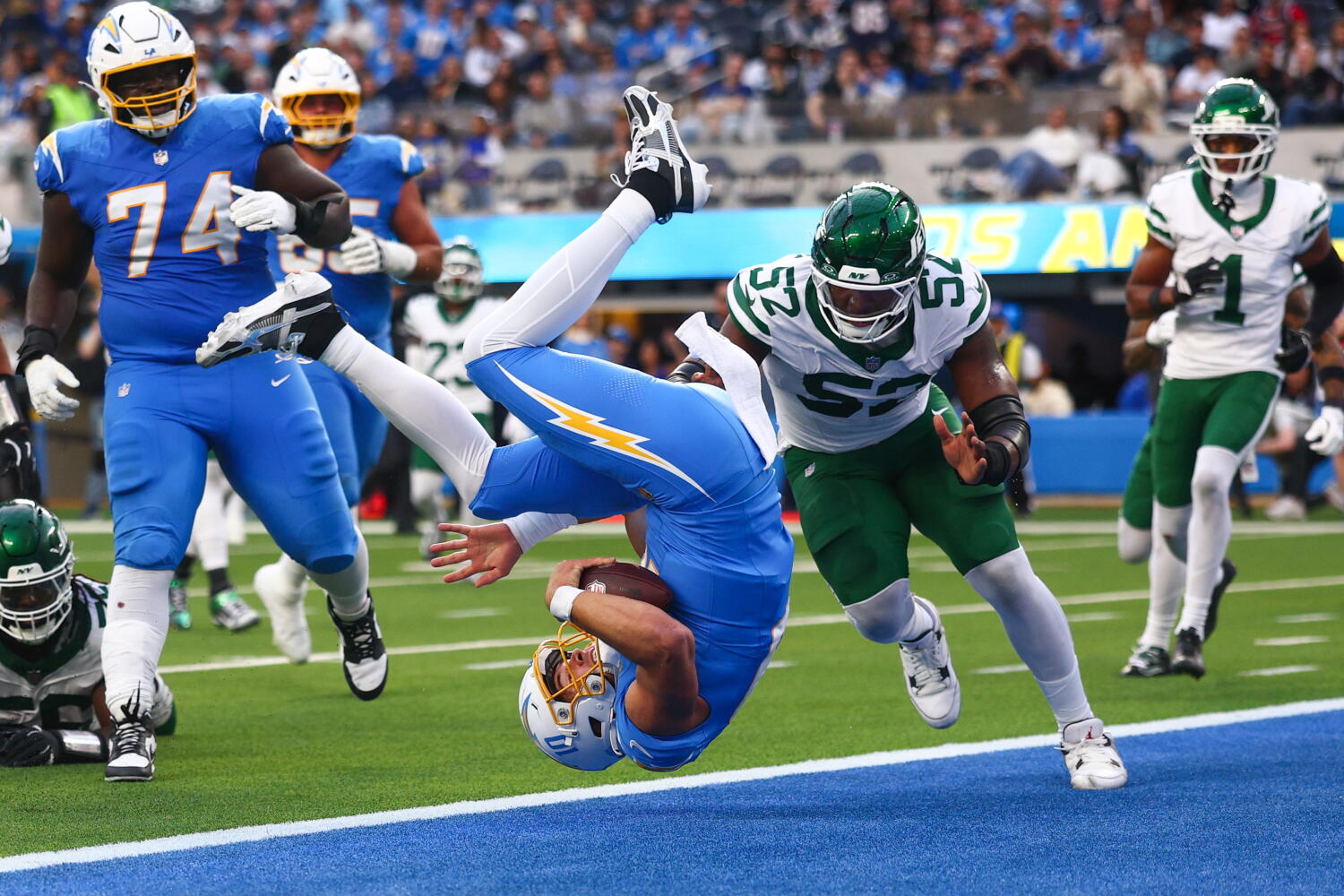
The sports media machine is predictable. A star quarterback takes a hit, enters the NFL concussion protocol, and his team falls to 1-9 against the Jets. Cue the collective wailing. Cue the predictable panic pieces mourning a lost season and questioning the franchise's very survival.
That narrative is lazy, sentimental, and completely detached from the brutal economics of modern football.
When Justin Herbert walked into that blue medical tent, the Chargers didn't suffer a fatal blow. They received an accidental, overdue intervention. Watching a generational talent absorb meaningless punishment behind a porous offensive line in a mathematically dead season isn't grit. It is organizational malpractice.
Front offices love to preach "competitive integrity" and "building culture" through November and December. Having watched multiple franchises burn through $250 million assets just to salvage three meaningless late-season wins, I can tell you what that actually buys you: a worse draft pick, a battered franchise cornerstone, and an illusion of progress that gets coaches fired a year too late.
The Myth of Competitive Integrity at 1-9
Let's define what a 1-9 record actually is in the National Football League. It is not a rough patch. It is not bad luck with one-score games. It is structural failure.
When a roster sits at 1-9, the coaching staff is usually coaching for their next job as coordinators, while the front office is quietly updating their scouting boards. Yet, the prevailing consensus demands that the franchise quarterback keep taking snaps until the clock hits zero in Week 18. Why? Because fans bought tickets, and television networks paid billions for star power.
Neither of those reasons helps the Los Angeles Chargers win a Super Bowl.
Football is a war of attrition disguised as entertainment. Every dropback carries an actuarial cost. When you trot out a franchise quarterback in a lost season, you are paying the maximum possible physical premium for zero return on investment. If the Chargers were 6-4, Herbert clearing protocol by Friday would be the only story that mattered. At 1-9, rushing him back onto the turf is the football equivalent of taking out a payday loan to buy lottery tickets.
What the Concussion Protocol Actually Protects
Most fans view the NFL's five-step concussion protocol as a bureaucratic hurdle—an annoying checklist standing between their favorite player and Sunday afternoon.
In reality, the protocol is the only mechanism in pro football capable of saving a franchise from its own worst instincts.
Under the joint NFL-NFLPA agreement, return-to-participation isn't decided by a head coach trying to save his job or a quarterback wired to play through a fractured ribcage. It requires clearance from both the team physician and an Independent Neurological Consultant (INC). The steps are rigid:
- Symptom-Limited Activity: Light stretching and balance work with zero cognitive load.
- Aerobic Exercise: Cardiovascular work under direct medical supervision to test heart rate elevation without symptom recurrence.
- Football-Specific Exercise: Non-contact drills, mimicking on-field movement patterns.
- Club-Based Non-Contact Training Drills: Throwing, running routes, and full cognitive processing of the playbook without physical contact.
- Full Football Activity/Clearance: Formal clearance by both the club doctor and the INC.
Notice what this process does. It forces an organizational pause. It strips decision-making power away from emotional, short-sighted actors and hands it to neurologists.
For a 1-9 team, this forced pause is a gift. It removes the pressure on Herbert to be the tough guy who never misses a snap. It removes the temptation for the coaching staff to lean on his arm to mask a broken offensive scheme.
The Sunk Cost Fallacy of "Building Momentum"
Ask any beat writer why a 1-9 team should keep playing its injured starters, and you will hear the exact same phrase: You have to build momentum for next year.
Momentum across an NFL offseason is a complete fiction.
Between January and September, a 53-man roster experiences roughly 30% to 40% turnover. Coordinators change. Schemes get scrapped. Free agents sign elsewhere, and rookies take veteran jobs. Winning a meaningless game in mid-December against another bottom-feeder does nothing to improve third-down efficiency the following September.
Imagine a scenario where the Chargers rush Herbert back, he plays hero ball behind a collapsing pocket, and Los Angeles squeaks out two ugly wins to finish 3-14. What did they actually accomplish?
- They dropped from a top-two draft pick to the sixth or seventh spot, missing out on a blue-chip offensive tackle or game-wrecking edge rusher.
- They subjected their most valuable asset to another 150 dropbacks and two dozen hits.
- They gave ownership a false reason to retain staff or delay necessary structural teardowns.
Bill Walsh, the architect of the West Coast offense and one of the sharpest roster builders in league history, famously understood the concept of asset preservation and organizational timing. You do not risk your foundational pieces when the mathematical probability of a championship hits zero. You protect the asset, evaluate the bottom of the roster, and weaponize your draft capital.
Dismantling the Wrong Questions
When news breaks that Herbert is in protocol after a loss to the Jets, the internet immediately floods with the wrong questions.
"Will Justin Herbert play next week?"
Who cares? Whether he plays next week or sits for a month does not alter the trajectory of this season. The real question is why the Chargers' offensive structure still leaves him exposed to high-velocity hits late in games that are already out of reach.
"Does this injury hurt the Chargers' chances of turning the season around?"
The season was over a month ago. You cannot hurt the chances of something that no longer exists. Pretending a 1-9 team is "turning things around" is an insult to anyone who understands basic standings math.
"Is Justin Herbert becoming injury-prone?"
This is the laziest take in sports media. Quarterbacks do not become "injury-prone" in a vacuum; they get broken by poor pass protection and static play-calling. When a quarterback is consistently asked to hold the ball for over 2.8 seconds behind a leaking offensive line, injuries aren't bad luck. They are statistical certainties.
The Uncomfortable Downside of Sitting Him
Of course, shutting down—or even slow-playing—a healthy-ish franchise quarterback carries real friction. Let's be honest about the fallout, because pretending there is no downside is just as dishonest as pretending a 1-9 season matters.
First, you risk mutiny in the locker room. NFL players have an average career length of roughly three years. They are playing for incentives, next contracts, and game film. When a defensive tackle sees the franchise quarterback sitting on the bench while cleared to play, resentment breeds fast. Players don't care about draft position; they care about putting good tape out there so they don't get cut in March.
Second, Herbert himself will hate it. Elite quarterbacks are pathological competitors. You don't reach the top tier of the NFL by accepting defeat in November. Telling a guy wired like Herbert to take a seat requires brutal honesty from the front office—a conversation that acknowledges the roster failed him, not the other way around.
What the Chargers Must Do Right Now
If the Chargers front office has any nerve at all, they will use this concussion protocol window to fundamentally shift their operating model for the remainder of the year.
- Extend the timeline. Even if Herbert clears Step 5 by Friday, hold him out. Use lingering caution as cover to give him an extra week or two away from live pass rushes.
- Audit the offensive line under live fire. Put the backup quarterback in, run the exact same protection schemes, and find out which linemen can actually hold a block without Herbert bailing them out with pre-snap adjustments and off-platform throws.
- Evaluate the depth chart ruthlessly. Play the rookie wide receivers. Give the practice-squad linebackers 40 snaps a game. Find out who belongs on the 53-man roster next fall when the games actually count.
The loss to the Jets didn't ruin the Chargers' season. The season was already dead. The only tragedy left in Los Angeles is if the franchise refuses to accept reality, rushes their franchise quarterback back through concussion protocol, and lets him take one more meaningless hit in a year that is already lost. Shut him down, take the draft pick, and fix the mess around him before you break him for good.