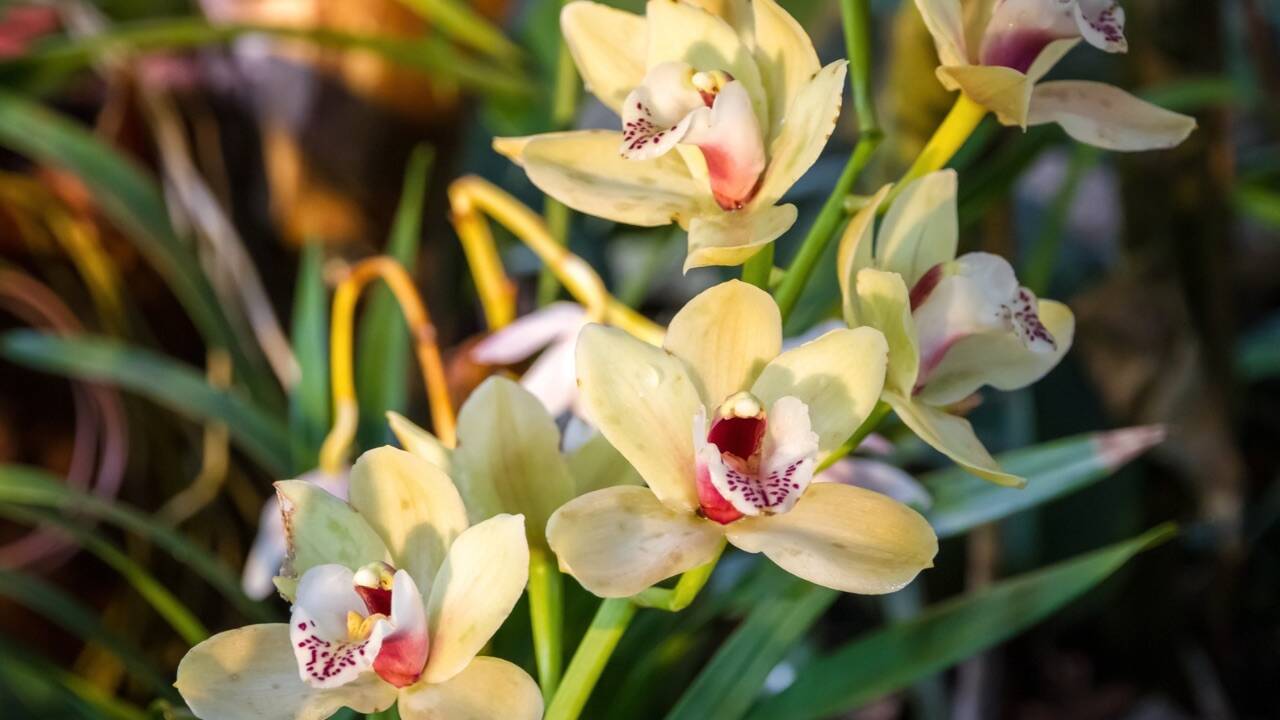
Every time a crew clears a stretch of mature roadside trees in Kerala, thousands of wild orchids vanish with the timber. Most people picture an orchid sitting in a clay pot on a windowsill. In Kerala, roughly 70% of orchids live up on trunks and branches instead, catching rain, mist, and airborne debris. Chop down the host tree, and the whole microhabitat goes down with it.
A study published in October 2026 by researchers from KSCSTE-Malabar Botanical Garden and Institute for Plant Sciences in Kozhikode alongside the Royal Botanic Gardens, Kew, tracked what happened after 27,324 rescued orchids across 21 species were moved from tree-felling zones to three Kozhikode sites. Over 12 to 24 months, 19,511 plants survived—about 71.4%. Even better, 5,224 of those survivors flowered and 1,934 formed seed capsules.
That headline number sounds like a clean win. Honestly, it's more complicated than a simple rescue triumph.
Why Kerala Road Widening Hits Epiphytic Orchids Hard
Kerala packs an extraordinary density of native orchids into a relatively compact southwestern footprint bordered by the Western Ghats. Around 271 orchid species occur in the state—roughly seven species per 1,000 square kilometers, putting Kerala alongside heavyweights like Costa Rica and Ecuador on a per-area basis.
Road expansion and highway widening slice right through places where mature trees have stood for decades. Big, rough-barked trees hold moisture in fissures, support moss and lichen mats, and buffer harsh sunlight. Young saplings planted as "compensatory greenery" after a project finishes don't offer that same bark texture or canopy shade for years.
Two common myths get in the way of clear thinking here:
- Tree orchids are parasites: They aren't. Epiphytic orchids use bark for physical support and anchor roots, pulling water and nutrients from rain, humid air, and trapped organic matter rather than draining the tree's sap.
- Moving plants fixes habitat loss: Translocation helps salvage individual plants from an active chainsaw, yet it can't recreate an intact forest canopy or every fungal partner in the wild.
What the Kozhikode Rescue Actually Showed
Researchers moved the 27,324 plants to three very different spots around Kozhikode: Sarovaram Bio Park, Malabar Botanical Garden, and Kappad Beach. Each site tested a different set of stresses.
Sarovaram is an urban wetland with mangrove cover. Malabar Botanical Garden blends shaded and marshy pockets. Kappad Beach sits right on the coast, blasting plants with stronger wind, direct sun, and salt spray.
Survival wasn't uniform across the board, and flowering told a surprising twist. At Kappad Beach, 35.6% of surviving orchids flowered, and 62.3% of those flowering plants produced seed capsules. Sarovaram saw 26.3% flowering with 34.8% capsule production, while Malabar Botanical Garden recorded 27% flowering and 40.1% capsule production.
Stress sometimes triggers reproduction in stressed or exposed plants, though long-term establishment is the real test. Researchers also looked closely at 6,126 plants across 12 regionally endemic species—eight restricted to India and four shared between southern India and Sri Lanka. Around 55% of those endemic plants (3,368 individuals) survived.
Moving cool, misty hill-slope orchids closer to warm sea-level conditions is risky. Seeing thousands of moved plants—including species with small, unflashy blooms—survive and set seed shocked the team. Even tiny root growth turned out to be a practical clue to how well a plant was settling in.
The Limits Nobody Should Ignore
I'm glad over 19,500 plants made it through the first one to two years. Still, treating rescue translocation as a get-out-of-jail-free card for highway planners would be a mistake.
The study authors themselves stress that moving orchids should remain a last resort when host trees simply can't be saved in place. A 71.4% overall survival rate means nearly three out of ten moved plants still died—and endemic hill species sat closer to 55%.
There's also a broader blind spot. Systematic statewide counts of how many trees and wild orchids are lost to roadwork haven't historically been tracked consistently, meaning local populations can quietly wink out before anyone tallies the loss. Plus, orchids have dust-like seeds lacking stored food reserves, so wild germination depends heavily on symbiotic mycorrhizal fungi. Producing a seed capsule on a relocated plant is encouraging, yet self-sustaining wild recruitment takes years to verify.
Practical Next Steps for Planners and Conservationists
If you work on infrastructure alignment, urban forestry, or biodiversity projects in Kerala or similar tropical regions, a few concrete steps make a real difference right away:
- Survey trees before a single contract is signed. Map orchid-bearing trees along proposed widening corridors early enough to tweak road alignment or save key specimen trees.
- Pair botanical rescue with civil schedules. Give botanists enough lead time to detach, tag, and mount epiphytes on suitable living hosts rather than rushing salvage hours before felling.
- Match microclimates instead of dumping plants anywhere. Keep cool-elevation and coastal conditions in mind when picking host trees and safe-haven sites.
- Track multi-year survival and roots, not just day-one counts. Monitor root attachment, flowering, and capsule set over multiple seasons to separate short-term holding from genuine recovery.
- Protect existing old-growth trees first. No relocation program replaces a mature canopy ecosystem once it's cleared.