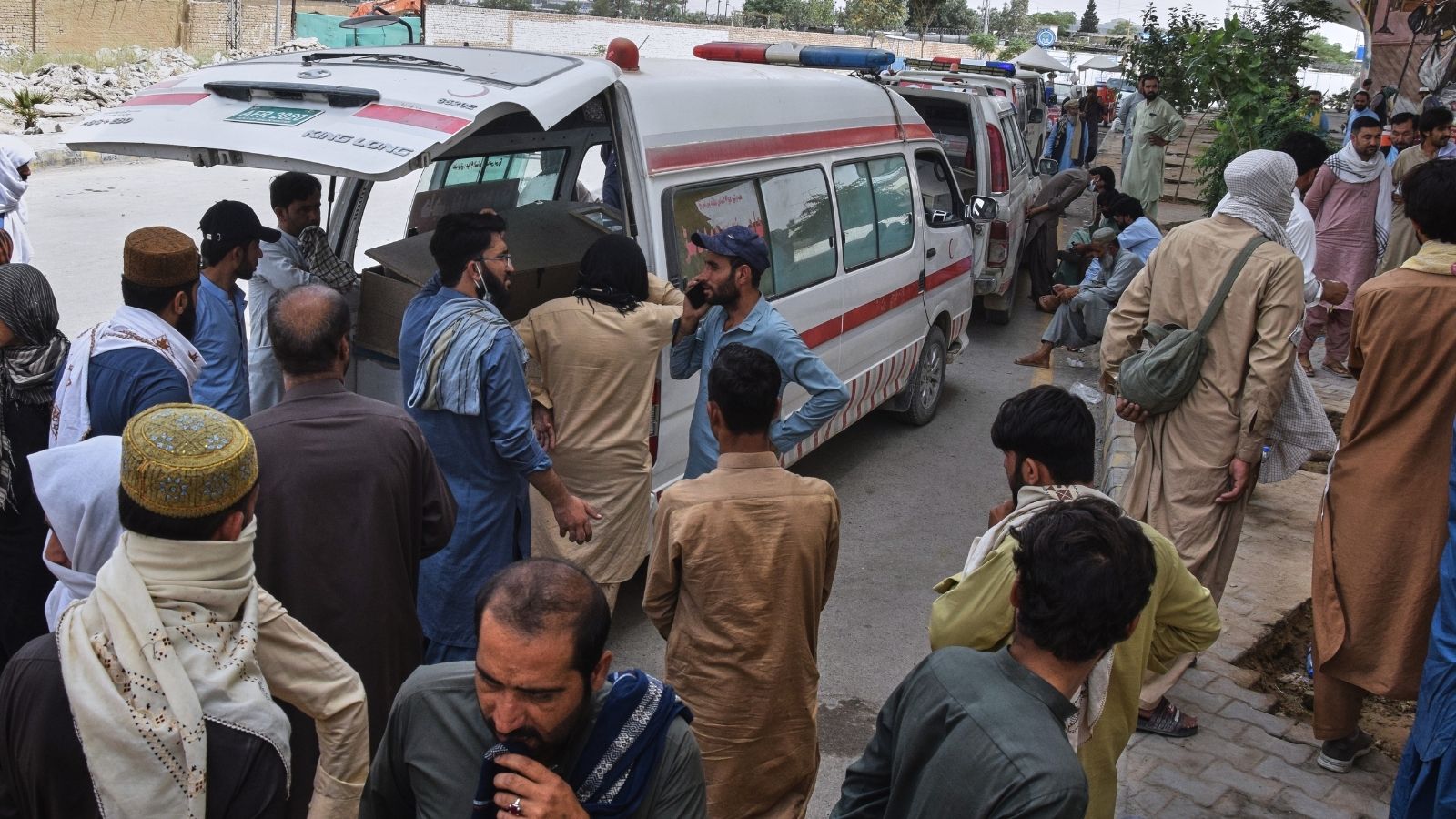
The execution of 18 abducted, blindfolded Pakistani police officers in Balochistan and the subsequent state kinetic response—resulting in the reported deaths of 75 insurgents—exposes a critical structural vulnerability in Pakistan’s domestic security architecture. In asymmetric conflicts, state forces routinely misinterpret high insurgent body counts as a metric of strategic success. This kinetic friction highlights a deeper reality: the Balochistan Liberation Army (BLA) is successfully shifting from low-intensity sabotage to high-yield, coordinated multi-domain assaults.
To understand the strategic implications of this escalation, the conflict must be broken down into its core structural operational variables. The recent violence is not a series of isolated skirmishes, but an expression of a highly evolved insurgent doctrine clashing with a rigid, reactive state containment strategy.
The Asymmetric Value Asymmetry: Why Body Counts Deceive
The Pakistani state's announcement of killing 75 insurgents represents a standard counter-insurgency framework focused on attrition. However, in asymmetric warfare, the cost function of the state and the insurgent group operate on completely different axes.
- The State’s Cost Function: The state measures losses in institutional stability, sovereign credibility, and infrastructure security. The initial BLA assault near the Mangi Dam—a critical water reservoir supplying Quetta—and the subsequent ambush of an army vehicle killing 11 soldiers demonstrate the BLA’s ability to disrupt vital state assets and logistics lines. The execution of 18 police officers further degrades local state authority and shatters police morale.
- The Insurgent’s Cost Function: For an insurgent group like the BLA, personnel are consumable assets in service of a broader psychological and strategic objective. While losing 75 fighters degrades immediate operational capacity, the strategic yield of executing 18 state officers and ambushing regular army units outweights that tactical loss. It signals to the local population that the state cannot guarantee the safety of its own security apparatus.
This dynamic creates a structural imbalance. The state is forced to deploy expensive, conventional military assets—including helicopter gunships, regular army units, and the Frontier Corps—to clear terrain that it cannot permanently hold without massive financial and human resource drains.
The Triad of Insurgent Mobilization
The escalation of BLA capabilities points to a sophisticated supply and recruitment pipeline that conventional counter-insurgency operations fail to neutralize. The structural viability of the insurgency rests on three distinct pillars.
- Geopolitical Sanctuaries: Pakistan repeatedly asserts that the BLA and allied factions like the Tehrik-e-Taliban Pakistan (TTP) utilize border sanctuaries in Afghanistan to regroup, rearm, and plan operations. While Kabul denies these assertions, the porous 2,640-kilometer border creates a geographic buffer that prevents Pakistani forces from achieving decisive operational closure.
- The Resource Extraction Grievance: Balochistan is Pakistan's largest province by landmass but its least populated and economically least developed. The concentration of capital-intensive projects under the China-Pakistan Economic Corridor (CPEC) provides a potent narrative for insurgent recruitment. The BLA exploits the gap between localized resource extraction and local economic marginalization, framing the state as an occupying corporate-military entity.
- Tactical Convergence: Although structurally distinct from the religiously motivated TTP, the ethnocentric BLA benefits from a shared operational environment. The return of the Afghan Taliban to power in 2021 altered the regional security equilibrium, creating an environment where multiple anti-state actors can share tactical innovations, smuggling routes, and intelligence.
Tactical Innovation vs. Reactive Containment
The mechanics of the initial assault reveal an evolution in insurgent tactics. The target selection—Mangi Dam and Ziarat district—shows a calculated move toward critical infrastructure and soft state targets simultaneously.
The standard state response is a cyclical pattern of reactive kinetic operations. Operation Sha'ban utilized a joint force of the Pakistan Army, Frontier Corps, and police to execute sweeps through mountainous terrain. While these operations yield high insurgent casualties on paper, they face strict structural limitations.
The first limitation is the verification bottleneck. Because the military restricts independent journalistic access to operational zones in Balochistan, claims of 75 neutralized insurgents cannot be independently verified. This lack of transparency undermines the state's strategic communications narrative internationally and domestically.
The second limitation is the holding capacity of local police forces. The federal government's announcement of an 11.1 million rupee (approximately $39,000) compensation package for the families of fallen officers acknowledges the high risk borne by under-equipped local law enforcement. Police forces are tasked with holding static positions, making them vulnerable to concentrated, mobile insurgent assaults. When these static lines fracture, the military must intervene, consuming valuable operational readiness and capital.
The Strategic Play
To break this cycle, the state's strategy must pivot away from pure kinetic attrition toward a dual-track paradigm of localized containment and targeted infrastructural insulation.
First, static police outposts must be replaced with hardened, sensor-fused joint operating bases capable of resisting coordinated assaults until rapid-reaction air assets can deploy. Stacking under-resourced police officers at isolated checkpoints creates high-yield targets for insurgent propaganda.
Second, the state must separate the insurgent elite from the local population by restructuring the financial distribution of CPEC projects. Security operations can suppress active insurgent cells, but they cannot neutralize the economic incentives that fuel long-term recruitment. Unless local populations are directly integrated into the economic value chain of regional infrastructure projects, the BLA's recruitment pipeline will outpace the military's rate of attrition.
The current kinetic victory claimed by Islamabad will provide a temporary operational pause, but without structural changes to border management and regional economic architecture, the underlying friction guarantees future escalation.