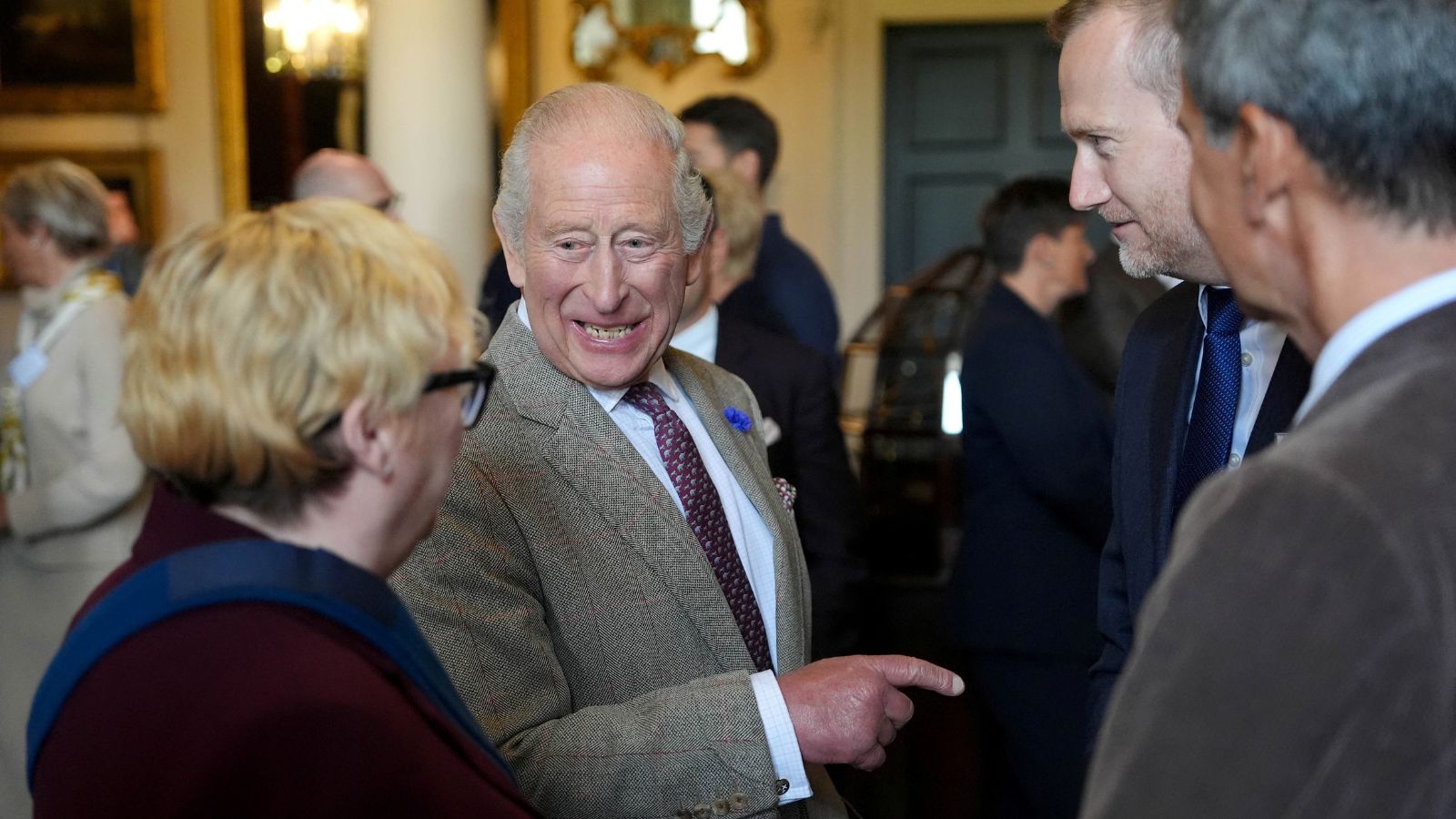
You wouldn't normally expect a monarch living in historic royal residences to dictate terms to Silicon Valley's heavyweights. Yet, King Charles recently gathered top executives from OpenAI, Anthropic, Google DeepMind, and Nvidia at Dumfries House in Scotland to deliver a blunt warning. The core message wasn't about stifling innovation. It was a direct call to make sure artificial intelligence stays under human control before things spin out.
When the people building the most powerful systems on earth start warning that their own creations could spiral past human management, it's time to pay attention.
Behind Closed Doors in Scotland
The gathering brought together an unusual mix of tech royalty and global policymakers. Nvidia CEO Jensen Huang, Google DeepMind co-founder Demis Hassabis, and OpenAI Chief Financial Officer Sarah Friar sat in the same room as Vatican adviser Paolo Benanti and computer scientist Stuart Russell.
The atmosphere wasn't hostile, but the stakes couldn't have been higher. Charles opened the summit by pointing out a stark contradiction. The technology is solving massive problems in life sciences and medicine, yet its creators are increasingly sounding alarms about darker capabilities.
"Surely, we need sufficient means of control before it is all too late?" the King asked the room.
Instead of getting bogged down in technical jargon, he laid out two straightforward questions for the attendees: How do we harness AI benefits with safety at the core, and how do we build international consensus so the human race stays securely in place?
What the Tech Leaders Actually Said
While public commitments didn't magically appear overnight, the admissions from industry insiders were telling. Demis Hassabis noted that artificial general intelligence could be just a few years away, comparing its potential disruption to a magnitude vastly outstripping the Industrial Revolution. He put the odds of things going wrong at a decidedly non-zero chance.
Jensen Huang took a practical stance on product safety, pointing out that when something isn't safe enough, companies should hold it back and keep engineering. Meanwhile, OpenAI's Sarah Friar emphasized that no single company or government can shoulder the burden of safety alone.
Critics often dismiss these high-level summits as mere talking shops or PR exercises for tech giants looking to cozy up to regulators. After all, voluntary pledges don't carry the weight of hard legislation like the European Union's AI Act. But royal interventions have a long history of shifting cultural conversations long before laws catch up. Charles spent decades championing sustainable farming and climate awareness when those topics were considered fringe. Bringing AI governance into that same framework treats technological recklessness not as an abstract IT glitch, but as a genuine threat to humanity and the natural world.
Where We Go From Here
The tension between racing for market dominance and ensuring safety isn't going away. Companies want growth, investors want returns, and governments are terrified of falling behind in a geopolitical arms race.
If you're watching this space, stop waiting for Silicon Valley to self-regulate out of pure goodwill. Pay attention to how open models evolve, how startups handle safety testing, and whether international bodies can actually enforce baseline standards. The conversation in Scotland proved that even traditional institutions are waking up to the reality that we're building a world we might not know how to steer. Keep an eye on regulatory pressure points, and don't assume rapid progress equals smart progress.


