Walk into a club in Bamako or sit in a quiet concert hall in London, and you'll hear two wildly different futures for the kora. On one side stands Sidiki Diabaté, turning a centuries-old harp-lute into a hook-heavy engine for West African hip-hop, R&B, and stadium pop. On the other stands Sona Jobarteh, breaking hundreds of years of male-only griot convention while reimagining education and traditional repertoire from the ground up.
Honestly, pitting them against each other misses the point. Both artists are pulling a deeply rooted Manding instrument into the present, even if their methods couldn't look more different. If you only listen to pure acoustic purists, you miss how fiercely alive this music is on young dancefloors. If you only chase viral beats, you miss the historical weight and structural discipline that keep the tradition from thinning out into novelty.
What Makes the Kora So Hard to Pigeonhole
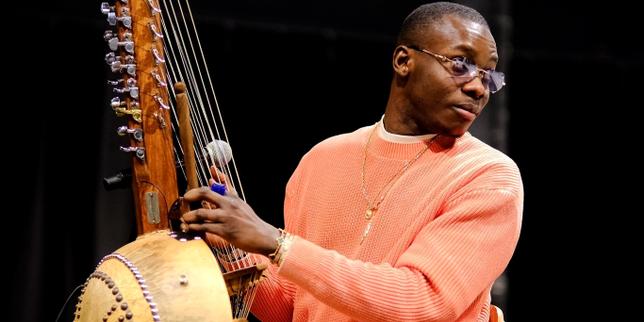
Before getting into family trees and modern spotlights, it helps to look at the instrument itself. A traditional kora isn't a guitar with extra strings, and it isn't a Western concert harp either. Builders start with a large calabash gourd, cut it, stretch cow or antelope hide over the opening, fit a long hardwood neck, and balance a double-notched freestanding bridge on the skin. Most koras carry 21 strings—though 22-string builds and custom variants exist—plucked by the thumbs and index fingers of both hands.
That simple physical layout produces something extraordinary. Left and right hands weave interlocking polyrhythms and cascading harmonic patterns that sound simultaneously intimate and orchestral. Traditional players tune the strings using leather rings called konso slid along the neck, shifting between four main seven-note modes that sit close to Western major, minor, and Lydian scales. On stage today, you'll see players add pickups, nylon monofilament strings, or geared machine heads so the instrument survives humid nights, loud bands, and tight tour schedules without losing its resonant warmth.
For generations in the Manding world—across Mali, The Gambia, Guinea, Senegal, and neighboring regions—the kora belonged to jali or djeli families, often translated into English as griots. Griots weren't background entertainers. They were historians, genealogists, diplomats, mediators, and praise-singers carrying oral archives that stretched back centuries. Legends from Kaabu trace the kora's origins to figures like Jali Mady Wouling Cissoko, and hearing a seasoned master play old repertoire still feels less like a "world music" performance and more like a living chronicle.
How Sidiki Diabaté Bends the Kora Toward Stadium Pop
Born in Bamako in 1992, Sidiki Diabaté grew up inside one of the heaviest musical lineages in West Africa. His father was the late kora legend Toumani Diabaté, who died in July 2024, and his grandfather was Sidiki Diabaté Sr., who recorded the landmark first full-length kora album in 1970. When you're raised in that house, a small seven-string kora isn't a museum piece—it's basically your first toy.
What Sidiki did next ruffled feathers among traditionalists and electrified younger listeners. Instead of treating griot heritage as a fragile glass box, he soaked in hip-hop, rap, R&B, and urban Malian pop. He worked with Malian rappers like Iba One, produced and arranged tracks, and brought kora phrasing into punchy, rhythm-driven arrangements made for phones, speakers, and crowded arenas.
When Sidiki plays acoustic, though, the lineage shows right away. His 2014 duet album Toumani & Sidiki, recorded with his father at RAK Studios in London with minimal rehearsal and no overdubs, proved he wasn't leaning on studio polish as a crutch. Father and son traded rapid-fire ideas with effortless command, bridging generations in real time. Later projects like Lamomali alongside Matthieu Chedid (-M-) and Fatoumata Diawara, along with solo releases like Diabateba Music, Vol. 1 (2016), Béni (2019), and Kora Lover (2024), kept pushing his sound across borders, including a guest appearance on Gorillaz's Humanz.
Let's be real, though. Popularity and controversy often travel together in Sidiki's story. In September 2020, he was arrested in Bamako following domestic violence allegations made by his former partner Mariam Sow and spent months in custody before his release in December 2020. Any honest look at his career has to hold both sides: his undeniable musical instincts and star power on one hand, and real public accountability questions on the other.
Why Sona Jobarteh's Rise Changed the Griot Rulebook
If Sidiki shook up the kora's sonic packaging, Sona Jobarteh challenged something even older: who gets to hold the instrument in the first place.
Born Maya Sona Jobarteh in London in 1983 to a Gambian griot family and an English mother, she grew up surrounded by kora royalty. Her grandfather was celebrated Gambian kora master Amadu Bansang Jobarteh, her father was Sanjally Jobarteh, her brother is kora player and composer Tunde Jegede, and her cousin is Toumani Diabaté. Yet inside traditional Manding griot households, women were expected to be vocalists and oral historians, while men played the kora.
Sona didn't just sneak a few chords as a kid—she went on to become the first professional female kora virtuoso from a West African griot dynasty. Early on, she trained in Western classical music in the UK, studying cello, piano, harpsichord, and composition at institutions including the Royal College of Music and the Purcell School of Music, later completing studies at SOAS. Around age seventeen, she asked her father to teach her the kora properly, taking on the pressure of proving herself without being reduced to a novelty.
Listen to albums like Afro Acoustic Soul (2008), Fasiya (2011), and Badinyaa Kumoo (released in 2022/2023), or her film score work on projects such as Motherland and The First Grader, and you hear a distinct voice. Rather than chasing Western pop formulas or leaning on cliché drum-heavy tropes, she builds arrangements around Mandinka lyrics, resonant kora counterpoint, and deep cultural grounding. As she has pointed out in interviews, adapting tradition—including opening kora mastery to women—is how heritage stays relevant instead of turning stiff.
She also takes the griot role beyond the stage. Through The Gambia Academy in Kartong, The Gambia, and her talks and academic residencies—including receiving an honorary doctorate from Berklee College of Music in 2023—she pushes for educational reform that centers African languages, history, and self-belief rather than treating colonial schooling models as the only standard of excellence.
Purism vs. reinvention isn't a zero-sum game
People love clean debates. "Is Sidiki selling out tradition?" "Is Sona too academic or traditionalist?" Both questions are lazy.
When you listen closely to West African music history, adaptation is baked into the walls. Kora players have long absorbed outside ideas, tuned to shifting contexts, and traveled far beyond village courtyards. What matters isn't whether a song has an 808 kick or an acoustic solo—it's whether the musician actually knows the language of the instrument and respects what they're building on.
Sidiki shows how a young artist can make the kora feel immediate and cool to kids who might otherwise skip traditional repertoire entirely. Sona shows how breaking a gender barrier while deepening cultural scholarship and institution-building expands who belongs in the room. Neither cancels the other out. Together, they prove the kora isn't trapped in amber.
Mistakes Listeners and Writers Keep Making About the Kora
A few misconceptions pop up constantly whenever the kora gets mainstream attention:
- Calling it a "West African harp" and stopping there. That shorthand helps new listeners picture the shape, sure, but it misses the calabash gourd resonance, the double bridge, the konso tuning system, and the thumb-and-index-finger technique.
- Treating all griots like one identical group. Families, regions, and individual artists hold different histories, repertoires, and political or social stances. Even within the same extended family network, styles vary sharply.
- Assuming "traditional" means static. Oral traditions survive by being sung, played, and reinterpreted in real communities—not preserved untouched like fossils.
- Flattening every modern fusion into "world music." Mixing kora with hip-hop, soul, jazz, or orchestral strings isn't one single move; a duet record with your father, a film score, and a club track do very different jobs.
How to Actually Explore This Music on Your Own
If you want to go past surface-level playlists and hear the range of what's happening right now, don't binge one track on shuffle and call it a day. Try a few concrete listening steps instead:
- Compare two recordings side by side. Put on a track from Toumani & Sidiki to hear stripped-back acoustic interplay and family chemistry, then play a solo or ensemble cut from Sona Jobarteh's Fasiya or Badinyaa Kumoo to notice how differently voice, kora, and arrangement breathe.
- Trace the wider family tree. Follow threads outward to Toumani Diabaté's solo and collaborative work (such as Kaira or In the Heart of the Moon with Ali Farka Touré), Ballaké Sissoko, or Tunde Jegede. Hearing cousins and elders side by side makes subtle tuning and phrasing choices jump out.
- Look up translations of the lyrics. Mandinka and Bambara lyrics often carry proverbs, social commentary, family history, and humor that get lost if you only treat the kora as background chill music.
- Support independent artists and educational initiatives directly. Buy physical releases or official downloads when you can, and check out projects like Sona Jobarteh's official site and The Gambia Academy to see how cultural preservation connects with real-world schooling.
The kora doesn't need rescuing by nostalgia, and it doesn't need to hide its roots to sound modern. Keep your ears open to both the street-level spark and the long-arc craft—that's where the real momentum lives.