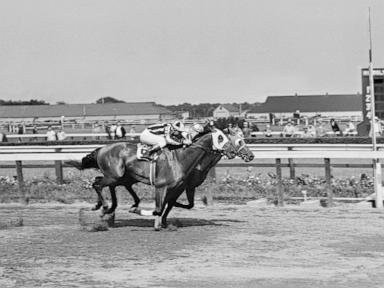
The dirt at Aqueduct Racetrack has a specific smell when the autumn wind sweeps in off Jamaica Bay. It is a mix of salted Atlantic air, crushed stone, dried hay, and the sharp, metallic tang of horse sweat. For eighty-eight years, that scent has signaled the arrival of New York winter racing. It meant the glamorous crowds had fled Saratoga’s manicured lawns and Belmont’s sweeping grandstands, leaving the real diehards behind in South Ozone Park, Queens.
Soon, that dirt will be paved over.
The announcement came without the thundering drama of a photo finish. It was a corporate decision, a clinical restructuring plan designed to consolidate New York horse racing. Belmont Park is getting a multi-million-dollar facelift. When it reopens, Aqueduct—the blue-collar workhorse of the state’s racing circuit—will close its gates for good. The grandstands will be torn down. The land will likely be swallowed by casino expansion or housing developments.
To the casual observer, it looks like progress. To the bean counters, it is a maximization of real estate value. But if you stand near the paddock on a Tuesday afternoon when the sky is the color of wet asphalt, you realize that a ledger cannot capture what is actually being lost.
We are witnessing the death of a distinct subculture.
The Men Who Keep the Time
Consider a man like Arthur. He is a hypothetical composite of the dozens of clockers, grooms, and railbirds who have spent forty years treating Aqueduct like their living room. Arthur wears a faded canvas jacket with a New York Racing Association patch from 1994. His fingers are permanently stained by newsprint and cheap coffee.
Every morning at 5:00 AM, long before the A train starts rattling past the backstretch with its first heavy load of commuters, Arthur is there. He knows the horses not by their names on a program, but by the rhythm of their hooves on the track.
"Every horse has a heartbeat you can hear if you stand close enough," Arthur might tell you, leaning against the rail. "Some sound like a metronome. Some sound like a freight train running out of track."
For men like Arthur, Aqueduct was never about the high-stakes glamour of the Triple Crown. It was about the daily grind. It was a sanctuary for people who found solace in the routine of the morning works. When Aqueduct closes, these people do not simply migrate to Belmont or Saratoga. The distance is too far, the culture too corporate, the environment too sterile.
The closing of Aqueduct is not just the end of a sports venue. It is the eviction of a community.
The Cold Math of Modern Racing
The decline did not happen overnight. To understand why Aqueduct is fading, you have to look at the shifting landscape of American entertainment. In 1959, when the modern version of the track opened after a $33 million overhaul, more than 42,000 people showed up on opening day. They arrived by bus, by car, and via a dedicated subway station built specifically to funnel bettors into the grandstand.
Horse racing was the king of American sports because it held a monopoly on legal gambling.
Then came the state lotteries. Then came Atlantic City. Then came off-track betting parlors, followed swiftly by tribal casinos and, ultimately, the smartphone in every citizen's pocket. Today, a person can wager on a race in Kentucky while sitting in a dentist's waiting room in Ohio. The physical racetrack, once a necessary cathedral of chance, became an expensive piece of overhead.
The numbers paint a stark picture of this shift. In its heyday, Aqueduct averaged daily attendances that rivaled major league baseball teams. By the 2020s, the weekday crowd on a freezing Thursday in January could often be counted in the hundreds. The vast, cavernous grandstand, built to hold tens of thousands, became an echo chamber.
Aqueduct Attendance Over Time (Approximate Daily Average)
1960s: █████████████████████████ 30,000+
1990s: ████████████ 12,000
2020s: █ 800 (Weekday live attendance)
The state’s solution was the introduction of video lottery terminals. Resorts World Casino opened on the Aqueduct grounds, transforming a portion of the facility into a flashing, chiming neon paradise. The irony is bitter. The casino, which was brought in to subsidize and save horse racing, eventually eclipsed it. The slots generated billions; the live racing became a footnote, an administrative hurdle to be cleared so the casino could keep its license.
The Invisible Backstretch
When an ecosystem dies, the apex predators are rarely the ones who suffer first. The millionaire owners will move their stables to Kentucky or Florida. The celebrity jockeys will follow the biggest purses. The real damage will be felt by the invisible army that keeps the sport running.
Behind the grandstands sits the backstretch. It is a self-contained village hidden from public view. Here, hundreds of backstretch workers—grooms, hotwalkers, exercise riders, and blacksmiths—live and work. Many are immigrants. Many live in dormitories provided by the track. Their entire lives are structured around the specific needs of the thoroughbreds in their care.
A thoroughbred horse is a fragile miracle of biology. They weigh more than a thousand pounds, yet they run on ankles no thicker than a human's. They require constant, meticulous attention.
"If a horse gets colic at two in the morning, you don't call an app," says Maria, a backstretch groom who has spent a decade at Aqueduct. "You walk him. You stay up with him until the sun comes up, holding his lead shank, praying his stomach untwists. You do it because you love them, and because your paycheck depends on them staying alive."
When Aqueduct ends live racing, the backstretch closes too. The state plans to centralize everything at Belmont, but centralization always breeds contraction. There will be fewer stalls. Fewer stalls mean fewer horses. Fewer horses mean fewer jobs for the people who shovel the manure, wrap the legs, and feed the animals at dawn.
The industry calls this "efficiency." The people living in the dorms call it an earthquake.
A Architecture of Ghostly Grandeur
Walking through Aqueduct today is a surreal experience. The building is an artifact of mid-century brutalism and optimism. It was designed by Arthur Froehlich, the legendary architect who built tracks across the world. It features massive concrete cantilevers, vast expanses of glass, and escalators that were once considered technological marvels.
It is an architecture built for crowds that no longer exist.
You can stand in the betting hall on the third floor and look out over a sea of empty blue seats. The paint is peeling in the corners. The monitors show races from Gulfstream or Santa Anita, their commentary muffled by the hum of the HVAC system. It feels less like a sports arena and more like a abandoned terminal at JFK airport during a strike.
Yet, there is a haunting beauty in this emptiness. The light hits the dirt track at a low angle in the late afternoon, casting long shadows from the starting gate. For a moment, if you close your eyes, you can hear the ghosts. You can hear the roar of the crowd when Secretariat won the Gotham Stakes here in 1973. You can hear the thunder of Cigar winning the Cigar Mile.
Those moments were real. They altered the fabric of New York sports history. But history is a luxury that modern real estate development cannot afford.
The Final Turn
The conversation around Aqueduct’s closure usually focuses on the future. Proponents talk about the state-of-the-art facilities coming to Belmont. They talk about a unified New York racing product that can compete on the global stage. They talk about progress.
But progress always leaves a scar.
The true loss of Aqueduct is the loss of accessibility. This was the city’s racetrack. It was reachable by a single swipe of a MetroCard. It belonged to the immigrants from Guyana, the retirees from Brooklyn, the blue-collar workers from Queens who could take an afternoon off and spend ten dollars to see some of the finest athletes on earth run in their backyard.
Belmont, nestled on the border of Nassau County, has a different energy. It is suburban. It is manicured. It is exclusive.
As the final racing dates approach, the atmosphere at Aqueduct is not one of anger, but of resignation. The people who love this place are used to being overlooked. They know that the world has moved on from the slow, deliberate drama of horse racing. They know that a culture based on patience, animal husbandry, and local grit cannot survive in an era of instant gratification and digital efficiency.
On the last day of racing, there will likely be speeches. There will be retrospective videos played on the big screen. A few old-timers will cry. Then the horses will be loaded into vans, the gates will be locked, and the bulldozers will arrive to erase eighty-eight years of dirt and dreams.
The afternoon sun sinks low over the grandstand, casting a shadow that stretches all the way to the finish line, where the dust refuses to settle.