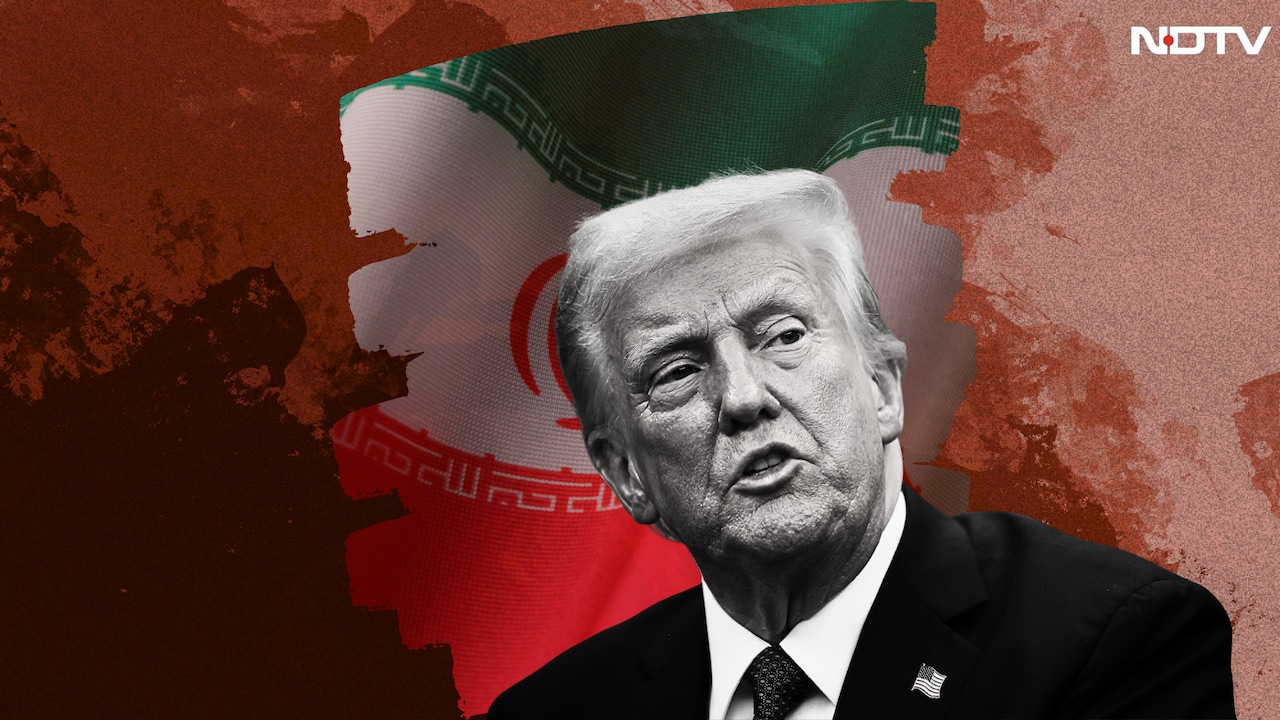
The foreign policy establishment is currently salivating over a new, supposedly brilliant military strategy circulating through the corridors of Washington. The headlines paint a dramatic picture: a daring amphibious assault to seize the strategic islands in the Strait of Hormuz, followed by a series of precise, devastating airstrikes to obliterate Iran's underground missile bastions, starting with the infamous Pickaxe Mountain.
It sounds like a Hollywood blockbuster. It reads like a slick briefing prepared by defense contractors eager to sell more hardware. Discover more on a connected topic: this related article.
It is also a complete tactical hallucination.
The armchair generals pushing this plan are making the same fatal mistake that has defined every failed American foreign intervention of the last half-century. They are fighting the war they want, not the war they will actually get. They assume an adversary will sit quietly, play by the rules of a western war-gaming simulation, and allow themselves to be systematically dismantled. Additional journalism by NPR highlights related perspectives on the subject.
Having spent years analyzing the tactical realities of Persian Gulf security, I can tell you that this proposed plan is not a path to victory. It is a blueprint for a historic military disaster.
The Suicide Mission on the Hormuz Islands
The centerpiece of this new strategic fantasy is the rapid seizure of the islands scattered across the Strait of Hormuz—specifically Abu Musa and the Greater and Lesser Tunbs. The theory is simple enough on paper: secure these islands, establish air defense batteries, and control the world’s most critical maritime choke point, thereby neutralizing Iran’s ability to shut down global oil shipping.
In reality, putting American boots on these rocky outposts is a logistical and tactical nightmare.
To understand why, you must understand the geography. These islands are not isolated Pacific atolls. They sit directly in the backyard of the Islamic Revolutionary Guard Corps (IRGC) Navy. They are surrounded by shallow, treacherous waters that are perfectly suited for Iran’s massive fleet of fast-attack craft and swarm boats, but highly dangerous for deep-draft US Navy vessels.
Imagine a scenario where a regiment of US Marines is deployed to Abu Musa. They are now sitting on a piece of land roughly five square miles in size, located less than forty miles from the Iranian mainland. They are well within the range of thousands of unguided artillery rockets, short-range ballistic missiles, and suicide drones launched from the Iranian coast.
To protect those Marines, the US Navy would have to station major surface combatants close by. In doing so, they would be sailing multi-billion-dollar destroyers and amphibious transport docks into a literal shooting gallery. Iran’s military doctrine is explicitly designed around anti-access/area denial (A2/AD). They do not need to match the US Navy ship-for-ship. They only need to saturate the airspace with cheap, mass-produced anti-ship cruise missiles like the Qader and Gadir.
During the famous Millennium Challenge war game in 2002, retired Marine Corps Lieutenant General Paul Van Riper played the role of the red force commander. Using a swarm of small boats, civilian aircraft, and low-tech communication methods, he successfully sank sixteen major US warships in a matter of minutes. The Pentagon chose to ignore those results, reset the simulation, and pretend it never happened. This new Hormuz island plan suggests they still have not learned the lesson. Seizing those islands does not secure the strait; it merely hands Iran a collection of highly vulnerable targets.
The Indestructible Fortress of Pickaxe Mountain
If the island-hopping campaign is a tactical blunder, the planned bombardment of Kuh-e Kolang—often referred to in Western defense circles as Pickaxe Mountain—is a geological misunderstanding.
Pickaxe Mountain houses one of Iran’s highly classified underground missile bases, part of what the IRGC proudly refers to as its "missile cities." These are not simple concrete bunkers hidden under a few feet of dirt. These are sprawling subterranean complexes carved deep into the solid granite of the Zagros Mountains.
The proponents of the bombing campaign point to the GBU-57 Massive Ordnance Penetrator (MOP), a 30,000-pound GPS-guided bomb designed specifically to destroy deeply buried targets. They claim that a coordinated strike by B-2 Spirit bombers carrying these weapons would collapse the tunnels, bury the missile launchers, and decapitate Iran's retaliatory capability.
This claim ignores basic physics and engineering.
The Zagros Mountains are made of incredibly dense, folded rock formations. Many of these underground facilities are buried under hundreds of meters of solid granite and reinforced with specialized shock-absorbing materials. Conventional ordnance, even the largest bunker-busters in the American inventory, cannot penetrate deeply enough to collapse the primary launch chambers.
Furthermore, these missile bases are not designed with a single point of failure. They have multiple, heavily armored exit tunnels oriented in different directions. Even if an airstrike manages to collapse one entrance, the launchers can still deploy through another.
To actually destroy a target like Pickaxe Mountain with conventional weapons, you would need to sustain a bombing campaign of unprecedented scale, dropping dozens of heavy penetrators on the exact same coordinate over days to slowly drill through the rock. During that time, the bombers would be exposed to sophisticated air defense systems, including the Russian-made S-300 and Iran’s domestic Bavar-373, both of which are highly capable of tracking and targeting non-stealth aircraft and even challenging stealth platforms at close range.
A strike on Pickaxe Mountain would not neutralize Iran's missile capability. It would merely signal the start of a massive, region-wide retaliatory strike that the US and its allies are unprepared to contain.
The Ghost of Operation Praying Mantis
To justify this aggressive posture, advocates often point to history, specifically Operation Praying Mantis in April 1988. During that one-day clash, the US Navy destroyed half of Iran's operational fleet after an American frigate, the USS Samuel B. Roberts, was nearly sunk by an Iranian mine.
The lesson that Washington took from 1988 was dangerous: that Iran will always back down when faced with superior naval power.
This is a classic case of fighting the last war. Iran learned from that defeat, and they spent the next nearly four decades ensuring they would never have to fight a conventional naval battle again. They stopped trying to build a traditional blue-water navy. Instead, they built an asymmetric force designed to exploit the specific weaknesses of a high-tech adversary.
Today, the IRGC Navy relies on:
- Thousands of sea mines, including smart mines that can be deployed rapidly by submarines, commercial vessels, and even speedboats.
- Swarm fleets of fast-attack craft armed with light anti-ship missiles and torpedoes, designed to overwhelm a destroyer’s defense systems through sheer numbers.
- Mobile, coastal anti-ship missile launchers hidden in the rugged cliffs along the coast, making them nearly impossible to locate and target before they fire.
- An extensive arsenal of precision-guided ballistic missiles capable of targeting moving ships at sea.
If the US attempts to execute this new war plan, it will not face the weak, conventional Iranian Navy of 1988. It will face a highly coordinated, decentralized defense network designed specifically to turn the Persian Gulf into a graveyard for American ships.
The Real Battlefield is Economic, Not Kinetic
The most glaring flaw in the Hormuz and Pickaxe Mountain strategy is that it completely ignores the economic weapon that Iran holds over the entire globe.
Approximately 20% of the world’s petroleum passes through the Strait of Hormuz daily. This is the energy artery of the global economy.
The proponents of the war plan speak of "surgical strikes" and "containing the conflict." But in the real world, there is no such thing as a contained war in the Persian Gulf. The moment the first American bomb drops on Iranian soil, the global maritime shipping market will freeze.
+--------------------------------------------------------+
|             THE GEOPOLITICAL DOMINO EFFECT             |
+--------------------------------------------------------+
|                                                        |
|  [U.S. Kinetic Strike] ---> [Iranian Retaliation]      |
|                                     |                  |
|                                     v                  |
|  [Global Oil Shock] <--- [Strait of Hormuz Closure]    |
|          |                                             |
|          v                                             |
|  [Economic Collapse] ---> [Geopolitical Realignment]   |
|                                                        |
+--------------------------------------------------------+
It would not even require Iran to physically sink a commercial tanker. The mere threat of hostilities would cause maritime insurance rates to skyrocket to prohibitive levels. Shipping companies would refuse to send their vessels into the Gulf.
If the strait is closed or heavily contested for even a few weeks, the price of oil will surge past $150 a barrel. Global supply chains, already fragile, would buckle. Inflation would spike overnight, dragging the Western world into a severe recession.
While the US military is busy trying to dig Iranian missiles out of Pickaxe Mountain, the American consumer would be paying the price at the pump, and the global financial system would be facing a crisis that no bailout could fix. This is the asymmetry that the Washington war planners refuse to acknowledge. Iran does not need to win a military victory to defeat this strategy; they only need to survive long enough to let the global economy defeat it for them.
The Illusion of the Clean Exit
Every major military blunder of the past thirty years has begun with the same assumption: "We will be greeted as liberators, and we will be home in a few months."
The plan to seize the Hormuz Islands and bomb Pickaxe Mountain is built on that same arrogant foundation. It assumes that a massive strike on Iran’s sovereign territory will force the regime to the negotiating table in a state of submission.
History tells us the exact opposite will happen. An overt attack on the Iranian homeland would instantly unify a highly nationalistic population, silence domestic political opposition, and rally the entire country behind the regime. It would also trigger Iran's regional network of partners and proxies—from Lebanon to Yemen to Iraq—initiating a multi-front conflict that would draw in thousands of American troops and exhaust US military resources for a generation.
The Washington establishment wants you to believe there is a clean, high-tech solution to the Iranian challenge. They want you to believe that we can control the Persian Gulf through sheer force of will and superior technology.
It is a lie. The plan they are selling is not a strategic option. It is a dangerous fantasy born of historical amnesia and tactical hubris. If we choose to follow this path, we will quickly find that the rocky islands of Hormuz and the granite peaks of the Zagros Mountains are not stepping stones to victory, but the anvil upon which American global influence will be shattered.


