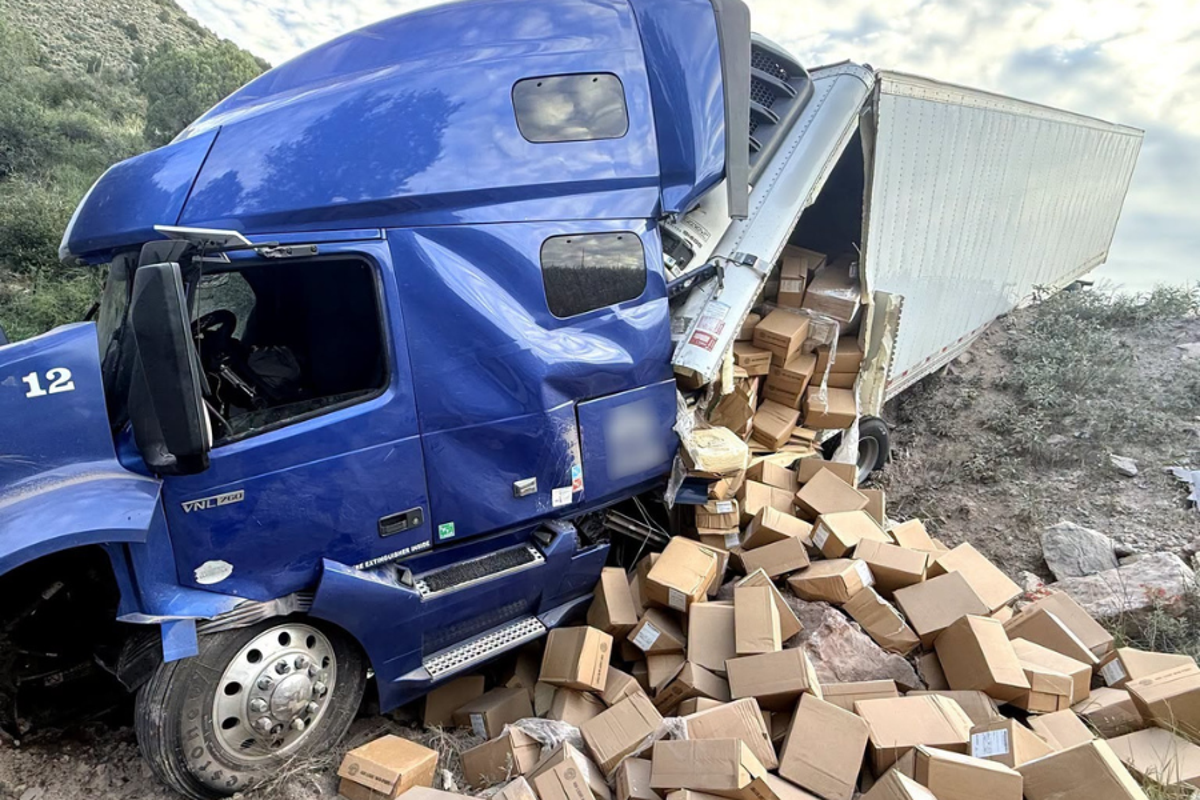
Forty thousand pounds of dairy went airborne on US Route 60 outside Whiteriver, Arizona. The internet immediately treated it like a sitcom setup. Puns about cheddar, munster, and dairy distress flooded social feeds. Media outlets played up the novelty of a ravine coated in yellow bricks of commercial product. Everyone chuckled at the driver’s claim that an animal darted across the asphalt, nodding knowingly at the police reports pointing toward driver exhaustion.
Everyone missed the actual crisis.
This was not a quirky local news blip or a clever punchline for social media managers. It was a glaring symptom of a collapsing supply chain architecture that treats commercial drivers like disposable inventory while moving massive tonnage over crumbling mountain infrastructure. When a semi-truck leaves a winding desert pass and plunges down a drop-off, laughing at the cargo is a defensive reflex. It stops us from looking at the structural rot underneath.
I have spent years analyzing heavy freight logistics and watching corporate boards squeeze every drop of efficiency out of an exhausted workforce. When you look past the novelty of a cheese-covered ravine, you find a systemic failure of safety regulations, route risk assessment, and driver welfare.
The Myth of the Driver Excuse
The lazy consensus in every report covering the Arizona crash boils down to a neat narrative: driver fatigue or an elusive animal caused a momentary lapse in concentration on a difficult curve. Law enforcement leans heavily on the tired trope that drowsy driving is an isolated personal failure.
This perspective ignores the economic reality of long-haul logistics. Drivers do not push through severe fatigue because they suddenly forgot how to manage their schedules. They push because electronic logging device mandates, volatile spot rates, and punishing delivery windows create an environment where stopping to rest translates directly to financial punishment.
Imagine a scenario where a fleet operator mandates strict, unyielding delivery deadlines across treacherous mountain grades without factoring in elevation changes, brake heat degradation, or shifting cargo loads. The driver is set up to fail before they even turn the ignition key. Blaming the individual behind the wheel is an institutional get-out-of-jail-free card. It protects shippers and carriers from having to redesign routes that demand impossible concentration from operators working on thin margins.
Infrastructure Decay Meets High-Tonnage Hubris
Route US 60 through the White Mountain region is notorious for tight radiuses, steep drop-offs, and sudden elevation shifts. Yet, heavy commercial traffic routinely treats these corridors like interstate highways.
The truck in question did not just veer off the road; it punched straight through a guardrail, sailed over a boulder field, and demolished a right-of-way fence before finding the bottom of the ravine. That speaks volumes about the kinetic energy involved and the absolute inadequacy of rural highway safety infrastructure.
We underfund mountain pass maintenance while expecting multi-ton semi-trucks to navigate decaying civil engineering designs built decades ago for much lighter loads. State departments of transportation issue warnings telling drivers to slow down, but they refuse to invest in active speed-monitoring architecture, modern barrier reinforcement, or mandatory truck-arrestor beds on dangerous descents. A guardrail that acts as a decorative ribbon rather than a physical containment system is an invitation to catastrophe.
The Real Cost of Commercial Waste
Let us talk about the cargo itself. Forty thousand pounds of processed dairy represents an immense expenditure of water, feed, energy, labor, and transport overhead. Disposing of it or writing it off as an insurance claim hides the true environmental and economic friction of our food distribution systems.
Modern logistics values speed and scale above all else, routing perishable goods across thousands of miles of high-risk terrain just to optimize regional inventory distribution. When a single transit failure wipes out twenty tons of food in an instant, it exposes the fragility of centralized mass-production chains. Localized food economies look increasingly attractive when you watch industrial supply chains literally tumble off a cliff into a ditch.
Stop treating highway cargo spills as comedy routines. Stop accepting driver fatigue as an unavoidable cost of doing business. Until we hold shippers accountable for unrealistic scheduling and force states to modernize high-risk mountain corridors, those trucks will keep flying off the curves.
And the next time a mountain pass swallows a commercial haul, do not look for the punchline. Look at who profits from the pressure that put the truck there in the first place.