Silence.
That is the first thing you notice when a rumor of this magnitude hits a trading floor, not the shouting, not the frantic clacking of mechanical keyboards, just a sudden, suffocating vacuum where the air used to be, as thousands of people simultaneously stare at a glowing headline and try to calculate the exact dollar value of human frailty.
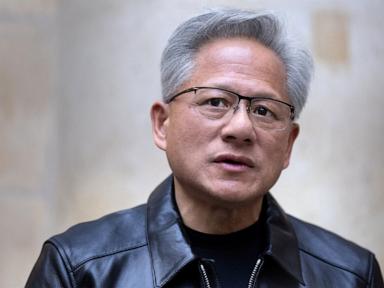
Imagine, for a moment, a hypothetical institutional portfolio manager named Elena sitting in a Midtown Manhattan glass tower at 6:42 AM, watching a single headline flicker across her Bloomberg terminal: Nvidia board reportedly preparing to oust CEO Jensen Huang after alleged affairs. Her coffee goes cold in her hand. She does not care about gossip. She cares about the trillions of dollars in market capitalization resting squarely on the shoulders of one man in a black leather jacket, and she immediately recognizes the terrifying fragility of modern corporate governance.
Consider what happens next. When a story like this surfaces—especially one wrapped in the ambiguous, high-stakes phrasing of "reportedly preparing" and lacking a verified primary source—the market does not wait for a subpoena or a press release. It reacts to the sheer geometry of the risk. We have seen this movie before, and the ending is almost never clean.
The Architecture of a Rumor
To understand why a single unverified report about an executive's personal life can trigger existential dread across Silicon Valley and Wall Street alike, we have to look at how information mutates in the digital age.
Let us be completely transparent here. When a prompt or a viral post cites an undefined URL and claims a corporate board is sharpening its knives over alleged affairs, the first instinct of any seasoned analyst is skepticism. In an era of algorithmic outrage and synthetic media, rumors are cheap, fast, and devastatingly effective at moving stock prices before the truth even puts its boots on. There is no verified public record confirming that Nvidia’s board of directors is moving to remove Jensen Huang over personal misconduct. Yet, the fact that the rumor itself is instantly believable—and instantly terrifying—reveals an uncomfortable truth about the company that built the modern artificial intelligence boom.
The vulnerability is structural.
For over three decades, Jensen Huang has been more than a chief executive; he has been the central nervous system of Nvidia. Founded in 1993 at a Denny's roadside diner in San Jose, the company survived near-bankruptcy in the nineties, pivoted from video game graphics to parallel computing with CUDA in 2006, and positioned itself as the sole arms dealer for the generative AI revolution. Unlike Apple, which spent years carefully grooming Tim Cook to succeed Steve Jobs, or Microsoft, which transitioned smoothly from Bill Gates to Steve Ballmer and then Satya Nadella, Nvidia is famously flat. Huang reportedly has dozens of direct reports. There is no designated crown prince waiting in the wings.
Think of Nvidia not as a traditional pyramid-shaped corporation, but as a suspension bridge where every single cable runs through one central tower. Remove the tower, and the math stops working.
When the Boardroom Meets the Bedroom
Why would a board of directors ever consider removing a founder who has delivered historic, unprecedented shareholder returns? History gives us a clear, brutal answer.
Boards do not exist to protect founders; they exist to protect the institution from existential liability. Over the last decade, corporate America has rewritten the rules governing executive behavior. What was once swept under the rug in the smoky boardrooms of the twentieth century is now treated as an acute fiduciary crisis.
Consider the precedent. In 2019, McDonald's fired CEO Steve Easterbrook over a consensual relationship with an employee, only to later sue him when investigators uncovered evidence of multiple undisclosed relationships and attempts to conceal them. In 2018, Intel—Nvidia's oldest and fiercest rival—abruptly ousted CEO Brian Krzanich after learning of a past consensual relationship with an Intel employee that violated the company's non-fraternization policy. Krzanich had overseen strong financial performance, yet the Intel board showed zero hesitation. The policy was absolute. The risk of favoritism, power imbalance, and potential litigation outweighed the inconvenience of a sudden leadership vacuum.
Even Bill Gates, a man who seemed utterly untouchable in the tech sector, stepped down from Microsoft's board in 2020 amid an investigation into a prior romantic relationship with a Microsoft employee that board members deemed inappropriate.
The pattern is unmistakable. In modern corporate governance, personal conduct is never merely personal when the person in question holds absolute authority over sixty thousand employees and trillions of dollars in retirement funds. A romantic entanglement within the chain of command introduces rot into the foundation. It compromises promotion decisions, breeds quiet resentment among senior vice presidents, and hands activist investors or plaintiff attorneys a loaded weapon.
The Anatomy of Key-Person Risk
I remember sitting in a cramped conference room during a mid-cap tech crisis a few years ago, watching a board of directors tear itself apart over a similar dilemma. The founder was brilliant, abrasive, and irreplaceable. The allegations were messy, half-confirmed, and toxic. The general counsel sat at the end of the table with dark circles under his eyes, explaining to a room full of venture capitalists that keeping the founder meant risking a shareholder derivative lawsuit, while firing him meant watching the stock drop forty percent before lunch.
Nobody slept that week. You could smell the stale espresso and the cold sweat of people realizing that their fiduciary duty required them to detonate their own balance sheet.
In finance, analysts call this key-person risk. Normally, it is a dry footnote buried on page forty-two of a Form 10-K filing—standard boilerplate warning investors that the loss of certain senior executives could adversely affect operations. For Nvidia, that footnote is the entire thesis.
Let us look at the actual mechanics of how Nvidia operates under Huang:
- The Flat Hierarchy: By eliminating traditional middle-management layers and maintaining roughly fifty direct reports, Huang ensures that information flows directly from engineering teams to the top without corporate filtering. It makes the company astonishingly agile, allowing it to pivot entire chip architectures in months rather than years. However, it also means that no single lieutenant possesses a complete, bird's-eye view of the entire enterprise.
- The Cultural Gravity: Engineers at Nvidia do not just work for a paycheck; they work within a specific, high-intensity culture forged entirely in Huang's image. From his famous whiteboard sessions to his insistence on zero-compromise execution, the culture is inseparable from the man.
- The Supply Chain Diplomacy: Building the world's most advanced AI accelerators requires delicate, high-stakes diplomacy with Taiwan Semiconductor Manufacturing Company (TSMC), SK Hynix, and sovereign governments from Washington to Riyadh. Huang’s personal relationships with leaders like TSMC founder Morris Chang and current chairman C.C. Wei are geopolitical assets that cannot be transferred via a LinkedIn announcement.
If an actual scandal ever forced Nvidia’s board to pull the emergency brake, the fallout would not be confined to Santa Clara, California. Hyperscalers like Microsoft, Meta, Google, and Amazon have committed hundreds of billions of dollars in capital expenditure based on Nvidia’s multi-year product roadmap—moving from Hopper to Blackwell to Rubin on an aggressive, annual cadence. Any hesitation in that cadence, any boardroom civil war that distracts engineering leadership for even two quarters, opens the door for custom silicon competitors and AMD to eat into a moat that currently looks impregnable.
Why False Alarms Still Leave Scars
We live in an information ecosystem where verification is an afterthought. When a rumor about a high-profile CEO circulates without a credible journalistic anchor, it functions like a stress test on the collective psyche of the market.
Why do people click on unverified stories about titans falling? Because deep down, we suspect that immense power rarely exists without immense hubris. We are conditioned by Greek tragedy and modern business journalism alike to look for the fatal flaw behind the leather jacket.
Yet, when we examine the actual governance structure of Nvidia, we find a board composed of seasoned Silicon Valley veterans—figures like Mark Stevens, Tench Coxe, and Harvey Jones—many of whom have sat beside Huang for decades. These are not reactive novices. A board with that level of institutional memory does not leak half-baked coups to obscure corners of the internet. When a board of that caliber moves against a founder, you do not hear whispers for weeks; you wake up on a Monday morning to a formal press release stating that the executive has stepped down to pursue other interests, effective immediately, accompanied by the name of an interim successor.
Still, the mere existence of the rumor highlights a blind spot that Nvidia will eventually have to confront, scandal or no scandal.
Huang is in his sixties. He is healthy, energetic, and seemingly tireless, routinely working grueling schedules across multiple time zones. But biology is undefeated. Whether through retirement, health, or an unforeseen crisis, the day will inevitably come when someone else has to walk onto that stage at GTC and explain the future of accelerated computing.
The Illusion of Permanence
Consider what happens when a company grows so large that its market value rivals the gross domestic product of G7 nations. At that scale, the distinction between a private individual and a public utility dissolves. Every decision, every email, every whispered rumor in a Palo Alto coffee shop carries systemic weight.
The true lesson of a phantom headline about Jensen Huang is not found in salacious speculation about his private life, for which there is zero credible evidence. The lesson lies in the mirror it holds up to our obsession with solitary genius. We love the myth of the lone visionary who bends an industry to his will, right up until the moment we realize how terrified we are of what happens if he stumbles.
A great company is built by a visionary, but a lasting institution is built to survive him.
Late at night, long after the markets close in New York and the cleaning crews move silently through the empty corridors of Santa Clara, the servers keep humming, training models on billions of parameters, indifferent to the fragile human beings who designed them—waiting to see who will still be holding the keys when the lights come back on.