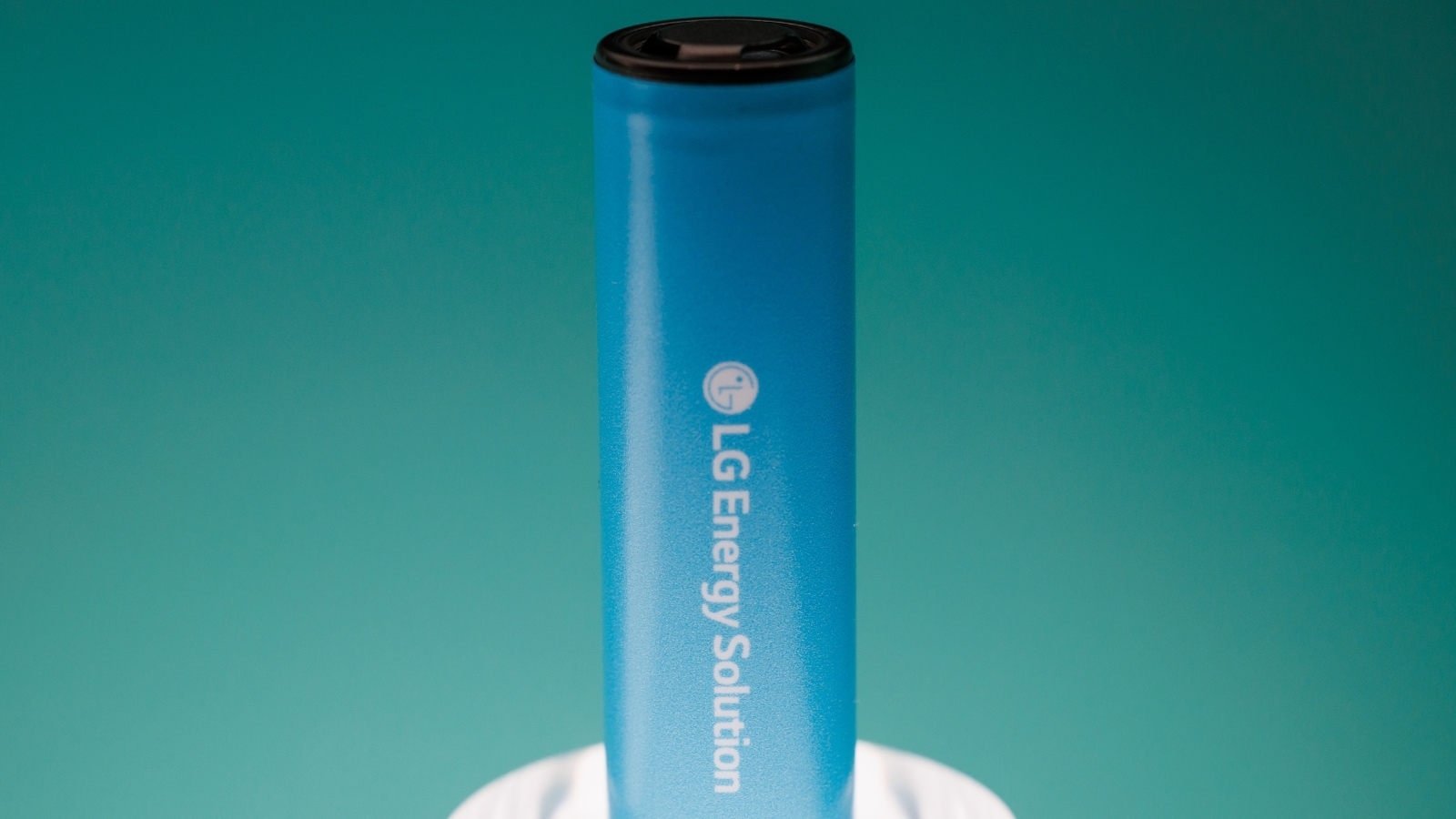
The headlines are running scared. Every analyst with a microphone is treating LG Energy Solution's pivot toward military drone batteries as a desperate emergency retreat from a dying electric vehicle market. They think the South Korean battery giant got bruised by slowing passenger car demand and ran into the arms of the Pentagon just to keep factory lines humming.
They have it completely backwards. Also making waves in this space: Stop Obsessing Over Publisher Creator Relationships.
I have watched corporate strategy boards panic-buy trendy sectors for a decade, and this move is not a panicked retreat. It is a calculated ambush. LG is abandoning low-margin, high-friction passenger EV volume because the math on consumer cells has turned toxic. The real money isn't in satisfying suburban commuters stuck in traffic. It is in feeding the insatiable, deep-pocketed appetite of tactical autonomous flight.
Strip away the corporate press releases about diversification. Look at the chemistry, the margin structures, and the geopolitical realities. LG is swapping out a bleeding consumer sector for a defense market that does not care about retail sticker shock. More information regarding the matter are explored by The Wall Street Journal.
The Consumer EV Trap Nobody Wants to Talk About
For five years, battery manufacturers bought into their own propaganda. They scaled gigafactories assuming consumer adoption curves would shoot straight up like a hockey stick, ignoring the messy friction of public charging infrastructure, raw material price volatility, and brutal margin-slapping price wars waged by automakers desperate to stop bleeding cash.
When you sell cells to a major car manufacturer, you are locked into multi-year supply agreements with fixed pricing mechanisms. If lithium carbonate spikes, you eat the cost or fight a war of attrition in contract renegotiations. If consumer demand dips because a tax credit changes or interest rates stay sticky, your massive production lines idle, and your overhead eats your lunch.
I have seen tier-one suppliers burn through billions trying to optimize cathode chemistries for a mass market obsessed with a fifty-thousand-dollar price tag. You cannot build a durable business model when your primary customer base demands luxury performance at discount-store pricing while expecting you to shoulder every ounce of commodity risk.
The military drone market operates under an entirely different set of physics.
Why Tactical Drones Outclass Passenger Cars Every Single Time
When a defense contractor orders high-density power cells for a medium-altitude long-endurance tactical UAV, they are not shopping around on a dealer lot. They are not asking for a discount because a competing cell is two cents cheaper per watt-hour. They want extreme safety profiles, zero-failure thermal management under heavy combat stress, and reliable high-discharge rates in hostile environments.
Defense budgets do not shrink during consumer recessions. They expand. And unlike consumer passenger vehicles, where a battery failure results in a warranty claim and a PR headache, a military drone failure results in a lost platform worth millions. Reliability trumps cost reduction every single time.
This is where LG's pouch and cylindrical cell architectures gain an unfair advantage.
Energy Density Versus Cycle Life
The lazy consensus in the battery world is that everyone wants the same thing: maximum range. That means shoving as much energy into a single pack as humanly possible, often at the expense of structural durability or rapid discharge tolerance.
Consumer EVs trade cycle life and thermal stability for headline-grabbing range numbers. A tactical drone needs a completely different optimization matrix. It requires high burst power for sudden evasive maneuvers, incredible low-temperature performance at high altitudes, and rigorous safety against catastrophic thermal runaway when hit by shrapnel or exposed to extreme heat.
LG already owns the manufacturing rigor required for high-nickel chemistry. Transitioning those lines from passenger cars to specialized defense applications does not require inventing physics. It requires tightening quality control filters and shifting the electrolyte formulation to handle extreme abuse profiles.
The Geopolitical Shield
You cannot talk about defense manufacturing without addressing the elephant in the room: supply chain nationalism.
Washington wants its critical defense hardware built by allies using verified, non-adversarial supply chains. By positioning themselves as a trusted, non-Chinese supplier of high-end energy storage for Western military applications, LG is building a moated fortress around their revenue.
China currently dominates the global supply chain for standard LFP and lower-end chemistry. Trying to out-volume them on mass-market EV cells is a fool's errand. They can subsidize production in ways that Western-aligned companies legally and financially cannot match.
So what do you do when a competitor dominates the low-end volume game? You abandon the battlefield and conquer the high ground.
Defense supply chains are aggressively vetting partners for security compliance, provenance, and sovereign manufacturing footprints. LG’s sprawling investments in North American and South Korean production facilities suddenly transform from risky over-expansion into strategic assets of immense value. They are localized, secure, and ready to meet stringent defense standards.
The Contrarian Cost of Doing Business
Let's address the downside of my thesis. This pivot is not without friction.
Moving away from mass-market automotive contracts means writing down capacity utilization in the short term. It means reallocating engineering talent away from cost-down initiatives toward ruggedization and custom pack design. Defense contracts are notoriously bureaucratic, slow to award, and bogged down by compliance overhead that would suffocate a nimble startup.
Furthermore, total volume in military drones will never match the raw tonnage of global passenger car production. You cannot replace the sheer mass of millions of electric sedans with tactical UAVs alone.
That is precisely the point.
LG is trading vanity volume for margin velocity. They are trading high-stress, low-margin revenue for low-volume, high-margin contracts that insulate them from consumer market whiplash.
Stop Measuring Success by Unit Sales
The next time an analyst tries to tell you that a battery manufacturer pivoting to defense is signaling weakness, ask them to look at a balance sheet instead of a showroom floor.
Volume without margin is just a very expensive way to go bankrupt. LG Energy Solution is shedding dead weight, dodging a commodity bloodbath in the consumer vehicle space, and locking down lucrative defense contracts where quality still matters more than a clearance-sale price tag.
While everyone else is crying over slowing car sales, they are quietly wiring the nervous system of the next generation of autonomous air power.
Adapt or get priced out. They chose to survive.