There is a specific kind of silence that falls over a press briefing room when a question is asked that everyone is thinking, but no one has the courage to say out loud. It is the heavy, suffocating silence of a room holding its collective breath, waiting to see if the glass will break.
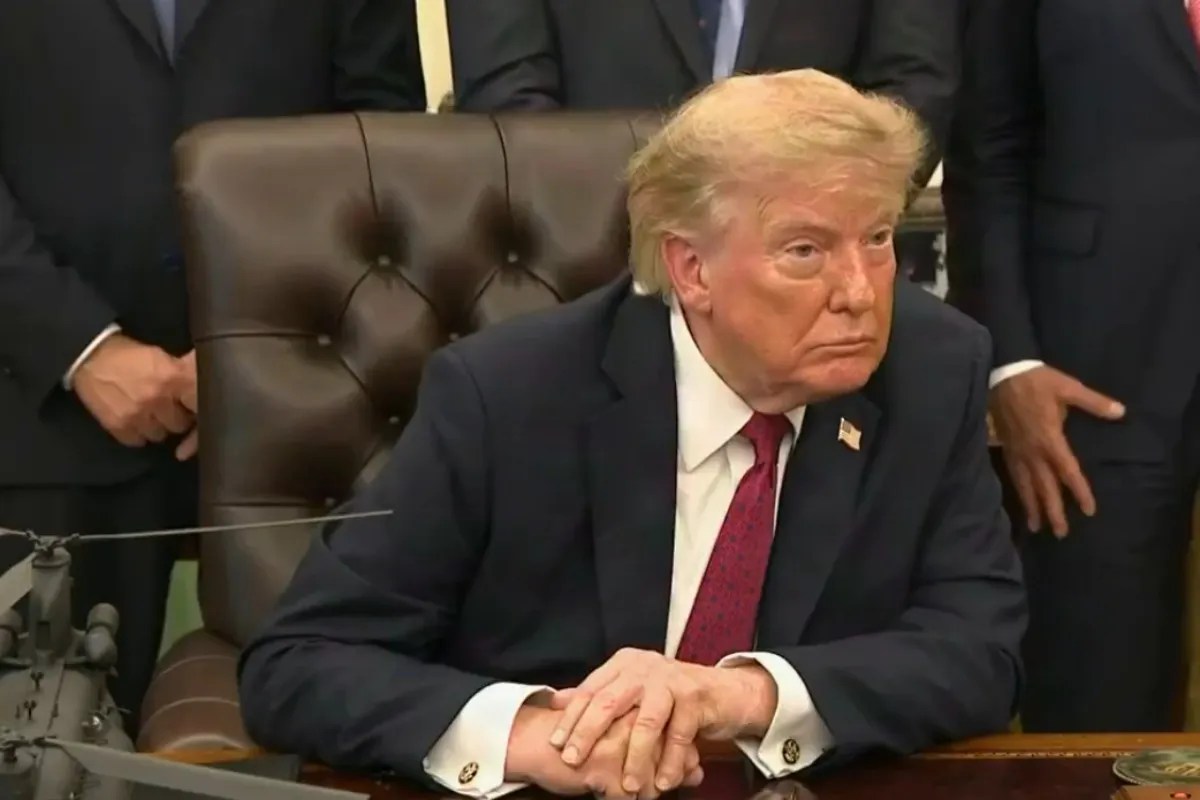
The air in the room was thick with the scent of coffee, damp coats, and quiet panic. Reporters leaned forward, their notebooks resting on their knees like shields, pens poised. Across the room stood Donald Trump, the man whose vocabulary often swings like a wrecking ball through diplomatic porcelain. For a closer look into this area, we recommend: this related article.
A journalist stepped up to the microphone. The question was blunt, stripped of the usual diplomatic cushioning that lets governments pretend they are dancing rather than wrestling in the mud. The reporter wanted to know about the ultimate threshold. About the iron fist wrapped in radioactive steel. Would the United States ever consider using nuclear weapons against Iran?
In that microsecond before the answer came, the ghosts of the twentieth century seemed to crowd the back of the room. Hiroshima. Nagasaki. The Cold War anxiety of ducking under school desks. The terrifying calculus of mutually assured destruction. For decades, the nuclear taboo has been the thin red line holding the sky from falling. To get more background on this issue, detailed reporting can be read at NBC News.
Trump did not hesitate. He did not parse words or consult a briefing book for a sanitized talking point.
He called it a foolish question.
Not just a bad question, or an inappropriate one, but fundamentally absurd. The kind of question asked by someone who fundamentally misunderstands the weight of the buttons they are asking about. He made it clear, with characteristic bluntness, that such a catastrophic escalation was entirely off the table. The United States, for all its aggressive posturing, economic throttling, and midnight drone strikes, was not standing on the precipice of nuclear annihilation in the Middle East.
Relief rippled through the rows of journalists, though it was masked by the click-clack of keyboards capturing the quote for an anxious world.
The Calculus of Restraint
To understand why that moment mattered, you have to look past the bluster and examine the cold, mathematical reality of modern statecraft. War has evolved. It is no longer just about mushroom clouds and total vaporization; it is about invisible codes, economic sanctions that starve a currency before a bullet is fired, and precision strikes that can take out a general while leaving the coffee cup on his desk intact.
Nuclear weapons are the ultimate bad investment. They are expensive to maintain, impossible to use without triggering global condemnation, and worst of all from a strategic standpoint, they lack utility. You cannot occupy a pile of glowing ash. You cannot extract oil, negotiate trade deals, or build alliances with a wasteland.
When a leader, even one as unpredictable as Trump, explicitly dismisses the nuclear option against a nation like Iran, it reveals a hidden truth about modern power: the nuclear arsenal exists primarily to ensure that it is never deployed. It is a terrifying ornament. A monster kept in a cage so deep underground that everyone prays the key gets lost.
Yet, the media cycle feeds on the fear of that door opening. Every escalation, every harsh word traded between Washington and Tehran, is treated by the 24-hour news machine as a step closer to the end of days. We have been trained to expect the worst, to anticipate the flash of light on the horizon, to treat global politics like an apocalyptic thriller where the heroes always run out of time.
Living in the Shadow of the Button
Most of us do not live in war rooms. We live in kitchens with leaking faucets, in traffic jams on rainy Tuesdays, in quiet bedrooms where we scroll through headlines on glowing rectangles before turning off the lights.
When we read about nuclear threats, something primal stirs in the back of our minds. It is an inherited trauma, passed down from grandparents who remember air raid drills and parents who watched the Berlin Wall crumble. We feel small against the backdrop of superpowers playing high-stakes poker with the fate of humanity.
That is why moments like the one in that press conference are so disorienting. They strip away the theatrical terror and expose the mundane pragmatism beneath. For all the shouting matches and diplomatic brinkmanship, the adults in the room still know where the absolute boundary lies. They know that crossing it means destroying the very game they are trying to win.
Consider what happens next in the grand theater of international relations. The sanctions will remain. The harsh rhetoric will continue to bounce across social media feeds and television screens. Hackers in windowless rooms will trade digital blows, and diplomats in tailored suits will glare at each other across mahogany tables in Vienna or Geneva. The tension will persist because tension is the natural state of a world divided by borders and ambitions.
But the nuclear threshold remains reinforced with steel.
The Weight of Words
Words matter, especially when spoken by the leader of the free world. When Trump dismissed the idea of using atomic weapons against Iran as foolish, he was not just answering a journalist; he was recalibrating the baseline of global fear. He was stepping back from the ledge, reminding anyone paying attention that there are lines even the most aggressive superpowers refuse to cross.
We often look for heroes and villains in the great geopolitical drama, but reality is messier, quieter, and far more ordinary. It is made of compromises born of self-preservation, of red lines drawn not by morality, but by the terrifying realization of mutual ruin.
The press conference ended. The microphones were packed away. The journalists rushed to file their stories, eager to feed the insatiable beast of the news cycle with the latest soundbite. Outside, the city traffic hummed along, indifferent to the invisible nuclear tripwires holding the world together.
We walked away from the screen, leaving the high drama behind to deal with our own small, earthly concerns. But somewhere in the back of our minds, the tension eased just a fraction. The sky was still up there, holding firm. The worst-case scenario had been pushed back into the dark, where it belongs.

