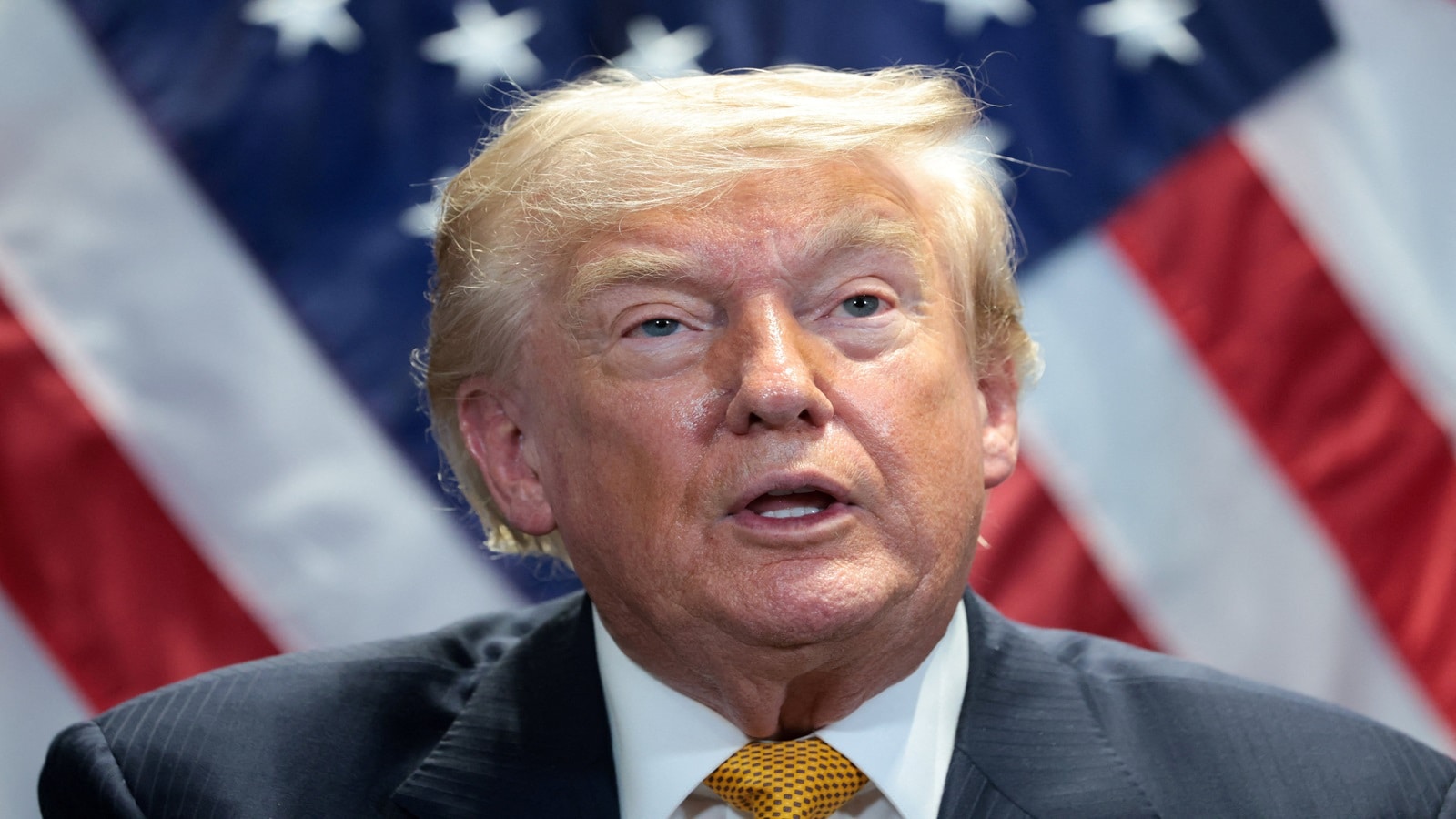
Every headline on foreign desks right now is singing the same tired tune. Donald Trump steps up to a microphone, ties a civilian nuclear cooperation agreement for Riyadh directly to normalization with Israel, and Washington gasps in polite, uniform applause. The lazy consensus among mainstream analysts treats this as a masterstroke of transactional diplomacy. Tie the crown jewels of energy technology to a historic regional handshake, and watch the Middle East fall into line.
It sounds clean. It plays well on cable news. And it is entirely backwards.
I spent years tracking energy infrastructure financing across the Gulf, watching billions evaporate because bureaucrats treat geopolitical leverage like a game of Monopoly. Linking a nuclear energy framework to the Abraham Accords does not secure peace. It creates a structural hazard. It assumes Riyadh wants an American reactor so badly that they will swallow domestic political blowback on the Palestinian issue. That calculation fundamentally misunderstands modern Saudi strategy. Riyadh does not need Washington's permission to build a nuclear sector; they need a partner willing to bypass the non-proliferation dogma that drove them toward Beijing and Moscow in the first place.
The Flawed Premise of Transactional Coercion
Look at the mechanics of the demand. The conventional wisdom states that the Kingdom wants a U.S.-backed civil nuclear program complete with domestic uranium enrichment capabilities, and Washington holds all the cards. Therefore, withhold the reactor until Mohammed bin Salman signs on the dotted line with Tel Aviv.
This argument ignores economic reality. When nations want critical infrastructure, they shop around. If the White House insists on binding civilian energy to a politically toxic normalization deal while Gaza remains an open wound, the Saudis will simply turn to partners with fewer moral qualms and zero interest in regional integration architecture. South Korea, France, and Russia have all eyed these contracts. China has already built uranium yellowcake facilities in the Kingdom.
By framing nuclear cooperation as a bribe for the Abraham Accords, Washington turns a commercial and strategic imperative into an all-or-nothing political gamble. If the Saudis say no—and domestic optics make a definitive "yes" nearly impossible right now—the U.S. loses its only remaining seat at the table governing Gulf nuclear safety.
Dismantling the Normalization Myth
Let us look closely at the Abraham Accords themselves. The original agreements signed in 2020 worked because they bypassed the central conflict of the Middle East. UAE and Bahrain made deals with Israel because geography and shared security concerns vis-à-vis Iran made economic sense, insulated from the immediate optics of Palestinian statehood.
Saudi Arabia is a different beast entirely. As the custodian of the Two Holy Mosques, the House of Saud cannot simply wave away the Palestinian cause without severe domestic legitimacy costs. King Salman has historically drawn a hard line. While Crown Prince Mohammed bin Salman is pragmatic and transactional, there is a hard ceiling on how fast public opinion can be bypassed.
When you tell Riyadh that they must formalize relations with Israel to get civilian energy tech, you force a false choice. You back a proud regional power into a corner where accepting the deal looks like capitulation to American and Israeli terms. Sovereignty-conscious states do not respond well to coercion disguised as deal-making.
The Real Danger of U.S. Withdrawal
The alternative threat—that Trump will walk away from the deal entirely—sounds tough, but it fails basic risk assessment. If the United States refuses a civilian nuclear agreement, the Saudi program does not vanish. It goes dark.
An unmonitored, non-safeguarded nuclear sector in the heart of the world's most volatile energy producer is a nightmare scenario for non-proliferation advocates. The gold standard for nuclear cooperation, known as a 123 Agreement, is designed precisely to tie recipient nations to American oversight, safety protocols, and restrictions against domestic enrichment. By withholding this agreement over unrelated normalization politics, Washington shoots itself in the foot. You abandon the very tools meant to keep the region stable in order to chase a diplomatic headline that belongs to yesterday's news cycle.
I have seen companies blow millions on compliance frameworks that ignored the geopolitical baseline, and sovereign states behave the exact same way on a macro scale. You cannot bully a trillion-dollar economy into a diplomatic package it deems domestically toxic.
What Actually Needs to Happen
If Washington wants to secure both regional stability and non-proliferation guardrails, the sequence must flip.
First, decouple civil nuclear assistance from normalization. Treat energy infrastructure as a baseline security requirement. A monitored Saudi nuclear program under U.S. supervision is a strategic win for American non-proliferation goals, regardless of who Riyadh maintains embassies with.
Second, let normalization happen organically through economic integration, tech partnerships, and back-channel intelligence sharing. Force multipliers work best when they are quiet. The moment you turn diplomacy into a public reality TV negotiation, you compel leaders to dig in their heels to save face.
The next time you read a pundit cheering for this hardline linkage, remember what is actually at stake. This is not about locking down a historic peace accord. It is about a fading superpower trying to use outdated leverage to force a proud nation's hand, risking a totally unsupervised nuclear future in the process.
Stop trying to force the region to dance to a Washington script. The music stopped months ago.