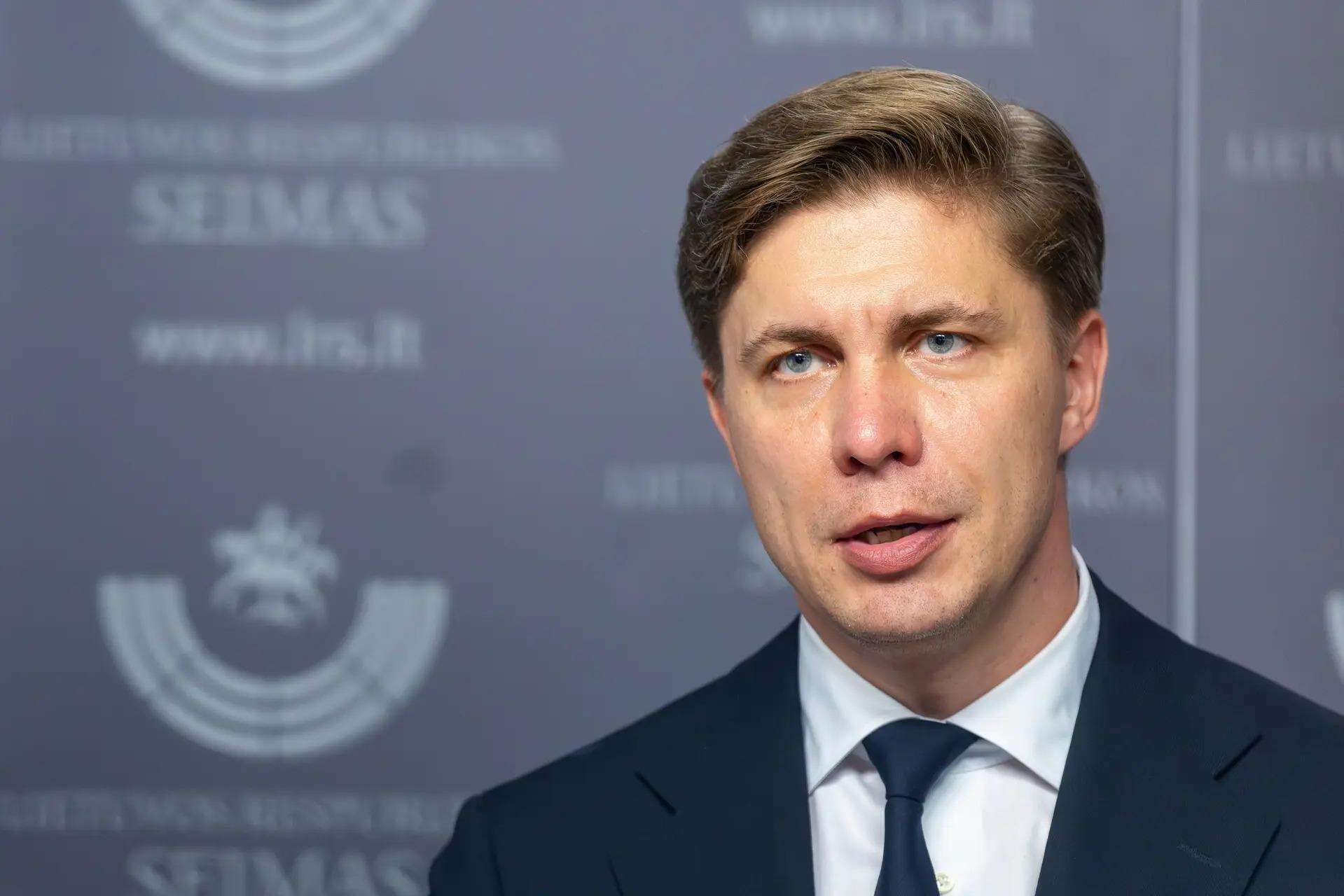
The era of Lithuania acting as Europe's ultimate geopolitical daredevil might be drawing to a close.
On July 14, 2026, the Lithuanian Seimas approved the government manifesto of newly minted Prime Minister Mindaugas Sinkevicius. This officially cleared his path to take the country’s top executive office. While a change of guard in Vilnius usually interests regional analysts, Sinkevicius used his very first day on the job to drop a diplomatic bombshell. If you found value in this article, you might want to look at: this related article.
He publicly admitted that Lithuania's famous 2021 decision to let Taiwan open a de-facto embassy under its own name was "maybe too brave."
This is a massive vibe shift for a Baltic nation that has spent the last five years punching far above its weight on the global stage. Under the previous leadership, Lithuania became a darling of Washington and Taipei by defying Beijing. Now, the economic and political bills are coming due. The new administration wants to dial back the drama, fix broken trade ties, and return to the European norm. For another look on this development, check out the recent update from The New York Times.
Walking Back the Taiwan Gamble
Back in 2021, Lithuania did something that larger, wealthier European nations wouldn't dare. It allowed Taiwan to set up a representative office in Vilnius using the name "Taiwanese" rather than the standard, Beijing-approved "Taipei." It sounds like a minor semantic detail, but to China, it was a direct challenge to its sovereignty claims over the island.
China retaliated instantly and brutally. It downgraded diplomatic ties, blocked Lithuanian imports like dairy and beef, and pressured multinational companies to drop Lithuanian suppliers from their supply chains.
Sinkevicius didn't mince words when addressing parliament before his confirmation vote. He noted that the country had a long-term, stable relationship with China until these "maybe too brave" decisions took them completely out of step with the rest of Europe.
But don't expect Vilnius to completely fold. The new prime minister is walking a fine line. He believes Lithuania can normalize relations and trade with China without actually closing or renaming the Taiwanese office.
The foreign ministry reportedly has several options to untangle this mess, though they're keeping those cards close to their chest for now. Beijing has previously stated that the door for communication is open, but only if Lithuania "rectifies its error." Whether Sinkevicius can find a middle ground that satisfies Chinese honor without looking like a total capitulation remains to be seen.
The Internal Chaos Behind the Changing Guard
To understand how the 42-year-old Sinkevicius ended up in the prime minister's office, you have to look at the absolute circus of Lithuanian domestic politics over the last two years.
This isn't a simple, smooth transition of power. Sinkevicius's Social Democratic Party has been dealing with an incredibly shaky coalition. His predecessor, Inga Ruginiene, resigned after a major political shakeup. That shakeup involved kicking the far-right, controversial "Dawn of Nemunas" party completely out of the ruling coalition.
The new governing alliance is a fragile patchwork of:
- The Social Democratic Party
- The Democratic Union "In the Name of Lithuania"
- The Union of Peasants, Greens, and Christian Families
Together, they hold a razor-thin majority of 75 seats in the 141-seat Seimas.
Opposition politicians are already calling this a deep governance crisis. They point out that the country has shuffled its coalition and effectively seen multiple changes in government leadership in less than two years. Even some coalition partners admit that the public is exhausted by the constant internal squabbling and public drama.
Sinkevicius is being sold by his party as the ultimate pragmatist—a mature manager who can stop the bleeding, restore public trust, and actually get things done. He is a seasoned political figure who previously served as the mayor of Jonava and as the country's economy minister. He has plenty of hands-on administrative experience, but holding a fractious, three-party coalition together will test every bit of his political skill.
Defense and Ukraine Remain Untouchable
If Beijing or Moscow thinks this change in tone means Lithuania is softening its stance on regional security, they are sorely mistaken.
While Sinkevicius wants to smooth things over on the economic front with China, the new government's manifesto makes it clear that defense and national security are absolutely non-negotiable. Living next door to Russia and Belarus means survival is always the top priority.
The approved government manifesto explicitly commits Lithuania to:
- Keeping national defense spending above a massive 5% of GDP
- Securing and maintaining a permanent U.S. troop presence on Lithuanian soil
- Providing unwavering military, financial, and political support to Ukraine
Spending 5% of GDP on defense is an astronomical figure for a European nation—well above the standard 2% NATO target that many Western European countries still struggle to meet. It shows that while Lithuania's new leadership wants to be pragmatic about trade, they are incredibly clear-eyed about the physical threat on their eastern border.
What Happens Next
Sinkevicius now has a strict 15-day window to present his finalized cabinet and detailed government program to the parliament for a final vote.
If you're watching European geopolitics, the key indicator to track over the coming weeks is the specific language the new Lithuanian Foreign Ministry uses regarding Beijing. Watch for whether they offer a quiet diplomatic olive branch to restore ambassador-level relations without explicitly renaming Taiwan's office.
If Sinkevicius pulls off this diplomatic tightrope walk, he will prove that a small nation can protect its security alliances while correcting a costly economic misstep. If he fails, he risks alienating Western allies who praised Lithuania’s bravery, all while getting nothing but a cold shoulder from Beijing.