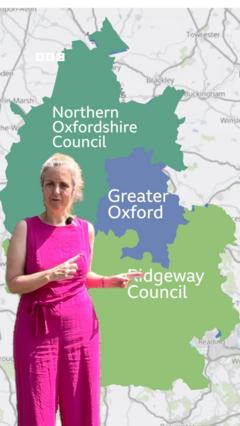
Splitting large counties into a trio of shiny new unitary authorities isn't modern governance. It is administrative theater.
When local governments announce plans to dismantle two-tier systems—carving up county and district councils to erect unitary bodies—the pitch is always identical. Promisers promise lower overhead, simplified services, and clearer accountability. Bureaucrats swap one letterhead for another, print new badges, and declare victory before the ink on the restructuring budget dries.
I have watched public sector transformations burn millions of tax dollars over two decades. The playbook never changes, and the results rarely improve. Dividing a county into three smaller unitary authorities creates a temporary illusion of proximity to the public while multiplying the exact operational friction it claims to solve.
The Myth of Scale and the Reality of Friction
The central premise of the unitary push rests on a flawed assumption: that smaller geographic units automatically yield better service delivery.
It sounds logical on paper. Smaller councils mean localized decisions. A council serving 200,000 residents ought to understand its streets better than an umbrella authority serving 700,000.
Except modern public services do not scale down cleanly.
Consider social care, highways, and waste management. A single county authority leverages its aggregate purchasing power when contracting out massive infrastructure or care facilities. The moment you carve that county into three distinct unitary units, you break that scale. Instead of one Chief Executive and one procurement directorate, you now pay for three. Instead of one massive, high-leverage contract for road repairs, you have three smaller entities bidding against each other for the exact same regional contractors.
You haven't eliminated bureaucracy. You've triplicated it.
The Redistribution Fallacy
When you carve up an established county, you rarely split the tax base evenly.
Imagine a scenario where a county has an affluent southern corridor, a dense urban center in the middle, and a sparsely populated, economically depressed northern region. Under a unified county model, tax revenues automatically cross-subsidize services across municipal boundaries.
The moment you draw lines to create three self-contained unitary authorities, that natural rebalancing breaks.
- Unitary Council A (South): Inherits high property values, low social care costs, and a thriving commercial tax base.
- Unitary Council B (Central): Inherits heavy urban infrastructure burdens, concentrated poverty, and high policing demands.
- Unitary Council C (North): Inherits vast geographic territory, low population density, and spiraling costs for rural transport and adult care.
Within five years, Council B and C face budget crises, forced to raise local rates while slashing core services. Meanwhile, Council A sits on reserves. Reorganization doesn't fix regional inequality; it hardcodes it into geography.
Why Consolidation Costs Always Blow Out
Advocates love to tout transitional savings. They present optimistic financial models showing how merging back-office functions will pay back the initial setup costs within three to five years.
They are selling a fantasy.
IT system migration alone routinely consumes double its allocated budget. Merging disparate payrolls, housing databases, planning portals, and GIS mapping software across fragmented districts into three new standalone systems is an IT nightmare.
The consultancy fees required to manage the shift swallow whatever administrative savings were promised on day one. You end up paying tens of millions upfront to achieve, at best, a break-even scenario ten years down the road—by which point the political landscape shifts and someone proposes reorganizing them back together.
What Actually Needs to Change
If the goal is genuine efficiency and better public outcomes, breaking counties into miniature unitary councils is the wrong fix for the wrong problem.
- Stop reorganizing structures; fix service integration. Citizens do not care which level of government empties their bin or fixes their pothole. They care that the job gets done efficiently. Digital integration across existing tiers costs a fraction of a full structural split and delivers actual user benefits immediately.
- Standardize data systems centrally. The real drain on municipal productivity isn't the number of councilors sitting in a chamber; it's broken, legacy software that doesn't talk to neighboring systems.
- Protect strategic purchasing scale. Shared services frameworks—where independent councils combine buying power without creating new administrative layers—achieve real cost reductions without the disruption of drawing new political borders.
Splitting a county into three new authorities is a high-priced distraction from the real work of public sector efficiency. Stop redistributing the deck chairs. Fix the underlying machinery.