The dashboard clock glows green at three in the morning, casting a pale, aquatic light across the knuckles of two men who share a last name and almost nothing else.
Picture a stretch of Interstate 95 somewhere between Washington, D.C., and the Deep South. The asphalt hums a low, monotonous note beneath worn tires. Inside the cabin of a mid-sized sedan, the air smells faintly of stale coffee, peppermint, and decades of unspoken resentment. The older brother grips the steering wheel at ten and two, his jaw locked so tight a muscle twitches beneath his ear. The younger brother leans against the passenger window, watching the pine trees blur into dark, jagged silhouettes against a bruised sky. Neither has said a word since Virginia. Both are rehearsing the speech they will give when they finally pull into the driveway of a man who taught them how to throw a spiral, how to tie a Windsor knot, and how to disappear without leaving a forwarding address.
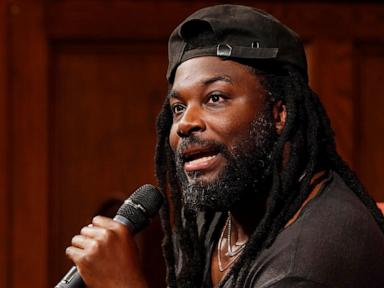
This scenario is a hypothetical composite, a sketch drawn from the emotional architecture of a thousand American road trips. Yet it captures the exact, suffocating atmosphere that Jason Reynolds is stepping into for the first time in his storied career.
For more than a decade, Reynolds has been the patron saint of the reluctant young reader. If you have walked into a middle school library, a juvenile detention center, or a high school English classroom anywhere in the United States over the past ten years, you have seen his name stamped across spines that have been cracked, dog-eared, and passed from backpack to backpack like contraband. With Long Way Down, Ghost, All American Boys, and Stamped, he built a literary empire out of empathy for teenagers navigating grief, systemic pressure, and the terrifying precipice of adulthood. He served as the Library of Congress National Ambassador for Young People's Literature, won Newbery Honors, Printz Honors, and a MacArthur "Genius" Grant, and sold millions of copies by refusing to talk down to kids.
Now, he is packing his bags and getting into the car with the grown-ups.
Reynolds has officially announced his debut adult novel, Father, Father, a road story centered on two estranged brothers traveling south to confront the man who raised them—and left them. Published by Scribner, an imprint of Simon & Schuster, the book marks a seismic shift for an author whose very brand has been synonymous with youth advocacy. The industry announcement read like a standard publishing press release: release windows, imprint details, a brief logline about two brothers on a cross-country journey grappling with masculinity, memory, and paternity.
Dry. Clinical. Safe.
If you read only the press release, you miss the tremor running beneath the surface of this announcement. You miss what it means when the writer who spent fifteen years translating the inner lives of Black boys decides it is time to look at what happens when those boys grow up, accumulate mortgages, carry silent heartbreaks, and realize they are turning into the very men they swore they would never become.
The Weight of the Rearview Mirror
To understand why Father, Father matters, you have to understand the specific, quiet ache of male estrangement.
I remember the first time I sat in a parked car outside a house I hadn't visited in seven years. My palms were sweating so badly I had to wipe them on my jeans before touching the door handle. My brother sat beside me, scrolling endlessly through his phone just to avoid looking at the front porch. We were grown men with careers, bills, and opinions about politics, yet the moment we turned onto that familiar street, we shrunk back into terrified ten-year-olds waiting for the front door to swing open. We didn't have a vocabulary for what we were feeling. Men rarely do. We are taught to fix engines, balance ledgers, and absorb hits, but nobody hands us a manual on how to sit across from a father and ask, Why wasn't I enough for you to stay?
That silence is the invisible stake at the center of Reynolds's transition to adult fiction.
In young adult literature, the clock is always ticking toward becoming. A fourteen-year-old protagonist is still wet clay; the tragedy or triumph lies in who they might turn out to be. When Will Holloman steps into that elevator in Long Way Down with a gun tucked into his waistband, the narrative tension hinges on sixty seconds of raw, unprocessed adolescent grief. There is still time to interrupt the cycle.
Adult fiction operates under a far heavier, more unforgiving gravity. In an adult novel, the clay has already hardened in the kiln. The brothers in Father, Father are no longer wondering what kind of men they will be; they are already living inside the consequences of their choices. The damage isn't theoretical anymore. It shows up in how they love their partners, how they flinch at raised voices, how they measure their own worth against a yardstick left behind by an absent parent.
Consider what happens when a writer of Reynolds's caliber removes the guardrails of the young adult category. In YA, there is an implicit, often unspoken obligation to leave a crack in the door for hope—a lifeline thrown to a young reader who might be drowning in similar circumstances. Adult literary fiction makes no such promise. It allows the shadows to stretch all the way across the room. It lets characters be petty, cowardly, contradictory, and stubbornly resistant to their own healing.
Why the Road Novel Was the Only Vehicle
There is a reason Reynolds chose a road trip for this debut rather than a courtroom drama or a sprawling multigenerational saga.
Think of a car moving at seventy miles per hour as a pressure cooker on wheels. In everyday life, adult brothers are masters of avoidance. They text on birthdays. They send thumbs-up emojis in group chats. They hide behind busy schedules, demanding bosses, and kids' soccer games. Distance is an anesthetic; as long as you stay three states apart, the wound never really throbs.
Put those same two men in a front seat together for twelve hours, and the anesthetic wears off by mile fifty.
There is nowhere to walk away to when you are doing seventy-five on the interstate. You cannot slam a bedroom door. You cannot pretend you have an urgent phone call to take. Every mile marker strips away another layer of polite adult armor until all that remains is shared history—and the agonizing realization that two people can grow up under the exact same roof and remember two completely different childhoods.
One brother remembers the father who taught him how to fish at dawn, his laugh booming across the water like thunder. The other remembers the slammed doors, the empty chair at graduation, the mother crying quietly over unpaid utility bills at the kitchen table. Neither is lying. Both are holding half of a torn photograph, convinced they possess the whole picture.
Historically, the American road novel—from Jack Kerouac's On the Road to Cormac McCarthy's The Road and Jesmyn Ward's Sing, Unburied, Sing—has been a way of mapping the national psyche onto physical geography. When Kerouac hit the highway, he was chasing freedom, escaping the suffocating conformity of 1950s suburbia. When Reynolds sends his brothers down the highway in Father, Father, they aren't chasing freedom. They are driving straight into the storm they spent their whole lives outrunning.
The Myth of "Graduating" from Youth Fiction
Whenever a beloved children's or young adult author announces an adult book, the publishing world tends to treat it like a promotion—as if writing for teenagers were a minor league warm-up before finally getting called up to the majors.
That assumption is completely backward.
Writing for young people is arguably the hardest discipline in literature. Teenagers have zero patience for pretentious prose, meandering plots, or unearned sentimentality. If you bore a fifteen-year-old by page twelve, the book hits the floor. Reynolds conquered that arena precisely because he stripped away literary vanity and focused on rhythm, white space, emotional precision, and the cadence of spoken language. He proved that brevity is not simplicity; a single line of verse in Long Way Down can carry the weight of a three-hundred-page novel.
When Reynolds crosses over to Scribner for Father, Father, he isn't leaving those tools behind—he is aiming them at a target that has been waiting for him.
Think about his actual readership. The kids who first discovered When I Was the Greatest in 2014 or wept over Long Way Down in 2017 are no longer sitting in ninth-grade desks. They are twenty-four, twenty-seven, thirty years old. They are paying rent, navigating layoffs, attending funerals, and staring into bathroom mirrors at midnight, noticing their father's hairline or their mother's tired eyes staring back. Reynolds isn't abandoning his audience; he is meeting them where they just arrived.
At the same time, he is inviting an older generation of readers—people who might never wander into the young adult section of a bookstore—to experience a voice that has quietly reshaped contemporary American letters. For years, critics and literary gatekeepers praised Reynolds's impact on literacy while subtly cordoning him off into the "youth" category. Father, Father kicks down that fence.
What Nobody Tells You About Confronting a Parent
If you have never had to confront an estranged parent, it is easy to imagine the scene like a movie monologue. You picture the righteous confrontation: the years of pent-up truth delivered with cinematic clarity, the older man breaking down in tears, the cathartic embrace on the front lawn as credits roll.
Real life is rarely that cooperative.
I know a man in his late thirties who drove six hundred miles to confront his father after twenty years of radio silence. He had practiced his speech in the shower for weeks. He knew every grievance, every missed birthday, every broken promise. When he finally stood on that porch and knocked, an old man opened the door wearing an oversized cardigan and holding a half-eaten bowl of oatmeal. The man didn't look like a monster. He didn't look like a villain capable of ruining a childhood. He looked frail, slightly confused, and terribly small.
My friend didn't deliver his speech. He couldn't. How do you wage war against a ghost when the ghost is leaning on a walker?
That is the trap waiting at the end of every road trip like the one in Father, Father. When we carry anger toward a parent for decades, we freeze them in amber. In our minds, they remain towering, all-powerful figures who consciously chose to hurt us. We forget that time keeps moving for them, too. We forget that the man who seemed invincible when we were eight might now be a lonely retiree struggling to remember where he put his keys.
And even worse: what if he remembers everything, and simply isn't sorry?
That uncertainty is the engine of genuine adult tragedy. A child asks, Will he love me? An adult asks, If he can't love me the way I need, can I survive without breaking?
The Invisible Language Between Brothers
While the title Father, Father points toward the patriarch waiting at the end of the highway, the real heartbeat of the story lies in the space between the two brothers inside the car.
Fraternal relationships are among the most complex, underexplored bonds in fiction. Sisters are routinely depicted dissecting their feelings over wine or late-night phone calls; brothers are more likely to communicate through insults, shared playlists, and arguing over whether to stop for gas now or push another forty miles on empty.
Yet beneath that armored banter runs a fierce, almost primordial loyalty—and an equally fierce competition. When a father leaves, or fails, or withholds affection, brothers rarely grieve together. Instead, they divide the emotional labor unconsciously.
One becomes the caretaker, the peacemaker, the son who tries to earn back the love that was lost by being unimpeachable. The other becomes the rebel, the cynic, the one who rejects the father first so he can never be rejected again. For years, those roles keep them alive. On a long drive south, those roles collide.
Imagine the quiet violence of that collision. The caretaker brother resents the rebel for leaving him to clean up the family mess alone. The rebel resents the caretaker for clinging to a fantasy of a father who never existed. Every exit ramp becomes a referendum on who suffered more, who sacrificed more, and who has the right to forgive.
Reynolds has spent his entire career listening to how men and boys talk when they think nobody is taking notes. He understands that what a man refuses to say is often louder than what he shouts. In the hands of a lesser writer, a road novel about two brothers and an estranged father could easily curdle into melodrama—all shouting matches in diner parking lots and tearful confessions by motel swimming pools.
Reynolds knows better. He knows that the deepest wounds don't bleed in dramatic monologues. They leak out in the way a brother reaches across the console to turn down the radio when a certain song comes on, or the way two grown men sit side by side in a Waffle House booth at four in the morning, stirring sugar into black coffee because neither is ready to get back in the car.
A New Chapter for a Restless Storyteller
There is a vulnerability in starting over when you are already at the top of your mountain.
Jason Reynolds did not need to write an adult novel. He could have spent the next twenty years writing beloved middle-grade and young adult books, collecting accolades, packing auditoriums, and resting comfortably on a legacy already secured in American literary history. Taking on Father, Father means stepping onto unfamiliar terrain where the rules are different, the critics are sharper, and the safety net is gone.
Perhaps that is why the book feels so urgent before a single copy even hits bookstore shelves. Great art rarely comes from comfort; it comes from an artist asking a question they don't already know how to answer.
For years, Reynolds held a mirror up to young people and told them, I see you. Your pain is real. Your voice matters. Now, standing squarely in middle age, he is turning that same mirror toward himself and every man who has ever sat in a parked car, engine idling, trying to gather the courage to knock on a door.
The headlights cut through the dark ahead. Two brothers sit in the glow of the dashboard, watching the mile markers count down toward a house they haven't seen in years, carrying a lifetime of questions in the trunk and no idea who will answer when they finally arrive.