Ink dries on a ballot while grease smears across the bolt of an assault rifle three hundred leagues to the south.
In a modest kitchen in Voronezh, Maria stirs a pot of buckwheat while the television hums in the corner. The screen flickers with images of ballot boxes secured beneath the heavy gaze of armed guards. Outside her window, the grey slush of late winter refuses to melt, clinging to the curbs like a stubborn memory. She does not need the anchor to tell her what is happening. She feels it in the price of potatoes, in the empty chair at her neighbor's kitchen table, and in the quiet, absolute certainty with which the political calendar has aligned itself with the logistics of mobilization.
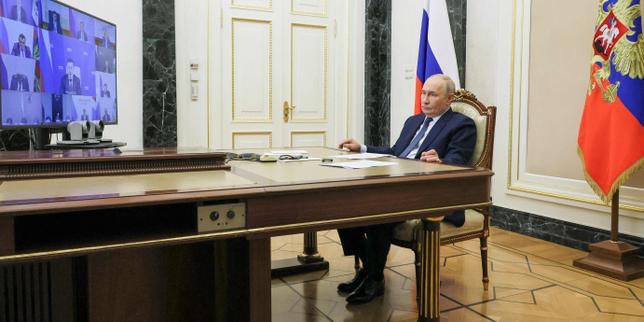
For the modern Kremlin, the machinery of democracy has never been about choice. It is a referendum on endurance. When Vladimir Putin steps before the cameras to campaign, he is not merely seeking a renewed mandate from a citizenry numbed by decades of managed politics. He is orchestrating a grand convergence. The ballot and the bayonet are being forged from the exact same iron.
Consider what happens next when a state structure organizes its entire domestic survival around perpetual confrontation. The political campaign ceases to be an exercise in persuasion. It becomes an administrative ritual of mobilization, where every vote cast is interpreted as a ration stamp for the ongoing military campaign. To question the strategy is to question the state. To question the state is to invite the cold, grey void of isolation.
We often talk about war and politics as two distinct rooms in the house of power. One is loud, kinetic, and bloody; the other is smoky, procedural, and calculated. But in contemporary Russia, those interior walls have been sledgehammered into dust. The war room and the campaign headquarters are now the exact same space. The strategists drafting stump speeches are the very same technocrats calculating artillery shell deficits and troop rotation schedules for the freezing steppes of Ukraine.
Let us be entirely frank about the mechanics of this alignment. Total mobilization requires total narrative control. If the public perceives a temporary conflict, they demand an exit strategy. But if the conflict is framed as an existential clash between a besieged civilization and a hostile exterior world, the timeline shatters. Eternity takes over. The ballot box becomes just another fortification, sandbagged against the uncertainties of foreign interference and internal dissent.
I remember the heavy silence that settles over a city when the state decides its survival depends on unanimous obedience. It is a tangible thing, heavy as lead and thick as fog. You see it in the way people avoid eye contact on the subway. You hear it in the careful phrasing of phone calls, where phrases are clipped and thoughts are left unfinished.
The strategy is brilliant in its cynicism and terrifying in its execution. By linking his personal political survival directly to the tactical fortunes of the armed forces, Putin creates a binary trap for the populace. Win or lose on the battlefield, the leadership presents itself as the only available shield against national disintegration. The ballot is no longer a mechanism to select a better future; it is an emotional anchor thrown into a turbulent sea, begging everyone to hold on tight to the familiar misery rather than risk the unknown abyss of change.
Yet, beneath the engineered certainty of the polling numbers, an invisible friction grows. Steel fatigues under constant pressure. Economies groaning under the weight of a war footing cannot hide their strain forever from ordinary kitchens like Maria's. The official rhetoric speaks of unshakeable unity, but human endurance has a breaking point, measured not in percentage points of electoral victory, but in the quiet, exhausted sighs of mothers, wives, and workers who bear the silent cost of grand geopolitical ambitions.
The campaign ends, the ballots are counted, and the numbers are duly recorded in the grand ledgers of the state. But the trench remains muddy. The artillery still barks in the dark. The ink on the ballot washes away in the rain, leaving only the iron behind.