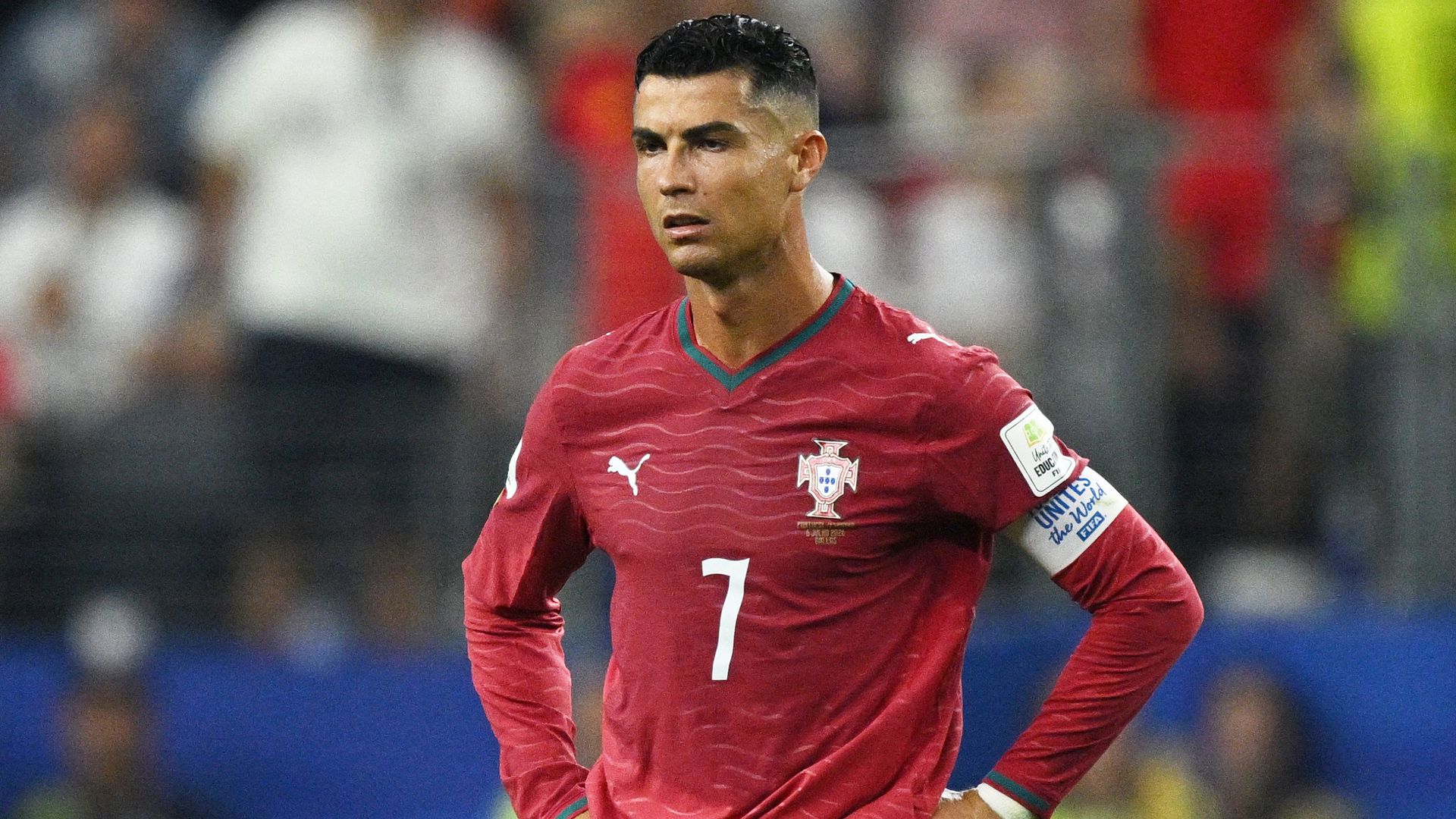
The air inside the stadium always smells of stale popcorn, damp grass, and a specific kind of electric anxiety. I remember sitting there three rows back from the technical area, watching the cleats carve into the turf like knives through old leather. You could hear the breathing. In modern football, everything is sanitized by distance and television sound design, but close up, it is a game of lungs and sweat.
Then, Cristiano Ronaldo said the quiet part out loud. Also making waves lately: Why Jumping Out Of A Perfectly Good Airplane With A Flag Is Just Expensive Noise.
It was after a match with Al-Nassr, the kind of Tuesday night fixture that used to be a mere stepping stone in a career measured in decades rather than years. He stood in the mixed zone, the digital microphones clustering around his face like metallic insects, and offered a sentence that dropped the temperature in the room.
It is probably my last year. Additional information on this are explored by ESPN.
Six words. No grand orchestral swell. No theatrical bow. Just the flat, heavy acknowledgment of a clock running down.
We have watched him for more than twenty years, treating his physical form as something manufactured in a laboratory of pure defiance. He defied gravity on headers that hung in the humid air of Manchester and Madrid. He defied the aging curve by turning himself from a flamboyant winger with step-overs into a ruthless penalty-box predator who hunted goals with the cold precision of an actuary. We grew comfortable with the myth. Myths do not age. Myths do not feel the dull, persistent ache in the right knee after a rainy Tuesday fixture in Riyadh.
Consider what happens next: the inevitable silence.
Football fans are terrible at goodbyes. We demand that our heroes remain statues until the bronze begins to flake, booing the moment they show a flicker of human vulnerability. When a player loses half a yard of pace, we call it decline; when they miss a sitter, we call it obsolescence. We forget that underneath the branded underwear, the billion-dollar social media following, and the sculpted physique, there is a man who has spent two decades running on a treadmill of hyper-performance that would have broken anyone else in a month.
Ronaldo’s career has been an exercise in absolute control. Every free-kick stance, feet planted wide, chest puffed out like a migratory bird staking a claim, was meticulously rehearsed. Every celebration—that trademark leap, the mid-air pivot, the thunderous roar that silenced Camp Nou and Old Trafford—was a public reaffirmation of dominance.
To watch him now is to watch a master craftsman trying to carve marble with a dulling chisel. The goals still come, bundled in headers, tapped in from close range, driven from the spot with the same terrifying certainty. But the spaces between the moments of brilliance are growing wider. You see it in the way he rests his hands on his hips, head tilted toward the night sky, drawing deep, shuddering breaths as the play surges away from him.
He is racing against an opponent he cannot dribble past.
Time undefeated.
It is easy to forget the sheer weight of what he is carrying. Every time he steps onto the pitch, he is not just playing against eleven men in opposing shirts; he is playing against the ghost of his twenty-four-year-old self. The crowd expects the runaway train. When the train slows to a steady, rhythmic chug, disappointment ripples through the stands. We are ungenerous to our legends. We want them to burn forever, regardless of how much oxygen they consume in the process.
When he hints at retirement, he is not looking for sympathy. Cristiano does not do sympathy; he does targets. He is simply staring at the horizon and calculating the distance left to run. He has scored over nine hundred career goals, collected five Ballon d'Or trophies, and conquered three of the most demanding leagues in European football before taking his talents to the Saudi Pro League. There is nothing left to prove on a spreadsheet.
Yet he stays. Why?
Because stopping is a kind of death for men who live at this velocity. The routine of the training ground, the smell of the liniment, the obsessive preparation—it is the only life he has known since he was a scrawny kid kicking a flattened plastic bottle against a concrete wall in Funchal. To walk away from that is to step off the edge of the world into a quiet room where nobody is screaming your name.
I look at the young kids in the academy shirts outside the stadium gates, wearing the number seven shirt that has become a global talisman. They don't remember the skinny teenager with the highlighted tips terrorizing Premier League full-backs in 2003. To them, he has always been a permanent fixture of the landscape, like a mountain or a monument. They think the energy will never run out.
It always runs out.
And when it does, the game will feel smaller. We will spend years arguing over who was better, who scored more, who won the argument between statistical efficiency and romantic flair. We will dissect heat maps and expected goals metrics to prove points that no longer matter. But we will miss the theater. We will miss the arrogant, beautiful certainty of a man who believed, against all evidence of human biology, that he could outrun the calendar forever.
The lights in the stadium are dimming now. The cleaners are sweeping up crushed paper cups and discarded program sheets. Somewhere inside the building, a legendary athlete is icing his joints, contemplating the end of a very long, very loud story, leaving the rest of us to wonder what football looks like when the sun finally sets on the era of the machine.