Salt tastes sharper when you are a thousand miles from home and no one on the bridge believes a war can reach your hull.
Listen.
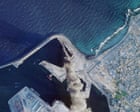
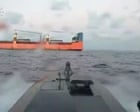
Out there in the dark water off Libya, where warm air from the Sahara meets the cool, heavy swell of the central Mediterranean, two Russian vessels took blows from Ukrainian naval drones. A dry wire report treats it like a box score: two ships struck, confirmation issued, distance noted. Easy to skim while drinking coffee. Easy to forget before the second cup goes cold.
Yet a war fought in the Black Sea does not stay politely inside a fence of coastline. When unmanned surface vessels hit Russian ships off Libya, geography stops being a shield and becomes a fuse. Freight rates twitch. Insurers recalculate risk before sunrise. Sailors who signed on for grain, fuel, or routine cargo suddenly check their phones with a cold knot in their stomachs, wondering whether their next port of call is a trade route or a target.
I have stood on cold docks at four in the morning listening to diesel engines idle while cranes swung like iron pendulums over dark water. You learn fast that shipping runs on quiet trust. Crews trust the charts. Brokers trust the schedules. Families back home trust that a routine voyage means a paycheck in two weeks, not a name scrolling across a screen. When a strike happens far from the main theater, that quiet trust cracks.
Why Distance Lies at Sea
On paper, the Mediterranean is a world apart from the Black Sea. One is a crowded highway linking Europe, North Africa, and the Suez corridor; the other has spent years narrowed by mines, missiles, and chokepoints. Anyone looking at a flat map might ask a fair question: how does a naval drone reach ships off Libya when the fighting began so far away?
Consider the mechanics rather than the magic. A naval drone—an uncrewed surface vessel packed with explosives, satellite links, and a low profile that barely ripples radar—is essentially a fiberglass or steel wedge with an outboard motor and a stubborn brain. Unlike a heavy cruiser, it does not need a grand port ceremony or a massive crew. It needs fuel, navigation data, a calm enough swell to keep its sensors clear, and a ship worth hitting. When operations stretch across long maritime routes or rely on forward staging and endurance that defenders keep pushing further, the old rule of "safe behind the horizon" starts looking less like a law and more like a rumor.
To make the human stakes concrete, let us step into a hypothetical scenario grounded in how modern mariners actually live and work. Picture Tariq, a second engineer on a merchant vessel threading the Mediterranean not far from Libyan waters. Tariq is not a soldier. He knows the smell of hot lube oil, the rattle of a cooling pump at 02:00, and the exact sound his boots make on grated steel when the ship rolls twelve degrees. His daughter in Alexandria is learning to ride a bicycle without training wheels. His mother asks every Tuesday whether the sea is calm.
When word ripples over marine frequencies that two Russian vessels were struck off Libya by Ukrainian naval drones, Tariq does not see a geopolitical chess move. He sees a narrow shipping lane where vessels with switched-off transponders, shadow-fleet tankers, and supply ships mingle with ordinary cargo hulls. One misread blip on a radar screen, one drifted course, one panicked evasive turn in heavy traffic—and suddenly an engineering problem becomes a survival problem.
That is the part cold headlines skip. A strike at sea is never just metal meeting metal. It is water rushing into a compartment while someone tries to dog a hatch. It is a watchkeeper staring at a dark horizon wondering if the next low silhouette cutting through the whitecaps is flotsam, a fishing skiff, or an explosive hull guided from hundreds of miles away.
The Shadow Fleet and the Cost of Deniability
Why would two Russian ships be off Libya in the first place?
For years, Russia has used maritime networks far beyond the Black Sea to move oil, military supplies, grain, and influence across North Africa and the wider Mediterranean. Some of those movements rely on aging tankers operating with opaque ownership, turned-off tracking beacons, or shifting flags—vessels analysts often group under the metaphor of a "shadow fleet," sliding through gray water to keep cash and cargo flowing despite sanctions and scrutiny. Other ships carry logistics that keep regional footholds supplied.
Let us be honest about what makes this whole subject feel dizzying and uncertain. Even seasoned observers sometimes struggle to untangle which vessel carries civilian cargo, which one ferries state supplies, and where commercial shipping ends and wartime logistics begins. If you feel a little whiplash trying to track who owns what at sea, you are in good company. Maritime registries are famously tangled, shell companies change names like coats in autumn, and a ship's paint job rarely tells the whole story.
Still, one logical deduction holds firm: when a state projects power or moves war-sustaining goods across distant seas, its ships become part of the conflict's geometry. Stripping away the fog around those vessels—or hitting them far from home—sends a message that reaches far beyond the blast zone. It tells Moscow that distance no longer guarantees sanctuary for its maritime lifelines. It tells commercial operators that carrying cargo tied to a belligerent brings real physical risk, not just paperwork headaches.
History has seen versions of this tension before, though rarely with hardware quite this cheap and nimble. During the "Tanker War" of the 1980s in the Persian Gulf, attacks on commercial and state-linked vessels turned vital waterways into nerves of steel and anxiety, driving up war-risk insurance and forcing navies to escort ships through tense waters. Naval history shows a clear pattern: once shipping lanes become contested, the shockwave hits wallets and supply chains long before it hits the average consumer's front door.
A Quiet Morning in Odessa, a Long Night at Sea
Suppose—again in a hypothetical scenario meant to mirror real pressures on Ukrainian drone operators—we follow Olena, a systems engineer helping refine navigation and resilience on uncrewed surface vessels. She works in a basement where the air smells of solder flux, espresso, and damp concrete. Outside, air-raid sirens have taught every neighbor the rhythm of running and waiting.
To Olena, a naval drone is not a sci-fi toy. It is a stubborn piece of engineering built because a smaller navy cannot match a larger fleet hull for hull in traditional shipyards. Think of it like David trading a heavy bronze sword for a sling—except the sling is guided by optics, inertial sensors, and satellite relays, and the stone has to cross open water without losing its mind when waves slam the bow.
When Ukrainian officials confirm naval drone strikes against two Russian ships off Libya, the triumph in that room is mixed with exhaustion. Reaching far-flung targets proves ingenuity and reach. It also means every link in the chain—communications, battery life, wave tolerance, target verification—was tested far from home waters where rescue is impossible and recovery is zero.
At the same time, any clear-eyed analyst has to ask what happens next when naval drones show up in the central Mediterranean. Does escalation pull other regional actors onto high alert? Does it complicate search-and-rescue duties for nearby merchant crews who are bound by maritime law to help people in distress, even in dangerous waters?
Nobody has a neat, tidy answer to every one of those questions. War at sea rarely stays inside tidy boxes. A wave does not check a border treaty before breaking over a gunwale.
What Ripples Through the Rest of Us
You do not need a sea bag or a maritime license to feel the wake of two ships struck off Libya.
Every time a chokepoint or long sea lane grows riskier, three quiet dominoes tend to wobble:
- Insurance and freight: Underwriters raise premiums when a corridor feels unpredictable, and shipowners pass those costs down the line.
- Supply timelines: Rerouting, slower transits, or extra inspections stretch delivery schedules for commodities and manufactured goods.
- Diplomatic friction: Coastal states and neighboring navies have to patrol busier, tenser waters, increasing the odds of miscalculation.
Even when a strike hits two specific vessels rather than blocking an entire canal overnight, the psychological shift is real. Markets price in fear as much as damage. A ship captain charting a course past North Africa now has to weigh weather, piracy advisories, traffic density, and the new reality that asymmetric sea drones can reach further than old playbooks assumed.
That is why reducing this story to a two-sentence wire blurb misses the point. Two Russian ships struck off Libya is not just a footnote from a distant sea. It is proof that modern maritime conflict has stretched its reach, testing old assumptions about safe distance, gray-zone shipping, and how vulnerable even large vessels can be to small, relentless machines.
Out on the dark water off Libya, the wind keeps blowing across an empty horizon long after the smoke clears, leaving behind only a widening wake and a question no chart can answer: where is quiet water anymore?