Time does not move uniformly. In Baghdad, inside a cell where the concrete drinks the light and the air tastes of old dust and persistent fear, a single hour can stretch into an eternity. It is an elastic torture. You measure existence by the shifting angle of a gray beam across a floor, or by the slow, agonizing drip of a leaking pipe that refuses to offer rhythm or comfort.
For Robert Pether, that waiting lasted five years.
To read a news ticker is to absorb tragedy as arithmetic. An Australian engineer. Detained in 2021. Arbitrary detention. Released. Five words that flatten half a decade of human suffering into a neat headline meant to be scrolled past over morning coffee. But numbers lie about weight. They cannot capture the sound of a heavy metal door sliding shut, sealing out the world, or the peculiar madness of maintaining sanity when tomorrow is an entirely hypothetical concept.
Consider what it takes to survive that kind of isolation.
Robert was not a spy, nor a soldier courting peril. He was a quantity surveyor, a man whose professional life was built on numbers, contracts, and concrete realities. He flew to Iraq to help resolve a commercial dispute over the construction of the Central Bank of Iraq building. It was supposed to be a matter of blueprints and spreadsheets. Instead, it became a nightmare of legal quicksand. A local court dispute morphed into a nightmare of wrongful imprisonment, fueled by political volatility and a justice system where the rules shifted beneath his feet like desert sand.
Imagine sitting in a room, watching the calendar pages tear themselves away in your mind. Birthdays missed. Anniversaries passed in total silence. The subtle, terrifying erosion of memory as faces of loved ones begin to blur at the edges, replaced by the stark, unforgiving geometry of prison walls. His family back in Australia—his wife, his children—lived their own parallel captivity. Every phone call a ghost, every government update a fresh dose of bureaucratic heartbreak.
We often talk about geopolitics as if it were a game played on a giant map by men in suits. We speak of diplomatic channels, consular access, and bilateral talks. These are sterile words designed to distance us from the messiness of human pain. Yet, behind every detained citizen in a foreign land is a kitchen table where a chair remains empty, year after year. There is a spouse who wakes up in the middle of the night reaching for a ghost, and children who have to grow up too fast because their father was stolen by a stamp on a visa and a flawed accusation.
The mechanics of freedom, when it finally arrives, are rarely cinematic. There is no triumphant slow-motion run into the arms of waiting crowds, at least not right away. There is only the shock of open air. The blinding intensity of a sun you haven't seen unfiltered in sixty months. The dizzying roar of a world that kept spinning while yours was violently halted.
When Robert finally touched Australian soil again, the relief was profound, but it was bruised. Freedom after wrongful imprisonment does not erase the past; it merely changes the nature of the burden. The invisible cage stays with you long after the iron bars are gone. Every sudden noise, every closed door, every flicker of uncertainty triggers a nervous system that learned to survive on hyper-vigilance.
Stories like this haunt us because they remind us of our ultimate fragility. We move through our daily lives assuming the safety of our passports, the predictability of the law, and the invisible safety net of our nations. We pack our bags for business trips, trusting that the world is a manageable place governed by reason. But the truth is far more fragile. A sudden shift in political winds, a misconstrued contract, or a desperate regime can turn anyone into a pawn.
We must look past the statistics of international diplomacy to recognize the human cost of these diplomatic standoffs. It takes tireless advocacy, relentless pressure from families who refuse to stay quiet, and a global community willing to call out injustice wherever it festers. Silence is the accomplice of tyranny. When governments treat human beings as diplomatic leverage, the only antidote is an unyielding public memory that refuses to let the prisoner become invisible.
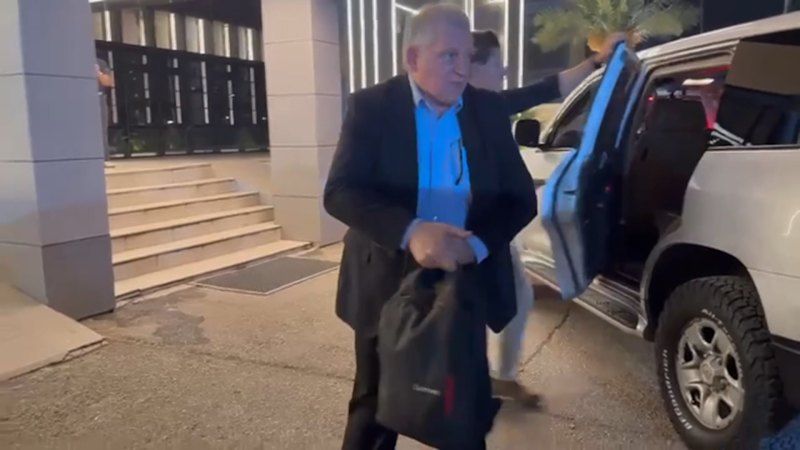
The plane wheels left the tarmac in Baghdad, lifting away from the dust and the ghosts of a half-decade lost to the void. Down below, the sprawling grid of the city shrank beneath the clouds, a place of intense trauma, but also of survival. Somewhere down there, the gray light was still shifting across a concrete floor, marking time for someone else. But for Robert, the horizon was finally widening. The sun was setting over a different ocean, painting the sky in colors that didn't look like rust and stone.