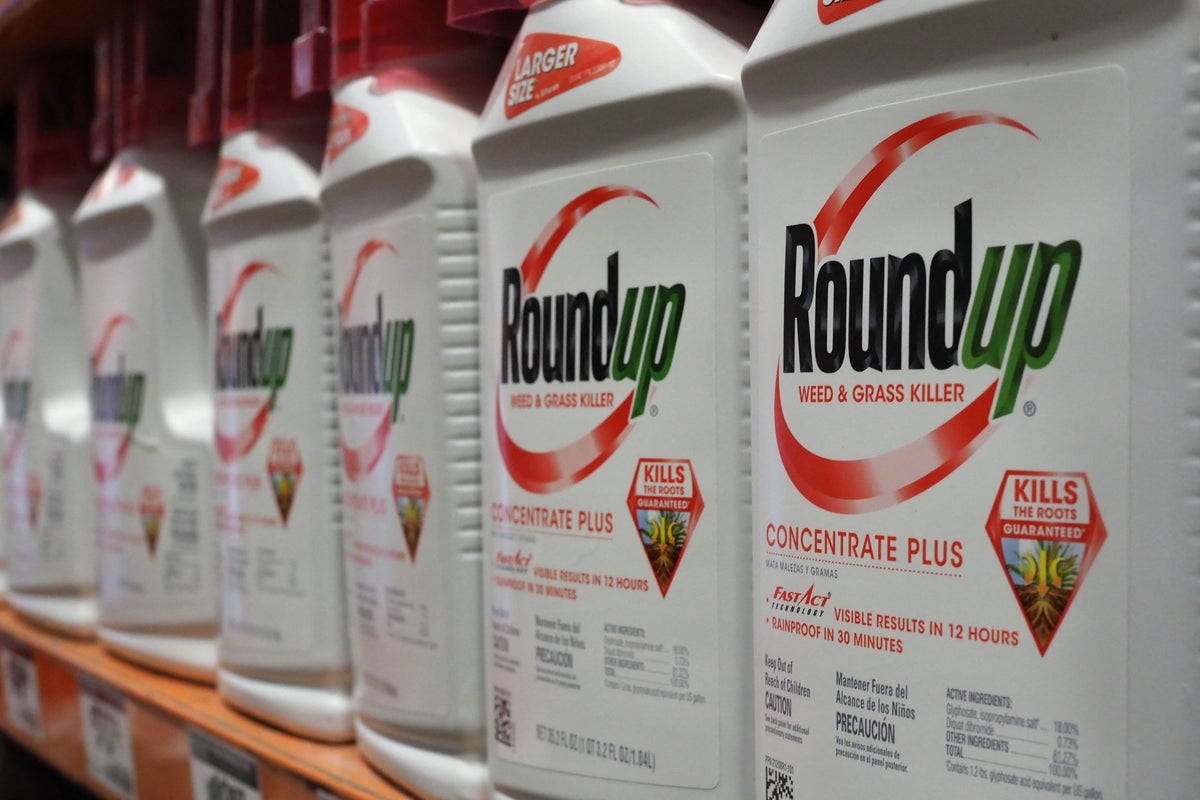
The 7-2 Supreme Court decision in Monsanto Co. v. Durnell fundamentally restructures the liability framework for corporate risk management within heavily regulated markets. By affirming that the Federal Insecticide, Fungicide, and Rodenticide Act (FIFRA) expressly preempts state-law failure-to-warn tort claims, the ruling blocks an estimated 61,000 pending lawsuits and fundamentally alters the cost function of mass tort litigation. The immediate market response—a 19 percent surge in Bayer AG’s equity price, its largest single-day appreciation in 23 years—quantifies the immense financial discount the market had previously applied to the company's long-term litigation exposure.
To fully understand the strategic implications of this decision, analysts must look beyond public health rhetoric and examine the structural mechanics of federal preemption, the operational optimization of corporate balance sheets, and the friction points generated between state-level tort systems and centralized federal agencies.
The Preemption Mechanism: Mapping the Legal Architecture
The core legal bottleneck in the Roundup litigation centered on statutory interpretation rather than toxicological consensus. The Supreme Court's majority opinion, authored by Justice Brett Kavanaugh, hinges on a strict reading of FIFRA’s express preemption clause.
The structural logic operates as a three-variable optimization function:
- The Federal Mandate: FIFRA dictates that pesticide manufacturers must utilize an exact, Environmental Protection Agency (EPA)-approved label. The EPA has consistently determined that glyphosate is "not likely to be carcinogenic to humans" and has affirmatively barred cancer warnings on these labels.
- The State Deviation: State tort law, applied through individual jury verdicts such as John Durnell’s $1.25 million award in Missouri, penalizes companies for omitting a cancer warning.
- The Preemption Conflict: Under FIFRA, states are explicitly prohibited from imposing labeling requirements that are "in addition to" or "different from" federal standards.
The majority concluded that a state-law failure-to-warn claim forces a manufacturer to append a warning that directly contradicts the EPA’s mandated text. Therefore, the federal requirement invalidates the state-level claim.
This architecture fundamentally redefines the operational boundaries of regulatory compliance. Historically, companies viewed federal regulatory approval as a minimum baseline—a shield against enforcement actions, but not an absolute defense against civil liability. The Durnell precedent elevates compliant federal labeling into an absolute liability shield against state failure-to-warn theories.
The dissenting opinion, filed by Justice Ketanji Brown Jackson and joined by Justice Neil Gorsuch, exposed a critical tension in federalist jurisprudence. The dissent argued that FIFRA limits, but does not eradicate, state authority. Under their alternative framework, if a state-law violation concurrently constitutes a violation of federal guidelines, the state claim should stand. The rejection of this view by a broad 7-2 coalition signals a decisive judicial preference for national market uniformity over state-level consumer remedies.
The Financial Repercussions: De-risking the Bayer Balance Sheet
The operational drag of the Roundup litigation on Bayer AG since its $63 billion acquisition of Monsanto in 2018 constitutes a classic case study in unhedged M&A liability. Bayer has historically deployed a multi-pronged containment strategy, allocating approximately $16 billion (€10 billion) to litigate and settle historical claims.
The Durnell decision radically alters the math behind Bayer's outstanding liabilities.
[Total Claims Pool (~200,000 Historical)]
       │
       ├─► Settled/Resolved Claims (~$10B+ Spent)
       │
       └─► Active Claims Pending (~61,000 Cases)
                 │
                 ▼ (SCOTUS Preemption Filter)
       ┌─────────────────────────┴─────────────────────────┐
       ▼                                                   ▼
[Failure-to-Warn Claims]                         [Alternative Torts]
(Systematically Barred/Dismissed)                (Design Defect / Negligence)
* Represents vast majority of volume             * Remains legally viable
* Eradicates future systemic filing pipeline     * Substantially lower success probability
The elimination of failure-to-warn claims systematically dismantles the economic model of the mass tort plaintiffs' bar. Because failure-to-warn is the primary lever used to secure large punitive damage awards from juries, stripping this claim drastically reduces the expected monetary value of any remaining active litigation.
Bayer’s financial architecture is now bifurcated into two distinct operational plays:
1. The Class-Action Settlement Cap
Prior to the ruling, Bayer proposed a $7.25 billion class-action settlement designed to cap future and remaining claims. While the Durnell precedent provides grounds to dismiss the vast majority of pending failure-to-warn lawsuits, corporate leadership has indicated it will proceed with the settlement. The financial rationale is clear: the settlement acts as an insurance policy to permanently extinguish alternative remaining legal theories, such as "design defect" or systemic negligence, which are not explicitly preempted by the FIFRA labeling clause.
2. Capital Reallocation Metrics
The structural reduction in expected legal payout frees massive amounts of capital that were previously tied up in litigation reserves. This capital can now be redirected into operational expenditures, specifically:
- R&D Innovation Pipelines: Reinvesting capital into the development of alternative, non-glyphosate crop protection tools.
- Debt Service Optimization: Accelerating the deleveraging of the debt burden incurred during the 2018 Monsanto acquisition.
- Residential Market Re-engineering: Solidifying the transition away from glyphosate in the U.S. consumer lawn and garden market, a preventative measure Bayer initiated independently to minimize localized state-level exposure.
Supply Chain Realities and the Agricultural Imperative
The economic consequences of the ruling extend far beyond the pharmaceutical and chemical sectors, directly impacting the macroeconomics of global food supply chains. The agricultural industry operates on razor-thin margins where input cost predictability is paramount.
The industrial defense of glyphosate by major agricultural lobby groups was driven by a stark reality: the systemic removal of the chemical from the U.S. market would have triggered an immediate supply shock. Had the Supreme Court allowed state-level failure-to-warn suits to continue expanding unchecked, Bayer indicated that a complete withdrawal of glyphosate from the U.S. agricultural market would be an economic necessity.
The operational alternatives to glyphosate illustrate the bottleneck the agricultural sector narrowly avoided:
- Escalated Input Costs: Alternative chemical herbicides generally command higher price premiums or require higher volume applications per acre to achieve bio-equivalent weed suppression.
- Labor Capacity Constraints: Replacing chemical suppression with mechanical tillage increases tractor-fuel consumption and overall labor hours, directly compressing farming margins.
- Yield Compression: Lower-efficiency weed management correlates with a predictable reduction in crop yields per acre, putting upward pressure on commodity food pricing.
By establishing federal regulatory supremacy, the Supreme Court normalized the regulatory environment for large-scale agricultural operations. Farmers retain access to a highly optimized chemical input, shielding the broader food supply chain from a sudden regulatory-induced inflationary spike.
The Political Disconnect: Executive Priorities vs. Populist Alignments
The political fallout of Monsanto v. Durnell highlights a growing ideological rift within contemporary governance, specifically within the executive branch. The Trump administration actively backed Monsanto, with the Justice Department filing briefs arguing that the EPA’s centralized authority must be protected against localized judicial interference. This position aligns with traditional corporate deregulation and the preservation of domestic industrial capacity.
However, this stance creates a sharp political contradiction with populist health movements, notably the "Make America Healthy Again" (MAHA) cohort. This faction has continuously advocated for the aggressive reduction of synthetic pesticide use and a complete overhaul of corporate agricultural practices.
The Durnell ruling effectively seals the courthouse door to these advocates, demonstrating that federal administrative state protections can insulate major industrial firms from grassroots tort litigation. Consequently, public health advocates must shift their strategy entirely away from courtroom litigation and toward direct lobbying of the executive apparatus to alter the EPA’s baseline toxicological classifications.
The Strategic Blueprint: Navigating the Post-Durnell Market
For corporate executives, general counsels, and institutional investors managing assets in highly regulated industries, the Durnell precedent provides a clear blueprint for liability mitigation.
The definitive strategic playbook requires executing three distinct operational initiatives:
- Aggressive Motion for Dismissal Deployment: Corporate legal teams facing active mass tort actions based on failure-to-warn theories must immediately file motions for summary dismissal across all state jurisdictions, citing Durnell to systematically clean outstanding balance sheet liabilities.
- Federal Labeling Anchoring: Product development pipelines must treat federal regulatory labeling not merely as an administrative hurdle, but as the primary layer of asset protection. Every piece of product literature must be tightly mapped to approved federal text to trigger express preemption protections.
- Bifurcated Litigation Risk Assessment: Compliance teams must revalue their risk models to anticipate that plaintiffs' attorneys will pivot entirely toward "design defect" and "negligent manufacturing" claims. Risk mitigation resources must shift from labeling defense to robust quality control and alternative product composition testing to neutralize these non-preempted legal avenues.