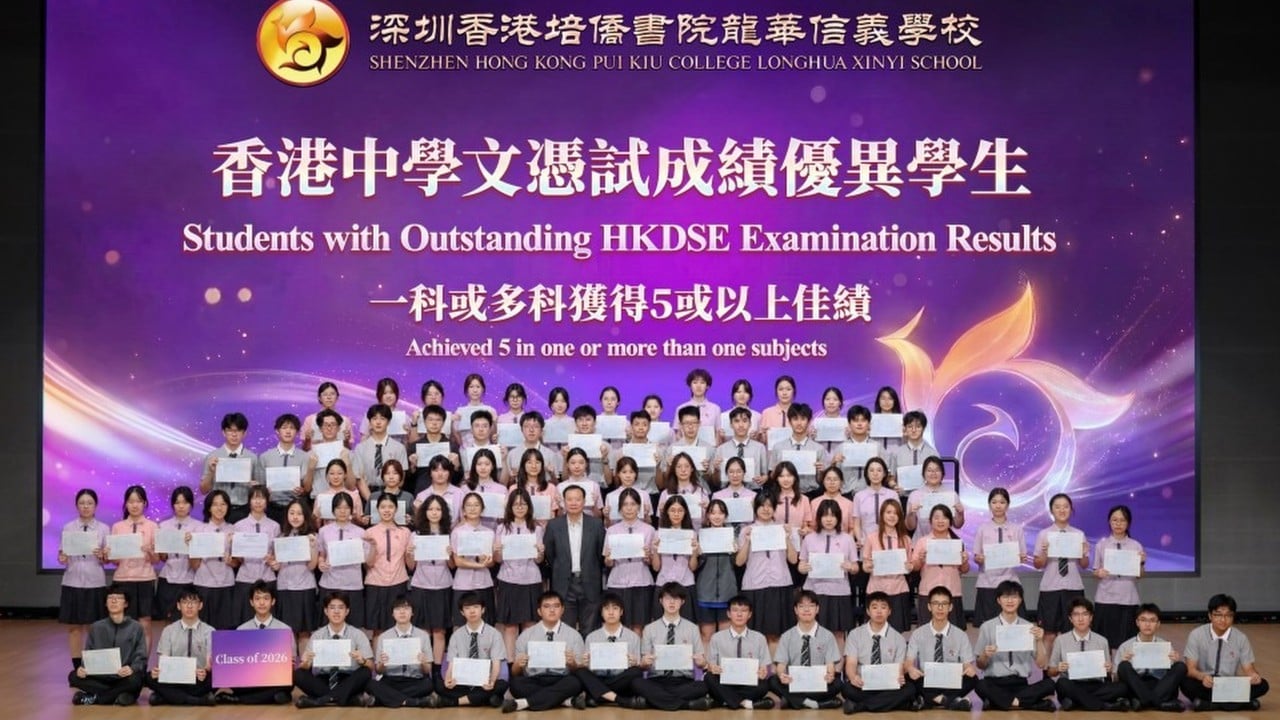
The results are out, and they are embarrassing for Hong Kong's local high schools.
For decades, the city assumed its home-grown education system was the gold standard for getting into local universities. If you wanted a spot at the University of Hong Kong or Chinese University, you stayed in the city and ground through the Hong Kong Diploma of Secondary Education (HKDSE). That logic just got shattered.
Recent HKDSE data reveals a staggering reality. More than 90% of Hong Kong students studying at mainland Chinese schools met the minimum university admission requirements. Meanwhile, the overall pass rate across all candidates—the vast majority sitting the exams in Hong Kong itself—was a miserable 38%.
Let that sink in. Mainland-based students didn't just edge out their Hong Kong peers. They completely destroyed them.
This isn't a statistical fluke. It's the predictable outcome of a massive shift in how families approach college prep, combined with the brutal, hyper-focused academic culture of the mainland. If you think the local public school system down the street is still the best route for your child's DSE prep, you're looking at an outdated map.
The Mainland Study Factory Meets Hong Kong Style Testing
To understand this massive gap, look at how these mainland schools operate. They aren't traditional international schools where kids coast through art projects and experiential field trips. They are academic pressure cookers.
Schools catering to Hong Kong children in cities like Shenzhen and Guangzhou have taken the infamous mainland study culture and pointed it directly at the HKDSE syllabus. In Hong Kong, a typical high schooler balances extracurricular activities, sports, and a relatively standard school day. In mainland DSE centers, the schedule resembles a corporate boot camp. Students frequently study from dawn until late at night, repeating mock papers and dissecting grading rubrics until they can recite them from memory.
Mainland educators have spent decades mastering the Gaokao, China's notorious national university entrance exam. The Gaokao is a brutal test of endurance and memory. When mainland schools apply that same relentless drilling methodology to the HKDSE, the results are almost unfair. The DSE is a challenging exam, but it values structured, predictable responses. Mainland teachers break down the HKDSE grading criteria into literal science. They teach students exactly how to structure an essay, exactly what keywords a marker looks for, and exactly how to maximize partial credit in math sections.
Local Hong Kong schools often focus on a more well-rounded student life. That sounds nice on a brochure. It just doesn't win public exam races against schools that treat test prep like an Olympic sport.
The Structural Edge Local Students Can't Match
It's tempting to think this is just about students working harder. It isn't. The mainland DSE centers possess concrete, structural structural advantages that local public schools simply cannot replicate.
First, consider student selection. Many of these mainland institutions are private or semi-private boarding schools. They don't take everyone. They screen applicants, filtering for families who are highly motivated and students who already possess strong academic foundations. Hong Kong public schools, by contrast, must accommodate a broad spectrum of learning abilities and socioeconomic backgrounds within their catchment areas. When you pool highly driven, filtered students into a single campus, peer pressure does the rest of the work.
Second, the boarding school model provides an insulated environment. On a mainland campus, students don't have the distractions of Hong Kong transit, city nightlife, or long commutes. They live, eat, and breathe exam preparation alongside their classmates. Teachers often live on or near the campus as well, providing evening tutoring sessions and immediate feedback on assignments.
Finally, there's the math advantage. The mainland curriculum in early childhood and middle school is famously advanced in mathematics and hard sciences. A student who moves from a mainland primary school into a DSE track frequently finds the HKDSE math requirements less daunting than their peers who grew up entirely in the Hong Kong system. They've already mastered the abstract logic required for advanced problem-solving before they even open a DSE textbook.
The Changing Map of Exam Centers
The physical location of the exams themselves has undergone a massive shift. Historically, mainland-based students had to travel to Hong Kong, check into hotels, and sit the exams in unfamiliar local halls. That added immense travel stress and financial burdens to families.
The policy changed to allow specific mainland schools to operate as official HKDSE examination centers. Students can now sit their papers in their own familiar classrooms, sleeping in their own dorm beds the night before. This removes the psychological friction of traveling across the border for a high-stakes test. It lets candidates focus entirely on performance.
This regulatory nod from the Hong Kong Examinations and Assessment Authority didn't just make life easier for these students. It legitimized the mainland DSE track. It proved to parents that the mainland option is no longer a secondary backup plan for families who couldn't secure a spot in Hong Kong. It is a premier launching pad.
What This Means For Your Education Strategy
If you're a parent or an educator, you need to abandon the assumption that Hong Kong schools hold a monopoly on HKDSE success. The data tells a completely different story.
If your child is highly competitive and targets a top-tier local university or an elite international program, the traditional local school route might actually put them at a disadvantage against the waves of perfectly prepared mainland candidates. You have to evaluate whether your current school possesses the same laser-like focus on exam strategy that the cross-border competition uses daily.
For families living in the Greater Bay Area, the decision is even clearer. The need to move back to Hong Kong for secondary education has evaporated. You can access world-class DSE preparation without uprooting your life or enduring long cross-border daily commutes for your kids.
The playing field has changed permanently. The 90% pass rate from mainland schools compared to the 38% city average is a wake-up call. It's time to stop looking at where a school is located and start looking at how effectively it prepares students for the reality of the exam paper.
If you're mapping out the next few years of your child's education, start interviewing schools with a heavy focus on their actual DSE strategy. Ask to see their mock exam frequencies. Find out where their teaching staff trained. Look closely at their past graduate tracking data. The competition isn't just down the street anymore. It's across the border, it's highly disciplined, and it's currently winning.


