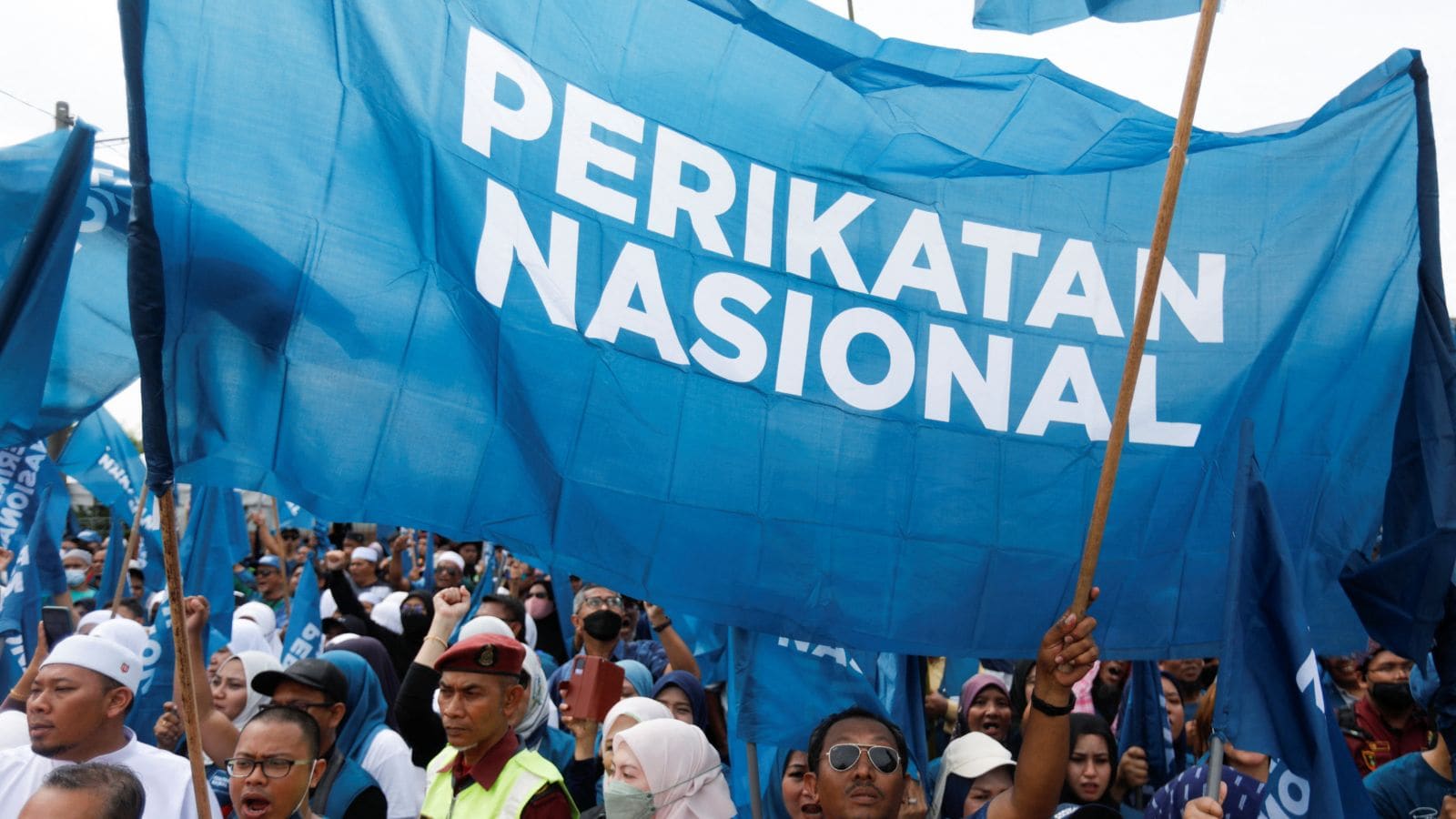
The Registrar of Societies dropped a hammer on Malaysian politics when it cancelled the official registration of Perikatan Nasional. Just like that, the country's primary opposition coalition lost its legal standing under Subparagraph 13 of the Societies Act right as local state polls loomed.
If you think this automatically hands Prime Minister Anwar Ibrahim a free ride to smooth sailing, think again. Political mechanics rarely play out so simply on the ground.
The Cracks Inside Perikatan Nasional
The official cancellation didn't happen in a vacuum. Regulators flagged statutory compliance failures, but the real damage was self-inflicted long before civil servants got involved.
The marriage between Parti Islam Se-Malaysia (PAS) and Parti Pribumi Bersatu Malaysia (Bersatu) was fractured. In August's Negeri Sembilan state contest, Bersatu openly broke ranks. They announced their own candidate roster and ran under their own independent logo—even competing head-to-head against their own coalition partners in eight distinct seats. Bersatu got wiped out across all 24 constituencies it contested alone. Meanwhile, PAS proved it holds the real grass-roots machinery.
When key coalition parties field opposing slates against each other, regulatory enforcement becomes an easy open goal.
┌─────────────────────────────────────────────────────────┐
│              PERIKATAN NASIONAL CRACKS                  │
├────────────────────────────┬────────────────────────────┤
│ Parti Islam Se-Malaysia    │ Parti Pribumi Bersatu      │
│ (PAS)                      │ Malaysia (Bersatu)         │
├────────────────────────────┼────────────────────────────┤
│ • Retains deep grassroots  │ • Internal party purges    │
│ • Strong regional bases    │ • Failed solo state runs   │
│ • Direct pacts with UMNO   │ • Splintered leadership    │
└────────────────────────────┴────────────────────────────┘
The high court stepped in shortly after the announcement to grant a temporary stay. That legal reprieve buys the alliance permission to print its name on upcoming state ballots. But a court-ordered pause doesn't mend a broken relationship.
Why Technical Bureaucracy Strikes Hard
In Malaysian elections, shared branding isn't cosmetic. It is the core machinery of voter turnout.
When a multi-party bloc loses its unified registry, several operational bottlenecks instantly cripple field campaigns:
- Electoral symbol confusion: Floating voters, particularly across conservative rural heartlands, rely heavily on recognized coalition logos rather than individual party flags.
- Machinery friction: Campaign workers from different factions end up running competing operations on the same street, burning cash instead of pooling resources.
- Fund distribution freezes: Joint bank accounts and shared funding vehicles face immediate scrutiny under regulatory enforcement.
When opposition figures lose their central banner, undecided voters naturally retreat toward the status quo.
What Anwar's Coalition Actually Faces
At first glance, seeing your main rival get tied up in legal disputes looks like a massive win for Anwar Ibrahim's Unity Government. It removes a unified national threat. But a fragmented opposition introduces unpredictable wildcards.
PAS doesn't actually need a joint coalition wrapper to win seats. Their voter base responds directly to religious identity and localized party networks. In fact, PAS has already negotiated direct seat-sharing arrangements with Barisan Nasional (BN) leaders in specific state seats.
By cutting Bersatu out of the equation, PAS frees itself to cut pragmatic deals directly on the ground. That makes individual state contests vastly more complicated for the ruling government than facing a single, predictable opposition front.
At the same time, splinters like Wawasan—formed by former Bersatu leader Hamzah Zainudin after his internal party purge—are jumping in to claim the center-right space. Instead of a straight two-way fight, elections turn into chaotic multi-cornered battles.
Practical Impact for Following Malaysian Politics
If you're tracking political stability and policy continuity in Southeast Asia, watching headline alliance names isn't enough anymore.
Focus your attention on three concrete indicators over the coming months:
- State-level candidate nominations: Watch whether PAS and Bersatu file individual party logos or attempt joint campaign operations despite their rift.
- Court of Appeal filings: Track whether the temporary judicial stay gets converted into a permanent reversal or if the cancellation stands permanently.
- Cross-party electoral pacts: Keep an eye on local deal-making between PAS and BN factions in Malay-majority state constituencies.
Court stays offer brief breathing room on paper. They don't fix the underlying realities of a broken political alliance.


