Wait.
Imagine standing in the middle of a crowded Mexico City plaza on a humid July night in 1988, watching a row of IBM mainframes suddenly go dark just as the numbers begin to turn against the people who own the building. If you enjoyed this article, you might want to check out: this related article.
For seventy years, the Institutional Revolutionary Party—the PRI—did not merely govern Mexico; it was the air the country breathed, the architecture of every municipal office, the unseen hand behind every newspaper headline, and the quiet guarantor of stability in a century scarred by revolution. Peruvian writer Mario Vargas Llosa famously called it the "perfect dictatorship," a system so sophisticated it didn't need the crude brutality of military juntas to survive, relying instead on co-optation, patronage, and the absolute certainty that the ruling party's chosen successor would always win. Until one man, born inside the very palace of that regime, walked out the front door and slammed it behind him.
Cuauhtémoc Cárdenas Solórzano has died at the age of ninety-two, leaving behind a nation that is louder, messier, infinitely more fractured, and undeniably freer than the one he inherited. To read a standard obituary of Cárdenas is to trace a dry ledger of titles—Governor of Michoacán, three-time presidential candidate, the first elected Head of Government of Mexico City—and to see a man defined by the highest office he never officially occupied. Yet reducing his life to a series of electoral defeats misses the seismic shift he engineered, because Cárdenas did not need to sit in the presidential chair at Los Pinos to dismantle the throne. For another angle on this story, see the latest update from Reuters.
The Weight of a Sacred Name
To understand the quiet stubbornness of Cuauhtémoc Cárdenas, you have to picture a boy growing up in the shadow of a secular saint. His father, Lázaro Cárdenas, was the most revered president in modern Mexican history, the man who expropriated foreign oil companies in 1938, redistributed millions of acres of land to peasants, and gave sanctuary to Spanish refugees fleeing fascism. In Mexico, the name Cárdenas was not just a surname; it was a foundational myth, the moral bedrock upon which the PRI claimed its legitimacy.
When young Cuauhtémoc—named after the last Aztec emperor who resisted Hernán Cortés—studied civil engineering at the National Autonomous University of Mexico, he was being groomed to be a loyal technocrat within the system his father had helped institutionalize. By the late 1970s and early 1980s, he was rising steadily through the ranks, serving as undersecretary of forestry and eventually winning the governorship of his home state of Michoacán in 1980. He knew the rules of the machine because he had been raised inside its engine room.
Then the machine changed its soul.
During the 1980s, a new generation of foreign-educated economists took control of the PRI, embracing aggressive free-market reforms, privatization, and austerity measures that gutted the social safety nets Lázaro Cárdenas had built. For years, Cuauhtémoc tried to reform the party from within, forming the "Democratic Current" alongside fellow dissidents like Porfirio Muñoz Ledo to demand open primary elections instead of the dedazo—the traditional ritual in which the outgoing president unilaterally pointed a finger at his successor. When President Miguel de la Madrid ignored them and anointed Carlos Salinas de Gortari in 1987, Cárdenas made a decision that seemed, at the time, like political suicide. He broke with the PRI.
The Night the System Crashed
Consider a hypothetical voter in the summer of 1988—let's call her Elena, a schoolteacher in Guadalajara who had cast her ballot for the PRI every six years since she turned eighteen, not out of passion, but out of habit and a quiet fear of what might replace it. For Elena, politics was a settled weather pattern, predictable and unchangeable. Then she turned on her television and saw the son of Lázaro Cárdenas speaking in a measured, unhurried baritone, his face carved with an almost stoic gravity, telling ordinary Mexicans that their votes actually belonged to them.
Running at the head of the National Democratic Front, a fragile patchwork of small socialist parties and disillusioned PRI defectors, Cárdenas ignited something the ruling party had forgotten existed: genuine public hope. Hundreds of thousands of people poured into the Zócalo, Mexico City's main square, not because they were bussed in with promises of free lunches and union favors, as was the PRI's custom, but because they wanted to witness a miracle.
On the night of July 6, 1988, the miracle appeared to be happening. Early returns trickled into the Interior Ministry, showing Cárdenas surging ahead in the capital and across the central states. And then, suddenly, the screens went blank. Interior Secretary Manuel Bartlett announced that the computerized vote-tabulation system had suffered a caída del sistema—a "crash of the system."
By the time the computers flickered back to life days later, the trajectory had miraculously reversed, and Carlos Salinas de Gortari was declared the winner with just over fifty percent of the vote. Years later, former President Miguel de la Madrid would admit in his memoirs that the PRI had panicked when the early numbers showed Cárdenas winning, and that the results had been manipulated.
Think about what happens next in a country where the army is loyal to the ruling party and millions of furious citizens are waiting in the streets for a single word from their leader. Many of Cárdenas's closest advisors urged him to call for a national uprising, to march on the presidential palace and take by force what had been stolen at the ballot box. Had he given that order, Mexico might well have descended into a bloody civil war.
Instead, Cárdenas chose the harder, slower, less cinematic path. He refused to light the match, insisting that democracy could not be born from the very violence it sought to abolish. That restraint—dismissed by critics at the time as weakness or a lack of killer instinct—was perhaps his greatest act of statesmanship.
The Long March Through the Institutions
If 1988 broke the spell of PRI invincibility, the decade that followed tested the endurance of everyone who believed a peaceful transition was possible. Cárdenas founded the Party of the Democratic Revolution, the PRD, an unruly coalition of former communists, student activists from the 1968 Tlatelolco massacre, and progressive reformers.
It was a brutal era to be in the opposition. Over five hundred PRD activists and local organizers were murdered across rural Mexico during the Salinas administration, hunted down by local political bosses who refused to surrender their fiefdoms. Cárdenas ran for president again in 1994, a year torn apart by the Zapatista uprising in Chiapas and the assassination of the PRI's own presidential candidate, Luis Donaldo Colosio. Fear drove voters back toward the familiar devil they knew, and Cárdenas finished a distant third.
To the pundits in Mexico City's cafés, he looked like a relic—too stiff, too serious, too unwilling to smile for television cameras in an era when politics was becoming a branch of entertainment. Unlike the fiery, charismatic populists who would follow him, Cárdenas never mastered the art of the soundbite. He spoke like the civil engineer he was, laying down arguments brick by brick, treating voters like adults rather than an audience to be seduced.
Yet he kept walking. In 1997, following constitutional reforms that finally allowed residents of Mexico City to elect their own mayor rather than having one appointed by the president, Cárdenas won in a landslide. For the first time, the opposition governed the beating heart of the nation, proving to skeptical middle-class voters that the sky would not fall if the PRI lost power. Three years later, in 2000, when Vicente Fox of the conservative National Action Party finally ended seventy-one years of PRI rule, he walked through a door that Cuauhtémoc Cárdenas had spent thirteen years prying open with his bare hands.
The Shadow He Cast Over Modern Mexico
Here is the paradox that makes Cárdenas's legacy so compelling—and so complicated—in the Mexico of today. In building the PRD as a vehicle for the Mexican left, he created the political home that nurtured a younger, far more aggressive organizer from Tabasco named Andrés Manuel López Obrador.
For years, López Obrador stood at Cárdenas's side, learning the mechanics of mass mobilization and inheriting the moral authority of the 1988 movement. Yet as López Obrador eventually eclipsed his mentor, forming his own party, Morena, and sweeping into the presidency in 2018 with a brand of personalist, polarizing populism, a quiet chasm opened between the two men. Cárdenas had spent his life trying to dismantle an all-powerful presidency and build autonomous institutions—an independent electoral institute, a free press, checks and balances—that could outlast any single leader. Watching a new political movement centralize power once again, Cárdenas remained characteristically independent, refusing to become a rubber stamp for any administration, even one claiming his father's mantle.
He understood something that fervent partisans in every democracy tend to forget: the goal of a democratic movement is not to replace one permanent ruler with another, more sympathetic permanent ruler. The goal is to build a house where anyone can live, and where the locks are changed every few years.
A Quiet Departure
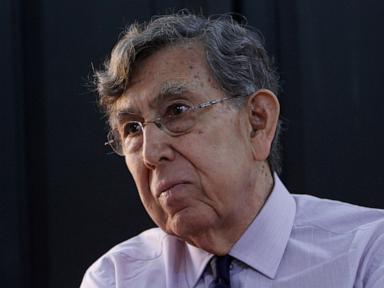
In his final years, Cárdenas rarely sought the spotlight, though his appearances—tall, gaunt, his face etched with deep lines that looked like riverbeds—still carried an unmistakable gravity. When he spoke at forums or gave occasional interviews, politicians across the ideological spectrum still listened, not because he commanded an army of voters anymore, but because he possessed something infinitely rarer in public life: a clean conscience.
To understand what Mexico lost with his passing, you have to look beyond the statues and the official statements of mourning from the very institutions he once challenged. Think back to that humid July night in 1988, when the screens went dark and a nation stood on the edge of a precipice. Every time a Mexican citizen walks into a voting booth today knowing that their ballot will be counted by an independent authority, every time a governor from an opposition party takes office without a shot being fired, they are living inside the blueprint drawn by a civil engineer who refused to look away when the numbers stopped adding up.
The computers came back on, the votes were eventually counted honestly, and the man who made it possible quietly walked home.