The autumn air over the East River carried that specific, biting chill of a city moving too fast to notice who was falling behind. Down on Park Avenue, the sirens rarely stopped. They just shifted pitch, weaving between the monolithic glass facades that swallowed the pale November sunlight. In rooms walled with mahogany and guarded by men who wore their loyalty like armor, the ground was shifting beneath feet that had long forgotten how to stumble.
Distance is a strange curator. A thousand miles south, under a sun that baked the asphalt of Caracas until it shimmered like water, the air tasted of dust and unfulfilled promises. There, a heavy metal door clicked shut with a finality that echoed through empty corridors. Nicolás Maduro sat in a cell where the walls smelled of damp concrete and disuse, his name reduced to a file number, his absolute authority reduced to the ticking of an invisible clock.
And yet, barely a flight away, the machinery of survival was finding a new lubricant.
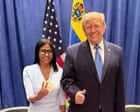
Delcy Rodríguez did not look like someone stepping out of a shadow. She walked into the orbit of New York with the quiet, practiced grace of a diplomat who understood that power does not always need a microphone to announce itself. Cameras flashed. Hands shook. The optics were jarring, almost cinematic in their irony. While the man who had drawn the maps sat locked away in the quiet dark of detention, his second-in-command was shaking hands within shouting distance of Donald Trump, navigating the high-stakes theater of global diplomacy as if the tectonic plates of Venezuelan politics had not just violently realigned.
Consider the surreal weight of that juxtaposition.
For years, the narrative was written in absolute strokes. You were either inside the fortress or you were the enemy at the gate. Millions learned to live around empty grocery shelves, hyperinflation that turned paper money into confetti, and the paralyzing fear of a midnight knock. We watched families fracture across borders, parting at bus terminals with cardboard suitcases and eyes fixed on the horizon. We became fluent in the language of scarcity.
Then came the fracture.
History rarely turns on a grand revelation. More often, it hinges on a whispered conversation in a corridor, a pragmatic calculation made by men and women who realize that survival is more intoxicating than ideology. When the architecture of a regime begins to crack, those closest to the center learn how to maneuver through the falling debris.
In New York, the conversation was not about past grievances. It was about oil, leverage, and the cold, unyielding arithmetic of international energy markets. In politics, sentiment is a luxury reserved for the defeated. For those still holding the levers of state apparatus, adaptation is the only currency that matters.
To understand why Delcy Rodríguez could stand in the American financial capital while Maduro languished just miles away, you have to look past the dramatic headlines and examine the architecture of transition. Dictatorships rarely dissolve overnight like sugar in hot water. They shed skins. They trade figureheads while preserving the institutional machinery beneath. It is a cynical dance, choreographed by the realization that Washington needs stability in the hemisphere just as badly as Caracas needs relief from sanctions.
The sidewalk outside the hotel was crowded with reporters, their breath pluming in the wind as they shouted questions into the void. They wanted a simple story. They wanted heroes and villains, a neat moral ledger where the bad guy goes to jail and the system is instantly cleansed.
Reality is rarely so neat.
Down in Caracas, the streets were quiet. Not peaceful—that is a different word entirely—but holding their collective breath. People sat in doorways, listening to radio static, trying to decipher what a handshake in New York meant for the price of bread tomorrow. They have lived through false dawns before. They have watched opposition leaders rise and stall, international summits fail, and sanctions bite deeper without loosening the grip at the top.
Trust is a fragile thing when it has been broken as many times as the Venezuelan social contract. When you have watched your currency lose its meaning and your children board flights to Lima, Madrid, or Miami, you stop believing in political magic tricks.
Yet, as the delegation moved through the Midtown hotel, something fundamental had shifted. The untouchable had been touched. The regime had proved divisible.
Power, at its core, is a projection of belief. Once the illusion of permanence is shattered, the scramble to survive begins in earnest. Maduro’s isolation is not merely physical; it is symbolic of an era burning down to embers. But the presence of his former loyalists in the heart of global capitalism signals something equally profound: the pragmatic, often unsavory negotiation over what rises from the ashes.
The city outside continued its relentless hum. Taxis honked. Pedestrians rushed past, oblivious to the diplomatic chess game playing out in their midst. But somewhere between the stone walls of a holding cell and the polished marble of Manhattan, the future of a nation was being quietly renegotiated, sentence by sentence, handshake by handshake, far from the eyes of the people whose lives hung in the balance.