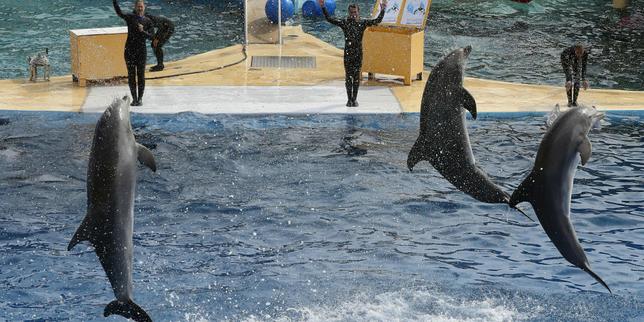
The operational closure or downsizing of marine zoological facilities represents a complex convergence of regulatory pressure, shifting asset monetization models, and capital-intensive biological logistics. When Marineland transferred eight dolphins to Spanish facilities, the movement signaled a broader structural shift across the European captive display sector rather than an isolated operational decision. Evaluating this relocation requires dissecting three core dimensions: the regulatory catalysts mandating asset liquidation, the logistical risk vectors inherent in cetacean transport, and the financial trade-offs governing international receiving facilities.
Regulatory Catalysts and Asset Liquidation Dynamics
The primary driver behind marine mammal transfers in European jurisdictions is the legislative tightening around captive breeding and commercial display. Legislative frameworks, such as France's law against animal cruelty enacted to phase out wild animal performances, fundamentally alter the economic viability of traditional oceanaria.
When a facility faces an operational sunset clause, its biological assets transition from revenue-generating entities to pure liability vectors. The cost structure of maintaining non-performing cetaceans includes three fixed operational expenditures:
- Life Support System (LSS) Maintenance: High-volume filtration, ozone disinfection, and continuous temperature regulation demand uninterrupted power grid consumption and specialized engineering staff.
- Veterinary and Nutritional Overhead: Daily dietary requirements rely on restaurant-grade frozen forage fish, paired with routine diagnostic bloodwork, ultrasound scans, and preventive medicine.
- Specialized Human Capital: Marine mammal trainers and animal care specialists represent non-compressible labor overhead required to maintain psychological welfare and husbandry behaviors.
Because euthanasia of healthy marine mammals is politically and legally prohibitive, facilities must initiate divestment strategies. The transfer of eight bottlenose dolphins (Tursiops truncatus) to Spain reflects an asset offloading mechanism where ownership or custody is transferred to operators in jurisdictions with distinct regulatory timelines or superior capacity to absorb long-term care costs.
Logistical Risk Vectors in Long-Distance Cetacean Transport
Relocating large aquatic mammals involves high-risk transport protocols where failure parameters carry significant mortality or morbidity costs. Moving eight cetaceans across national borders requires managing physiological stress, environmental thermal shifts, and strict transport window constraints.
[Pre-Transport Conditioning]
       │
       ▼
[Staging & Crating] ──(Sedation Avoidance / Hydration Management)
       │
       ▼
[Intermodal Transit] ──(Air / Ground Thermal Control & Wetting Protocols)
       │
       ▼
[Quarantine & Acclimation]
Thermal Regulation and Dehydration
Cetaceans rely on surrounding water to dissipate body heat via peripheral vascular beds in their flukes and dorsal fins. During overland or air transport, animals are suspended in specialized, custom-padded stretchers within moisture-retentive transport crates. Transport personnel must continuously apply water-based gels and water sprays to prevent thermal overload and cutaneous desiccation. Air transport cabins must maintain strict climate controls, typically between 15°C and 18°C, to minimize metabolic stress.
Respiratory Integrity and Transport Ergonomics
Unlike terrestrial mammals, cetaceans rely on voluntary respiration. Chemical sedation during transport carries elevated risk because it can suppress the respiratory drive or alter physiological responses to positional asphyxia. Consequently, preparation relies heavily on behavioral desensitization. Animals are conditioned months in advance to voluntarily enter transport stretchers and tolerate physical confinement.
During transit, the physical force exerted on the animal's ventral surface can restrict pulmonary capacity. Transport stretchers utilize precise anatomical cutouts for the pectoral flippers to avoid nerve compression and structural tissue damage.
Receivership Economics and Capacity Absorption
The absorption of eight dolphins into Spanish receiving parks (such as Loro Parque or Mundomar) is governed by spatial capacity, social dynamics, and regional revenue models.
Pod Integration and Social Architecture
Cetaceans operate within complex, fission-fusion social structures. Introducing eight new individuals into established pods creates immediate social destabilization. Receiving facilities must execute phased integration protocols:
- Quarantine and Health Assessment: Isolating incoming assets for 30 to 60 days to prevent pathogen transmission and establish baseline physiological metrics.
- Visual and Acoustic Introduction: Allowing non-physical interactions through gated pool dividers to evaluate vocalizations and dominant/submissive behaviors.
- Gated Physical Integration: Merging sub-groups gradually, typically starting with juveniles or sub-adult females, to minimize territorial aggression.
Revenue Offset Mechanisms in Secondary Markets
Receiving institutions accept the long-term financial obligations of imported cetaceans only when the acquisition aligns with specific economic criteria:
- Capacity Utilization: Facilities with underutilized LSS infrastructure can absorb additional animals at a lower marginal cost per unit than facilities operating near peak capacity.
- Genetic Diversity Management: Expanding regional breeding pools (where still permitted by law) enhances genetic health without incurring wild capture costs or expensive artificial insemination programs.
- Regulatory Arbitrage: Operating in regions where public display laws permit longer operational runways allows facilities to amortize the absorption costs through ticket sales, educational programs, and research grants over an extended timeframe.
Operational Risk Analysis
Executing large-scale cetacean relocations involves predictable failure modes that operators must mitigate through structural contingency planning.
| Risk Vector | Root Cause | Systemic Impact | Mitigation Protocol |
|---|---|---|---|
| Transport Hyperthermia | Air circulation failure or breakdown of wetting routines | High physiological stress, organ failure | Redundant climate systems, real-time core body temperature monitoring |
| Social Aggression | Premature physical integration of unfamiliar pods | Physical trauma, stress-induced immunosuppression | Prolonged acoustic gating, behavioral monitoring protocols |
| LSS Bio-Load Shock | Sudden increase in biological waste in receiving pools | Ammonia spikes, water clarity degradation, bacterial blooms | Incremental volume integration, secondary filtration scaling |
Strategic Execution Framework
To execute a multi-animal international transfer without severe asset degradation or public relations failure, operating entities must implement a rigid execution sequence.
Phase 1: Regulatory and Health Clearance
Secure all necessary CITES (Convention on International Trade in Endangered Species of Wild Fauna and Flora) documentation and veterinary health certificates. Establish baseline blood panels, respiratory blow cultures, and acoustic profiling for every individual.
Phase 2: Logistics and Transport Desensitization
Initiate daily voluntary stretcher training. Transport crates must be custom-fitted to individual length and girth specifications. Establish dedicated ground transport routes with priority highway clearance and pre-arranged runway access for chartered cargo aircraft.
Phase 3: Immediate Post-Transfer Stabilisation
Upon arrival, animals must be placed in shallow-water recovery pools monitored 24 hours a day by dedicated veterinary teams. Hydration levels must be verified via voluntary blood sampling or stomach tubing if voluntary intake is delayed.
The transfer of eight dolphins from Marineland to Spain demonstrates that the European marine park industry is consolidating its operational footprint. Facilities facing terminal regulatory deadlines will continue to offload high-maintenance biological assets to larger, centralized operators capable of scaling infrastructure costs. Operators that fail to anticipate regulatory sunset windows risk catastrophic asset devaluation and severe operational bottlenecks during forced liquidation scenarios.