Arab political parties in Israel frequently claim kingmaker status during national elections, yet that leverage remains largely theoretical because of deep ideological fractures among the parties themselves and an entrenched refusal by mainstream Zionist factions to form lasting coalitions with them. While these parties represent roughly twenty percent of the country’s population and regularly win enough Knesset seats to block a governing majority, turning those seats into actual executive power requires overcoming structural barriers that rarely bend under campaign rhetoric.
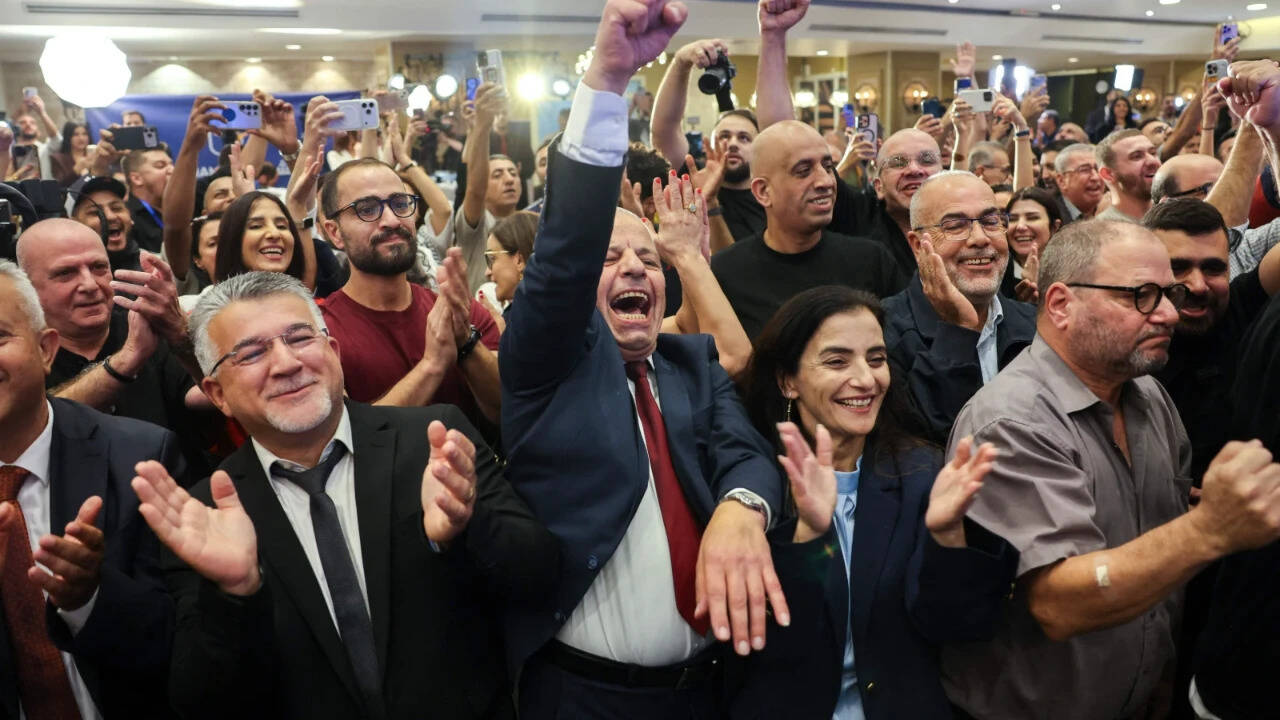
Every election cycle in Jerusalem follows a familiar script. Polling tightens, the traditional right-wing and center-left blocs stall just short of the 61-seat threshold needed to govern, and leaders from the Joint List, Ra'am, or Hadash-Ta'al step up to the microphones to declare that no government can be formed without them. On a purely arithmetic level, they are right. The Knesset has 120 seats, and when the Jewish electorate splits evenly between pro-Netanyahu and anti-Netanyahu camps, the 10 to 15 seats held by Arab-majority parties sit squarely on the balance beam.
Arithmetic is not politics. Holding the missing puzzle pieces does not make you the architect of the puzzle if the other players refuse to sit at your table—or if your own bloc cannot agree on what the picture should look like.
The Anatomy of a Fractured Bloc
To understand why Arab kingmaker status rarely translates into cabinet seats or sweeping policy overhauls, you have to look at the profound differences separating the factions lumped together by outside observers as "the Arab vote." Treating these parties as a monolith is a mistake veteran correspondents stopped making decades ago, though campaign headlines still fall into the trap.
The United Arab List, known by its Hebrew acronym Ra'am, is a conservative, Islamist party rooted in the southern branch of the Islamic Movement. Its leader, Mansour Abbas, broke decades of political taboo in 2021 by joining a governing coalition. His strategy was transactional and unapologetically pragmatic. Rather than demanding immediate breakthroughs on the Israeli-Palestinian conflict, Abbas asked for billions of shekels in infrastructure funding, crime-fighting budgets, and housing permits for Arab municipalities.
Compare that approach to Hadash and Balad. Hadash is a joint Jewish-Arab socialist party with communist roots that focuses heavily on socioeconomic equality and ending the occupation of the West Bank. Balad is a secular, pan-Arab nationalist movement that advocates transforming Israel from a Jewish state into a "state of all its citizens," a position that puts it on a direct collision course with Israel’s foundational Basic Laws.
When these factions ran together under the Joint List banner in 2015 and 2020, they achieved historic turnout and won up to 15 seats. That unity was always a marriage of convenience forced by Israel’s decision to raise the electoral threshold to 3.25 percent—a move originally engineered by right-wing lawmakers to squeeze smaller Arab factions out of parliament. Once inside the Knesset, the alliance consistently fractured over fundamental questions of strategy. Should they recommend a Zionist candidate for prime minister to the president? Should they vote for budgets that fund West Bank settlements in exchange for clinics in the Galilee?
They could not agree. In 2021, Ra'am split away entirely, and by late 2022, Balad broke off from Hadash-Ta'al at the eleventh hour, failing to clear the threshold and effectively handing a decisive majority to Benjamin Netanyahu’s right-wing bloc. You cannot act as a unified kingmaker when your own house is divided over whether to enter the palace at all.
Why the 2021 Breakthrough Was an Anomaly
Political analysts often point to the 2021 "change government" led by Naftali Bennett and Yair Lapid as proof that Arab parties have permanently arrived as coalition powerbrokers. That reading mistakes a desperate, one-off survival pact for a structural shift.
The 2021 coalition came together after four inconclusive elections in two years. It spanned an almost absurd ideological spectrum, stretching from the hard-right Yamina party to the left-wing Meretz, held together by a single shared objective—removing Benjamin Netanyahu from the prime minister's office. Mansour Abbas did not enter that government because the Israeli political establishment suddenly embraced Arab political integration. He entered because Bennett and Lapid had literally zero mathematical paths to 61 seats without Ra'am’s four mandates.
Even then, the arrangement functioned on a razor's edge. Every security flare-up in Jerusalem or Gaza threatened to collapse the government within hours. Right-wing lawmakers inside the coalition faced relentless attacks from the opposition, which branded them traitors dependent on "supporters of terror" to stay in power. Meanwhile, Abbas faced fierce backlash from rival Arab politicians and segments of his own base who viewed sitting in a government led by a former settler leader as a betrayal of Palestinian national identity.
The coalition lasted barely a year. Its collapse demonstrated the limits of transactional politics in a system governed by deep identity fault lines. When the dust settled, the traditional Israeli center-left was decimated, and the mainstream consensus hardened against repeating the experiment without an overwhelming mandate.
The Structural Veto in Israeli Coalition Building
Israel’s parliamentary system runs on proportional representation, which almost always forces prime ministers to assemble multi-party coalitions. In theory, any party with 10 seats holds tremendous bargaining power. In practice, coalition building in Jerusalem operates under an unwritten legitimacy veto.
For decades, Zionist parties across the spectrum adhered to an unspoken rule—a government must rest on a "Zionist majority." Even when Yitzhak Rabin relied on Arab parties in the early 1990s to pass the Oslo Accords, those parties remained outside the formal coalition, acting as a "blocking bloc" from the opposition benches rather than sitting at the cabinet table.
That distinction matters enormously. Sitting outside the coalition means you have no ministerial portfolios, no direct control over ministry budgets, and no seat in the security cabinet where critical military and diplomatic decisions are made. You can threaten to bring down the government, certainly. Pulling the trigger on a vote of no confidence, however, is a nuclear option that usually leads to new elections—and potentially to a worse outcome for your own constituents.
Consider a hypothetical scenario that plays out in every coalition negotiation. Suppose a centrist prime minister needs eight seats from an Arab party to pass a state budget. The Arab party demands the repeal of the 2018 Nation-State Law, which defines Israel exclusively as the nation-state of the Jewish people. The centrist leader knows that agreeing to repeal that law will instantly trigger the defection of moderate right-wing partners within their own coalition, collapsing the government anyway. The Arab party is left with a stark choice: accept watered-down municipal grants and stay in the game, or topple the government and watch a hard-right coalition take over with zero interest in their demands.
That is not kingmaker power. That is damage control.
The Voter Turnout Trap
A kingmaker needs troops, and the Arab electorate in Israel has grown deeply cynical about the return on investment from voting in national elections.
Turnout among Arab citizens of Israel is wildly volatile, swinging from a high of nearly 65 percent in March 2020 down to roughly 44 percent in April 2019, hovering around 53 percent in late 2022. Every percentage point drop in Arab turnout directly inflates the relative weight of ultra-Orthodox and religious nationalist parties, whose voters turn out at rates consistently exceeding 80 percent.
The disillusionment driving low turnout stems from three overlapping realities:
- The Crime Crisis: Organized crime and gun violence have devastated Arab towns and cities across Israel over the past decade, claiming hundreds of lives annually. Many voters feel successive governments—regardless of whether Arab parties supported them—have failed to deploy the police resources needed to dismantle local crime syndicates.
- The Shadow of War: Following the events of October 7, 2023, and the subsequent multi-front wars, the space for Jewish-Arab political partnership shrank dramatically. Wartime patriotism, strict crackdowns on public protest, and heightened mutual suspicion left Arab citizens feeling alienated from the state apparatus and skeptical that Knesset representation could protect their civil liberties.
- The Disconnect Between Local and National Power: Arab voters turn out in massive numbers—often over 80 percent—for municipal elections. They care deeply about local governance, schools, and zoning. They increasingly view the Knesset as a theater where their representatives either shout from the sidelines with zero legislative impact or compromise their core principles for budget promises that get frozen the moment a new finance minister takes office.
When party leaders go on television to boast about holding the balance of power, voters on the streets of Nazareth, Umm al-Fahm, and Rahat often hear hollow campaign spin. They have seen how quickly promised billions evaporate into bureaucratic red tape once the coalition ink dries.
Two Competing Visions for Survival
Inside the Arab political leadership, the debate over how to escape this trap has split into two irreconcilable philosophies, neither of which guarantees real influence.
The first path is civic integration, championed by Mansour Abbas and Ra'am. This strategy accepts the reality of Israel as a Jewish state and seeks to carve out a permanent seat at the table as an interest-group party, much like Israel's ultra-Orthodox factions. Ultra-Orthodox parties like Shas and United Torah Judaism have mastered Israeli coalition politics over forty years. They care little for grand ideological crusades outside their specific religious and financial priorities, allowing them to sit comfortably in governments led by either the right or the left in exchange for steady funding for their schools and communities.
Abbas wants to replicate that model. Yet he faces a hurdle the ultra-Orthodox never encounter. Ultra-Orthodox parties are viewed by the Jewish majority as an integral, if sometimes frustrating, part of the national family. Arab parties are routinely framed by mainstream politicians as a fifth column aligned with external enemies. Replicating the ultra-Orthodox playbook requires a level of baseline trust from Jewish voters that simply does not exist in the current climate.
The second path is principled opposition, favored by Hadash-Ta'al and Balad. Leaders like Ayman Odeh and Ahmad Tibi argue that joining a government that oversees military operations in Gaza and expands settlements in the West Bank is morally indefensible and politically suicidal. In their view, the role of Arab parliamentarians is to serve as an uncompromising democratic opposition, building alliances with progressive Jewish Israelis to challenge the foundational structure of the state and push for a two-state solution.
The flaw in principled opposition is equally obvious. By ruling out coalition membership in advance, you voluntarily surrender your leverage before negotiations even begin. If potential prime ministers know you will never join their government under any circumstances, they have no incentive to offer you meaningful concessions. You become a permanent protest movement with a parliamentary salary.
The Threshold Gamble
All of these strategic calculations unfold under the shadow of Israel's electoral mechanics, specifically the 3.25 percent threshold required to enter the Knesset. In a 120-seat parliament, a party must win roughly four seats—around 150,000 to 160,000 votes depending on overall turnout—just to clear the bar.
If a party wins 3.1 percent of the vote, every single one of those ballots is thrown into the trash and redistributed proportionally among the parties that passed. In tight Israeli elections, wasted votes decide who governs.
This mathematical reality forces Arab factions into an agonizing game of chicken before every election. Running on a single unified slate virtually guarantees clearing the threshold and maximizing seat counts, but it papers over massive ideological rifts that alienate both conservative Islamist voters and progressive secular youths. Running on separate lists allows each faction to campaign authentically to its base, yet it risks a catastrophic split where one or two lists fall just short of 3.25 percent, wiping out tens of thousands of votes and handing a landslide victory to right-wing rivals who openly advocate stripping Arab citizens of political influence.
What Real Leverage Would Actually Require
Claims of kingmaker status make for compelling headlines in international press outlets looking for a fresh angle on Middle Eastern politics. Inside the corridors of the Knesset, seasoned operatives know that true power in Jerusalem is measured by control over key ministries—Finance, Interior, Defense, and Justice—not by holding a tie-breaking vote on routine legislation.
For Arab parties to move from theoretical spoilers to genuine powerbrokers, three things would have to happen simultaneously. First, the Arab electorate would need to sustain turnout above 65 percent across consecutive election cycles, proving their voting bloc is reliable rather than reactive. Second, the rival Arab factions would need to forge a binding technical pact—agreeing on a shared set of non-negotiable civic demands while allowing individual lawmakers freedom on ideological votes. Third, and most difficult of all, a major Zionist party would need to campaign openly on partnering with Arab lawmakers before election day, defending that partnership to the Israeli public rather than treating it as an embarrassing emergency measure cobbled together at midnight before a coalition deadline.
Until those conditions align, the kingmaker label remains a political mirage—visible from a distance during campaign season, yet vanishing the moment someone tries to build a government on top of it.