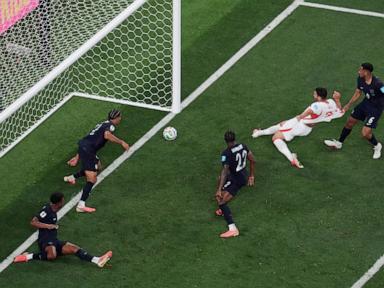
Mauricio Pochettino is finding out that coaching the United States Men’s National Team is not just a tactical puzzle. It is a cultural battleground. The Argentine manager’s irritation after a 3-2 group-stage loss to Turkey exposed a deep rift between his European-forged expectations and the fragile psyche of American soccer fandom. While fans and pundits reacted with familiar panic to a defeat, Pochettino viewed the match as a necessary, brutal data point in a longer cycle. The resulting friction shows that the biggest obstacle facing the USMNT before the upcoming World Cup might not be the players on the field, but the unrealistic environment surrounding them.
The Friction in Austin
The baseline facts of the match are straightforward. The United States rotated its squad, experimented with defensive lines, and surrendered three goals to a disciplined Turkish side that punished structural errors. In tournament play, a loss is always a setback. Don't forget to check out our earlier post on this related article.
But Pochettino’s post-match press conference shifted the narrative from a standard tactical review to an ideological critique. He didn't just defend the performance; he attacked the perception of the performance. He questioned the underlying assumption that the USMNT should comfortably roll through international opponents without experiencing growing pains.
This reaction was not an emotional outburst. It was a calculated message to a soccer culture that has grown accustomed to immediate gratification and soft grading curves. For decades, American soccer media and fans have treated friendly matches and group-stage encounters with a strange duality. Victories are heralded as proof of world-class progression. Losses are treated as catastrophic system failures. Pochettino is attempting to break this cycle by refusing to validate the emotional swings of the public. If you want more about the background here, CBS Sports offers an informative summary.
The Trap of the Gold Standard
To understand why Pochettino is annoyed, you have to look at where he spent his formative managerial years. At Tottenham, Paris Saint-Germain, and Chelsea, a loss meant a week of intense media scrutiny, intense fan protests, and board-level pressure. The stakes were concrete. Every match carried the weight of historical legacy and financial survival.
In the United States, the national team operates in a commercial bubble. The players are celebrated for their club pedigree in Europe, yet the domestic environment rarely holds them to the same standard when they don the national shirt.
Consider the structure of international soccer development. European and South American giants test themselves against peer competitors in high-stakes environments like the UEFA Nations League or World Cup qualifiers that feature brutal away dates in places like Montevideo or Asunción. The USMNT historically dominates a relatively weak region, coasting through matches against smaller nations where individual athleticism can mask tactical deficiencies.
When a team accustomed to winning via physical superiority faces a tactically sophisticated opponent like Turkey, the cracks show quickly. Turkey did not outrun the U.S. side. They outthinking them. They exploited the space behind the American fullbacks, triggered pressing traps at the exact moments the U.S. center-backs tried to build from the back, and remained compact when the U.S. possessed the ball in non-threatening areas.
Pochettino knows this. He planned for it. He explicitly stated that these are the types of failures required to build a resilient squad. The anger from the fan base suggests a lack of understanding of how elite teams are constructed. You do not learn how to survive a World Cup knockout match by winning comfortable matches against regional rivals. You learn it by bleeding goals against European tactical machines and figuring out how to plug the holes.
The Myth of the Golden Generation
The current crop of American players has been labeled the Golden Generation by media outlets eager to sell the sport to a mainstream audience. It is an easy narrative. Christian Pulisic, Weston McKennie, and Antonee Robinson play at historic European clubs. They feature in Champions League matches.
However, this branding has created a dangerous disconnect between individual resume and collective execution.
Having talent scattered across Europe is not the same as having a cohesive national team identity. When Pochettino looks at his roster, he sees a group of players who are often rotational pieces or specific role players at their clubs, rather than the undisputed leaders of those teams. When they join the national team, they are suddenly expected to dictate the tempo of international matches, break down low blocks, and manage the game like seasoned veterans.
Against Turkey, the lack of on-field leadership was stark. When the Turkish side pressed high in the second half, the U.S. midfield crumbled into predictable lateral passing lanes. There was no internal calibration, no senior player stepping up to slow the game down or alter the tempo. Pochettino can draw lines on a whiteboard, but he cannot inject ten years of elite game management into a twenty-three-year-old midfielder’s brain during a ninety-minute match.
The disappointment felt by the fan base stems from the belief that the Golden Generation title is an earned status rather than a marketing slogan. Pochettino’s irritation is a direct challenge to this myth. He is telling the public, and perhaps the locker room, that names on a team sheet mean nothing if the team cannot solve basic tactical problems under pressure.
Redefining the Meaning of a Loss
In international tournament preparation, not all defeats are equal. A loss that exposes systemic flaws while allowing a manager to evaluate depth is infinitely more valuable than an ugly, unconvincing win that sweeps problems under the rug.
The match against Turkey provided several vital realizations that will shape the team going forward.
- Defensive Depth Restrictions: The drop-off in positional awareness between the starting center-backs and the reserve options is severe. High-pressing systems require center-backs who can defend in space; the backup options struggled significantly when turned toward their own goal.
- The Transition Vulnerability: The U.S. midfield remains highly vulnerable to counter-attacks when the fullbacks push high up the pitch. Turkey’s second goal was a textbook example of exploiting the vacant space left by an advancing American defense.
- The Striker Dilemma: Despite various tactical experiments, the team still lacks a focal point in the penalty box who can create goals out of half-chances when the primary winger options are neutralized.
If Pochettino had prioritized a meaningless group-stage result, he could have played a conservative, low-block defensive system, ground out a 1-0 win or a boring draw, and kept the critics quiet. Instead, he forced the team to play an expansive, difficult style that tested their limits. They failed the test. That failure gives the coaching staff an exact blueprint of what needs to be fixed before the matches actually matter.
The Modern Fan Identity Crisis
The reaction to the Turkey match highlights a broader issue within the American soccer landscape. The fan base is caught between two distinct identities. On one hand, there is a desire to be taken seriously on the global stage, to be viewed as a legitimate soccer power capable of competing with Brazil, France, or Germany. On the other hand, there remains a fragile, defensive mentality that reacts to every setback with panic, demanding immediate changes and scapegoating individual players or managers.
True soccer cultures understand that progress is non-linear. Germany underwent a massive, decade-long overhaul after a disastrous Euro 2000 campaign, a process that involved painful losses and tournament exits before culminating in a World Cup title in 2014. France experienced years of internal chaos and tactical missteps before finding the right balance under Didier Deschamps.
The U.S. fan base wants the trophies and the respect without enduring the uncomfortable, messy middle stages of development. They want a world-class team but react with existential dread when that team looks ordinary against high-quality opposition.
Pochettino is not going to coddle this insecurity. His career was built in environments where pressure is constant but expectations are grounded in football reality. If American fans want to judge the national team by European standards, they must also learn to analyze matches with European perspective. A loss in a developmental window is an investment in the future, not a reason to tear down the house.
The path forward requires a collective tempering of expectations and a focus on incremental development. The U.S. team is not elite yet. They are an athletic, talented, but tactically immature group trying to learn a high-level system under a world-class manager. There will be more losses like the one against Turkey. There will be matches where the team looks disorganized and outclassed.
The real test of American soccer will not be whether they can avoid these defeats, but whether the culture possesses the maturity to let Mauricio Pochettino do the painful work necessary to fix them.