Popular science journalism loves a neat, tidy metaphor.
When mainstream outlets cover measles, they inevitably reach for the exact same lazy comparison. They tell you the virus gives your body "immune amnesia." They paint a picture of a digital hard drive getting formatted, wiping away the saved files of past colds, flus, and childhood vaccines, leaving you with a blank slate.
It is catchy. It is easy to digest. And it is dangerously incomplete.
Calling measles-induced immune suppression "amnesia" implies a passive loss of data. It suggests your immune system simply forgets who its enemies are, waiting patiently to re-learn them over the next few years. Having spent over a decade tracking viral pathogenesis and reading the raw immunological data that never makes it into press releases, I can tell you the reality is far more aggressive.
The measles virus does not just erase your memory. It executes a hostile takeover of your lymphatic architecture, liquidates your veteran defense forces, and replaces them with a hollow, genetically restricted clone army that leaves you biologically vulnerable to opportunistic killers for up to three years.
If you think the danger of measles ends when the red rash fades, you are asking the wrong question. You should not be asking how to help your immune system "remember." You should be asking how your body survives a total structural collapse of its adaptive defense network.
The Lie of the Blank Slate
To understand why the "amnesia" metaphor fails, you have to look at the mechanics of cellular invasion. Most respiratory viruses—like influenza or rhinoviruses—are localized thugs. They infect the epithelial cells lining your nose, throat, and lungs. Your immune system spots the breach, sends in specialized troops, clears the infection, and builds long-lived memory B and T cells to ensure that specific strain never bothers you again.
Measles does not play by those rules. It is a systemic assassin.
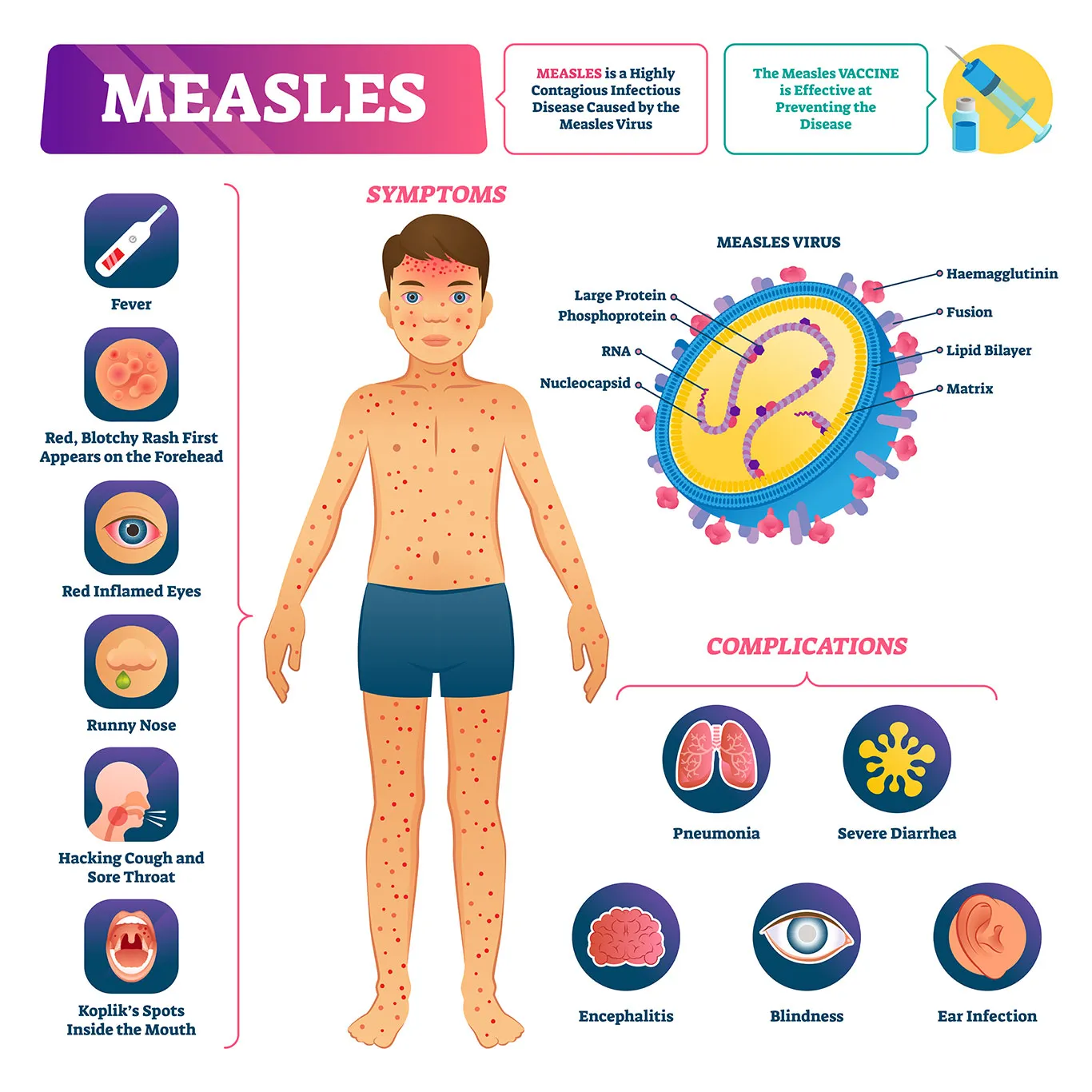
When you inhale the measles virus, it bypasses your standard epithelial defenses entirely. Instead, it uses a specific surface protein called hemagglutinin to lock onto a receptor known as CD150 (also called SLAM).
Where is CD150 found? Not on your skin. Not on the surface of your lungs. It sits directly on the surface of your immune cells—specifically your macrophages, dendritic cells, and your memory B and T lymphocytes.
Think about the sheer audacity of this evolutionary strategy. The virus uses your immune system’s own communication receptors as a front door. Dendritic cells, whose entire job is to patrol the airways, capture invaders, and carry them back to the lymph nodes to sound the alarm, become Trojan horses. They pick up the measles virus and dutifully transport it straight into the command centers of your immune system: your lymph nodes, spleen, and thymus.
Once inside, the virus replicates explosively. It does not just nudge your memory cells into forgetting their training. It infects them directly and triggers widespread apoptosis—programmed cell death.
In 2019, geneticist Stephen Elledge and epidemiologist Michael Mina published landmark research in Science that finally quantified this carnage. Using a tool called VirScan to analyze the blood of unvaccinated children before and after natural measles infection, they discovered that the virus wiped out between 11% and 73% of the children's entire antibody repertoire.
Up to three-quarters of a child's hard-won immunological history—gone in a matter of weeks.
The Illusory Recovery
Here is where the mainstream narrative completely drops the ball.
If you look at a standard blood panel of a child a few weeks after they recover from measles, their white blood cell count looks completely normal. To an untrained eye, the crisis is over. The hard drive has been wiped, sure, but the storage capacity is back up to 100%.
That recovery is an optical illusion.
When the measles virus destroys your diverse population of memory B and T cells, your bone marrow and thymus panic. They flood the bloodstream with newly minted lymphocytes to fill the empty space in your lymph nodes. On paper, your cell counts bounce back. In reality, you have replaced an elite, battle-hardened special forces unit with millions of identical, untrained recruits.
Immunologists call this homeostatic proliferation. Instead of maintaining a vast library of millions of different B-cell receptors capable of recognizing thousands of distinct pathogens, your body clones a tiny surviving fraction of cells over and over again.
Your immune repertoire becomes dangerously narrow. You have the numbers, but you lack the diversity.
Imagine a security firm guarding a massive skyscraper. Before the attack, they had ten thousand guards, each trained to recognize a different criminal, speak a different language, and handle a specific type of threat. After the attack, nine thousand of those guards are dead. To cover the shifts, the firm clones the remaining one thousand guards ten times each. The building looks fully staffed, yet the security team is now completely blind to ninety percent of the threats walking through the front doors.
This structural bottleneck explains why measles mortality has historically been so devastating, and why our modern metrics wildly underestimate the virus's true body count.
The Three-Year Shadow
For decades, public health officials noticed a bizarre statistical anomaly. Whenever a country introduced the measles vaccine, overall childhood mortality plummeted—not just by the number of deaths usually attributed to measles, but by 30% to 50%.
Children stopped dying of pneumonia. They stopped dying of bacterial sepsis. They stopped dying of severe diarrheal diseases.
For years, researchers assumed this was just a correlation, perhaps tied to better sanitation or improved nutrition coinciding with vaccine rollouts. Then, in 2015, Michael Mina and Bryan Grenfell analyzed decades of epidemiological data from England, Wales, the United States, and Denmark. They proved that the drop in non-measles deaths was directly tied to the prevention of measles-induced immune suppression.
They also uncovered the timeline. It does not take a few weeks for your immune diversity to recover. It takes two to three years.
During that thirty-month window, a child who "survived" measles is walking around with a compromised, monocultural immune system. When they encounter Streptococcus pneumoniae or Haemophilus influenzae—bacteria their bodies used to swat away effortlessly—they lack the specific neutralizing antibodies and memory T-cells required to mount a rapid defense. They end up in the hospital with secondary bacterial pneumonia. If they die, the death certificate says pneumonia, not measles.
The virus gets away with murder, leaving zero fingerprints at the scene.
Dismantling the "Natural Immunity" Delusion
There is a persistent, deeply flawed argument circulating in wellness circles and anti-vaccine forums that contracting measles naturally is a beneficial rite of passage—a workout that "strengthens" a child's immune system.
From a purely biological standpoint, this is like arguing that burning down a library strengthens your reading comprehension because it forces you to buy new books.
Let's be brutally honest about the trade-off. If you catch measles naturally, you do gain lifelong immunity to one single pathogen: the measles virus itself. Because the virus infects your immune cells so thoroughly, the survivors end up with an overwhelmingly robust response directed almost exclusively against measles.
In exchange for that single shield, you surrender your immunity to almost everything else you have ever been exposed to. You wipe out your protection against influenza, herpesviruses, pneumococcus, and even the vaccines you received prior to the infection.
The MMR (Measles, Mumps, Rubella) vaccine, by contrast, uses a live-attenuated strain of the virus. Because it is weakened, it replicates just enough in localized tissues to train your dendritic cells and generate a lifelong memory response, without triggering the systemic slaughter of your CD150-positive memory cells. VirScan data confirms this: children who receive the MMR vaccine show zero loss of their pre-existing antibody repertoires.
You get the shield without burning down the house.
The Questions You Should Actually Be Asking
When people search for information about measles and the immune system, they usually get bogged down in superficial anxieties. Let's look at the real mechanics behind the most common misconceptions.
Does the measles virus actually kill you directly?
Rarely. In developed nations, direct measles mortality from viral encephalitis or giant cell pneumonia occurs in roughly 1 to 3 out of every 1,000 cases. The vast majority of deaths happen weeks, months, or even two years later, caused by secondary bacterial and viral infections that take advantage of your depleted lymphocyte diversity. Focusing solely on the acute rash phase completely misses the primary mechanism of lethality.
Can you "boost" your immune system after a measles infection with supplements or diet?
No. There is no amount of vitamin C, zinc, elderberry, or bone broth that can accelerate the reconstitution of your V(D)J recombination—the genetic shuffling process your bone marrow uses to create diverse B and T cell receptors. Rebuilding a lost immune repertoire requires physical re-exposure to every single pathogen you previously encountered, one exhausting, high-risk infection at a time.
What about adults who had measles as children? Are they still compromised?
If you survived childhood measles and made it past that three-year danger zone, your immune system eventually rebuilt its library through decades of subsequent exposures. The immediate structural vulnerability is gone. However, you still carry a microscopic, terrifying lottery ticket: Subacute Sclerosing Panencephalitis (SSPE). In roughly 1 in 10,000 cases (and up to 1 in 600 for infants infected under age one), a mutated form of the virus hides silently inside the neurons of the brain, evading the immune system entirely, only to wake up 7 to 10 years later and cause progressive, universally fatal brain inflammation.
What is the downside of our current vaccination strategy?
To maintain absolute intellectual honesty, we have to acknowledge the limitations of our own interventions. Natural measles infection induces a wildly intense, lifelong sterilizing immunity because it hijacks the immune system so completely. The attenuated MMR vaccine, precisely because it does not cause systemic destruction, produces slightly lower antibody titers over decades. While two doses of MMR are roughly 97% effective at preventing measles, waning immunity in adulthood is a documented reality in populations where the wild virus no longer circulates to provide natural "boosters." We have traded the devastating collateral damage of wild infection for a safer, slightly less permanent shield that requires high herd immunity thresholds—around 95%—to keep the virus locked out.
The Actionable Reality
If you or your child have already contracted wild measles, you cannot undo the cellular wipeout. You are now managing a multi-year immunological vulnerability. Standard pediatric advice to "rest and hydrate" is entirely insufficient once the rash clears.
- Audit and Re-Administer Lost Vaccines: Because wild measles destroys pre-existing vaccine-induced antibodies, any immunizations given prior to the infection—including tetanus, diphtheria, pertussis, polio, and pneumococcal vaccines—may now be functionally useless. Work with an immunologist or infectious disease specialist to run antibody titers or systematically re-vaccinate once the acute phase has resolved.
- Treat Secondary Fevers as Medical Emergencies: For the next 36 months, a routine ear infection, sinusitis, or mild cough cannot be brushed off. Without your baseline memory T-cells and neutralizing antibodies, localized bacterial infections can escalate into invasive pneumonia or bacteremia at terrifying speeds. Demand rapid diagnostic cultures rather than waiting to see if an infection clears on its own.
- Eliminate Exposure Vectors: Recognize that the post-measles patient is clinically comparable to someone undergoing mild immunosuppressive therapy. High-density indoor environments during peak respiratory virus seasons are no longer minor inconveniences; they are high-stakes exposure events to pathogens the body must now fight completely blind.
Measles is not a benign childhood rite of passage, and it is not a simple case of biological forgetfulness. It is a calculated, systemic demolition of human adaptive immunity.
Stop calling it amnesia, and start treating it like the cellular massacre it actually is.