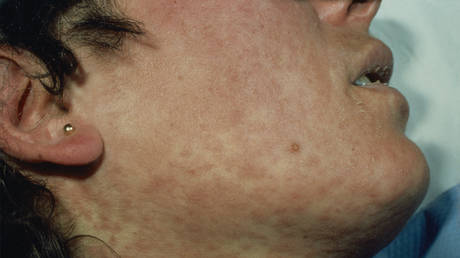
Every headline about surging measles cases sells the exact same narrative: a collapse in public trust, a wave of anti-vax sentiment, and an unprecedented health crisis. It makes for fantastic outrage bait. It keeps people clicking. It is also a complete misdirection.
When media outlets scream about measles cases hitting historic highs, they focus entirely on the tail end of a long, predictable supply-chain failure in modern preventive medicine. The mainstream commentary wants you to believe this is purely a cultural war about misinformation. That diagnosis is lazy. It lets structural healthcare failures off the hook while giving observers a comfortable scapegoat.
The real breakdown isn't just that some parents are reading conspiracies on social media. The real breakdown is that our public health delivery systems are structurally incapable of maintaining basic coverage in marginalized, highly mobile, and under-resourced communities.
The Coverage Fallacy
Public health authorities love to talk in national averages. They boast about overall vaccination rates hovering around 90% or 92%, reassuring the public that herd immunity remains largely intact.
That math is fundamentally broken.
Epidemiology 101 teaches us that measles requires a extraordinarily high threshold for herd immunity—typically between 93% and 95%—because the virus is absurdly contagious. A single infected individual can pass the virus to up to 18 non-immune people.
National averages mask hyper-localized pockets of vulnerability. You can have a state with 96% overall coverage, but if two specific county school districts drop to 75%, you don't have a minor dip. You have a massive outbreak waiting for a spark.
When public health agencies treat coverage as a monolithic national metric, they miss the micro-pockets where immunity actually collapses. The mainstream media looks at these outbreaks and blames a singular, villainous ideology. In reality, these pockets are created by a mix of socioeconomic access barriers, systemic healthcare deserts, and fragmented record-keeping systems that lose track of pediatric immunization schedules the moment a family moves across county lines.
Stop Treating Access Like an Ideology Problem
It is easy to blame suburban ideological resistance for falling numbers. It requires far less heavy lifting than auditing a broken clinical delivery network.
I have spent years looking at how health infrastructure operates under stress, and the pattern is always identical: when access degrades, missing records get labeled as refusal.
If a working parent cannot take three hours off work to navigate an inefficient public clinic, or if a rural community loses its only local pediatric care provider, children miss their MMR shots. When school entry deadlines arrive and the paperwork isn't filed, those kids get lumped into the exact same statistical bucket as active vaccine deniers.
We are confusing delivery friction with active resistance.
Consider what actually happens when clinics close and public funding is diverted away from routine pediatric care:
- Appointment shortages: Parents face multi-month waitlists for standard wellness visits.
- Tracking failures: State registries fail to sync, meaning doses given at local pharmacies never register on official school records.
- Cost barriers: Even when the dose itself is funded, the administrative fees or lost hourly wages turn a simple shot into a major financial burden.
By framing every unvaccinated child as the product of an ideological choice, public health authorities excuse their own operational failures. It allows them to fight a culture war on social media instead of fixing the logistics of local delivery.
The Price of Single-Disease Obsession
Fixating on measles headline numbers leads to terrible resource allocation.
When media panic forces health departments to scramble and throw emergency funding at localized measles containment, money is almost always pulled from existing primary care budgets. Emergency contact tracing, isolation protocols, and rapid-response clinics devour resources that were keeping standard childhood health checks afloat.
It is a classic public health trap: reactive management over proactive infrastructure.
+-------------------------------------------------------------------+
|                  THE REACTIVE FUNDING SPIRAL                      |
+-------------------------------------------------------------------+
|  1. Infrastructure degrades -> Pockets of low coverage form       |
|  2. Measles outbreak occurs -> Media triggers widespread panic    |
|  3. Emergency funds diverted -> Primary care budgets stripped     |
|  4. Routine health checks drop -> Next outbreak risk increases    |
+-------------------------------------------------------------------+
The trade-off is brutal. Every dollar spent on emergency PR campaigns and reactive outbreak response is a dollar taken away from fixed, accessible pediatric clinics that prevent a dozen other preventable conditions. We are burning down the house to catch a single mouse.
Rebuilding Public Health Logistics
If we actually want to solve the problem instead of just arguing about it on TV, the strategy has to shift entirely from lecturing to logistics.
First, dismantle the absurdly complex tracking systems that turn simple record-keeping into an administrative nightmare. Childhood immunization records should be portable, digital, and automatically updated across state borders without requiring parents to play private detective between different hospital networks.
Second, decouple basic preventative care from traditional clinical settings. If a child can only get vaccinated during standard 9-to-5 business hours at a specialized clinic, the system is designed for failure. Mobile health units, school-based health centers, and community walk-in centers must become the default delivery mechanisms.
Third, stop using broad-brush shaming campaigns. Decades of behavioral health data prove that aggressively lecturing people does not change health behaviors; it simply drives hesitant individuals away from medical providers entirely.
The measles surge isn't a mystery, and it isn't purely a triumph of anti-science rhetoric. It is the direct outcome of a fragile health delivery system that relies on broad national statistics to hide glaring local failures. Until we treat preventive care as an absolute logistical priority rather than a communication exercise, we will keep repeating this exact same outbreak cycle every few years.