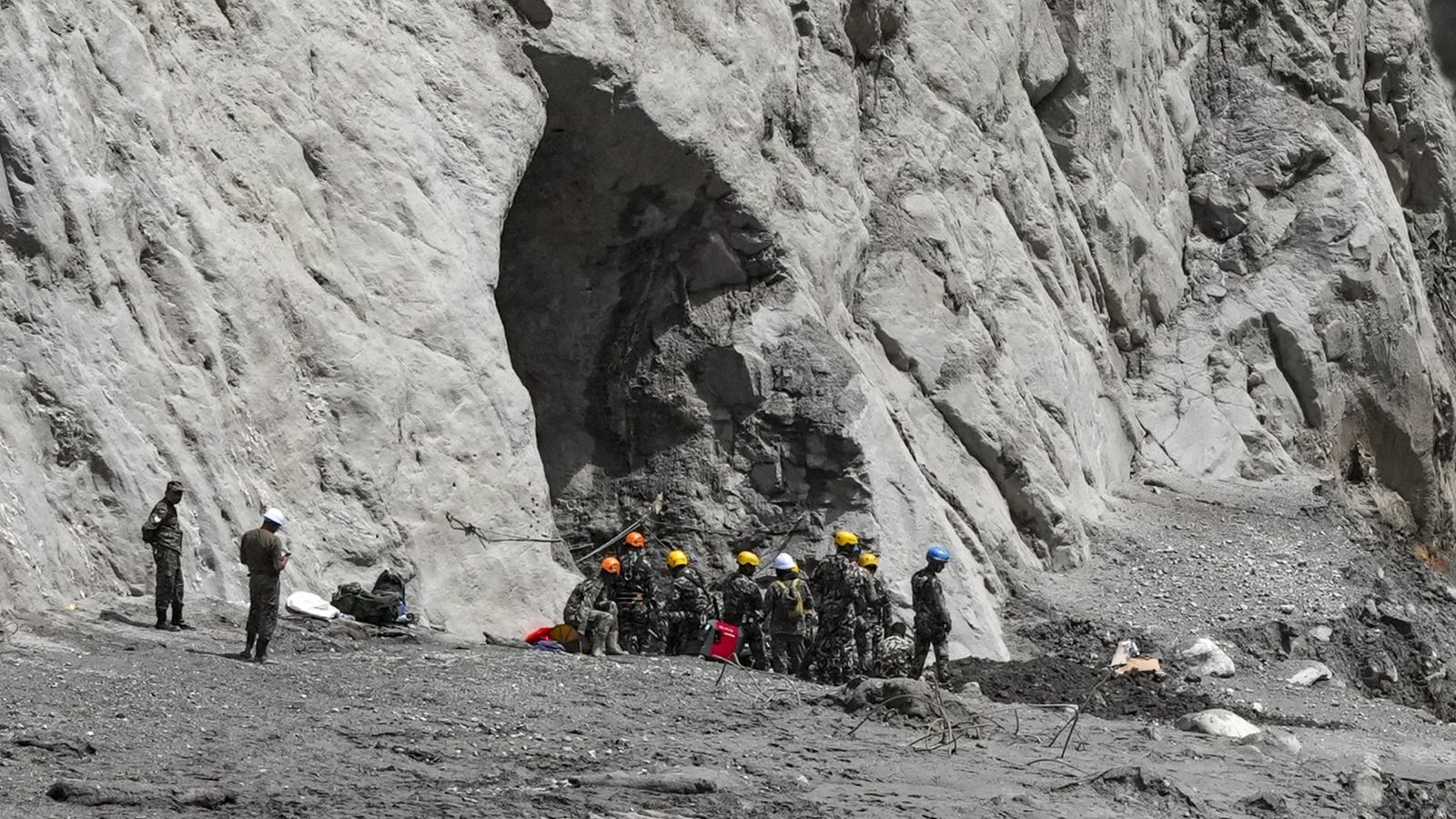
The operational velocity of cross-border humanitarian assistance during regional climate catastrophes depends entirely on pre-positioned logistics frameworks and bilateral institutional trust. When catastrophic flash floods swept through the Bhote Koshi and Trishuli river basins in Nepal, killing hundreds and trapping workers within remote subterranean hydropower infrastructure, the speed of external intervention became the primary determinant of survival outcomes. Political commentary often reduces these interventions to diplomatic courtesy, but a structural examination reveals a complex supply chain challenge governed by geographic friction, bureaucratic throughput, and specialized asset deployment.
Evaluating the mechanics of foreign disaster relief requires moving past qualitative diplomatic praise to analyze quantitative throughput metrics. When the Ministry of External Affairs in New Delhi dispatched consecutive aircraft carrying dozens of tonnes of humanitarian assistance and disaster relief material, the operational value was determined by three distinct variables: time-to-delivery, payload utility, and integration efficiency with local incident command systems.
The first variable, time-to-delivery, dictates survival curves in flash flood scenarios where hypothermia and trauma compound rapidly. Airlifting medical packets, water purification units, and heavy-duty shelter materials bypasses the structural bottlenecks of washed-out mountain roads. However, aerial logistics present their own cost functions. High-altitude flight operations in narrow Himalayan gorges require specialized rotorcraft and pilots certified for extreme terrain, turning asset allocation into a zero-sum calculation between search-and-rescue sorties and relief cargo transport.
The second variable, payload utility, measures how closely incoming supplies match the localized deficit. In the initial phase of the Nepal floods, the immediate requirement centered on heavy extrication gear, dewatering pumps for flooded tunnels, and specialized thermal detection equipment to locate victims buried beneath meters of silt and boulders. Consignments that prioritize generic food packets over specialized engineering tools register lower efficiency scores during the acute rescue window, regardless of total tonnage.
The third variable, integration efficiency, evaluates how rapidly foreign technical teams and specialized personnel can be embedded within the host nation's command structure. When technical experts from India, China, and South Korea arrived to assist local security forces—comprising over 20,000 deployed personnel from the Nepal Army, Nepal Police, and Armed Police Force—operational friction threatened to slow down execution. Seamless multi-national disaster response relies on pre-existing interoperability protocols, shared communication frequencies, and standardized incident command frameworks.
Geographic and infrastructural constraints heavily skew the economics of disaster recovery in mountainous terrain. The localization of hydropower projects within deep, inaccessible gorges creates asymmetric risk profiles. When tunnels flood and access roads fracture, conventional heavy machinery cannot reach the site. This necessitates vertical extraction via helicopter, which introduces severe capacity constraints. With thousands of individuals displaced or missing across multiple districts, flight rotations must prioritize immediate life safety over infrastructure assessment, creating a temporary information vacuum regarding asset damage and economic loss.
Bilateral early warning systems represent another critical node in the analytical framework. Criticisms regarding information asymmetry or delayed warnings often ignore the hydrodynamic realities of trans-boundary river systems. Rapid glacial lake outburst floods or sudden upstream blockages generate wave propagation velocities that outpace standard diplomatic communication channels. Effective early warning requires automated telemetry sharing at the basin level, bypassing ministerial desks to establish direct, machine-to-machine data pipelines between meteorological departments.
Financial mobilization follows a similarly structured trajectory. As domestic relief funds and emergency appropriations are mobilized across affected municipalities, the transition from immediate search-and-rescue operations to long-term infrastructure reconstruction shifts the economic burden. Foreign funding mechanisms must transition from uncoordinated grants to structured project-finance frameworks aimed at climate-resilient civil engineering. Rebuilding washed-out bridges and hydropower installations requires incorporating updated hydrological modeling that accounts for accelerated glacial melt and higher frequency extreme precipitation events.
Deploy pre-positioned trilateral data-sharing agreements between hydrometeorological agencies in Nepal, India, and China to automate early warning triggers for trans-boundary river basins, eliminating diplomatic latency during high-velocity weather events.