The collapse of a major federal procurement initiative targeting migrant youth representation exposes deep structural friction within public-sector contracting. When the Office of Refugee Resettlement attempted to shift a substantial legal services portfolio to an unseasoned commercial entity, the subsequent withdrawal of the vendor revealed the limits of applying political alignment models to complex operational workflows. This dynamic illustrates how administrative restructuring in immigration infrastructure often breaks down when faced with the realities of execution capacity, institutional inertia, and strict statutory mandates.
To understand why large-scale administrative transitions fail in this arena, one must examine the mechanics of public-sector legal service delivery. The federal government operates under a series of statutory obligations, notably the Trafficking Victims Protection Reauthorization Act, which mandates legal protections and representation frameworks for unaccompanied minors processed through immigration proceedings. When established networks of non-profit providers—previously coordinated through organizations like the Acacia Center for Justice—are abruptly displaced, the system suffers from an immediate loss of continuity. Recently making news in this space: The Voice Behind the Desk Who Changed the Room.
The friction points can be categorized into three distinct operational failures.
The Three Pillars of Procurement Failure
1. The Competency Gap
Public procurement in specialized legal domains requires deep domain expertise. The awarded entity, Burke Law Group, maintained a roster of fewer than thirty attorneys with minimal documented immigration litigation infrastructure. Shifting a multi-million-dollar portfolio covering tens of thousands of vulnerable minors to a boutique firm creates an immediate delivery bottleneck. Without established intake pipelines, multilingual staff, and nationwide court-appearance networks, the theoretical capacity of a contract cannot match its practical execution. Additional information into this topic are explored by TIME.
2. Information Asymmetry and Compliance Friction
Administrative friction escalated when contracting authorities attempted to alter data-sharing requirements. The demand for sensitive case files introduces legal and ethical hurdles for practitioners bound by client confidentiality. When incumbent providers resist handing over records that compromise privileged information, the contracting agency faces a compliance stalemate. This standoff directly precipitated the expiration of legacy agreements and forced rushed, interim arrangements that disrupted active court proceedings.
3. Judicial and Operational Rejection
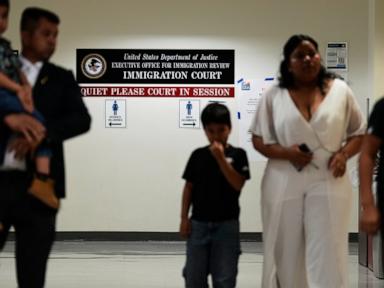
The transition strategy relied on substituting experienced non-profit legal aid groups with unready interim assignees, such as the U.S. Committee for Refugees and Immigrants. This substitution produced immediate friction in immigration courts, where newly assigned attorneys appeared without prior client contact, leading to judicial confusion and procedural gridlock. Simultaneously, federal judges intervened, ordering payments to legacy providers whose funding had been withheld, demonstrating that judicial oversight acts as a hard check against rapid administrative overhauls.
The Cost Function of Rapid Provider Replacement
When an administration attempts to abruptly reallocate public funds away from incumbent service networks, it triggers a cascade of systemic costs.
- Transition Drag: Institutional knowledge built over decades evaporates overnight. New entities must spend months onboarding personnel, establishing secure databases, and building relationships with local sponsors and custodians.
- Litigation Overhead: Displaced vendors routinely turn to the federal judiciary to enforce payment terms and challenge contract terminations. The resulting legal battles consume agency resources and create prolonged budgetary uncertainty.
- Quality Degradation: As represented minors face unannounced substitutions of counsel, trust between attorney and client deteriorates. In specialized administrative courts, this degradation directly alters case outcomes, skewing metrics in environments where legal representation dictates the statistical likelihood of relief.
Strategic Implications for Public Sector Infrastructure
The withdrawal from a high-value contract signals that commercial entities with political affiliations face severe reputational and operational risks when stepping into deeply entrenched public welfare domains. Boutique firms optimized for specialized advisory work or regulatory compliance lack the balance sheet elasticity and human capital distribution required to absorb nationwide caseloads of unaccompanied minors overnight.
Future iterations of federal contracting in sensitive jurisdictions will require a recalibration of vendor qualification metrics. Agencies can no longer treat legal service portfolios as standard procurement commodities. The combination of intense judicial scrutiny, complex ethical obligations, and high-volume casework dictates that any viable provider must possess demonstrated, multi-jurisdictional scale before capital allocation occurs.
To stabilize these operational pipelines, contracting authorities must decouple procurement cycles from short-term administrative shifts. Mandating phased transitions, safeguarding client confidentiality protocols, and instituting baseline staffing thresholds will remain prerequisites for any entity attempting to manage large-scale humanitarian legal frameworks. Without these structural safeguards, subsequent procurement attempts will encounter the same operational paralysis, leaving billions in capital unspent and thousands of active cases stranded in procedural limbo.


