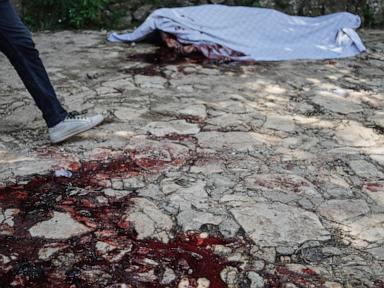
Security infrastructure in fragile states fails not through sudden collapse, but through progressive resource starvation and territorial displacement. When criminal networks overran the hill commune of Kenscoff, executing 47 individuals and abducting upwards of 50 others, public discourse focused entirely on the immediate horror. Yet the underlying mechanics of this attack reveal a predictable strategic calculation by armed coalitions operating in environments of asymmetric state capacity. Understanding how non-state actors exploit administrative blind spots requires examining the intersection of resource distribution, territorial geography, and tactical coercion.
The structural vulnerability of Kenscoff stems directly from how law enforcement allocates limited assets. Prior to the late-Sunday assault, security operations managed to suppress recorded violence in the commune by 66 percent over an eight-month window. This suppression created a false sense of institutional security, masking a fundamental economic reality of counter-gang operations: force concentration in urban centers necessarily generates peripheral deficits. The Haitian National Police, alongside international support elements, focused tactical units on central Port-au-Prince, where criminal syndicates control an estimated 70 percent of the territory. Criminal networks recognized this defensive posture and executed a lateral expansion into rural and semi-rural transition zones.
Territorial expansion into elevated communes like Kenscoff serves a dual utility for coalitions such as the Viv Ansanm network. Geographically, these high-altitude zones function as choke points and observation posts overlooking upscale districts like Pétion-Ville, while securing alternative transit corridors connecting the capital to the southern regions. Economically and logistically, striking these areas imposes a severe strategic dilemma on state forces. When insurgents seize hostages and threaten mass executions should authorities retaliate, they establish a zero-sum game. If state forces deploy heavy armaments to retake the territory, the resulting collateral damage or hostage fatalities provide the syndicates with propaganda and psychological leverage. If forces withhold action, the state's monopoly on violence is exposed as theoretical.
Intelligence architecture within the region suffers from systemic latency. Official responses from law enforcement representatives regarding prior intelligence collection remained intentionally opaque, citing operational security while failing to demonstrate predictive capability. In environments where local intelligence networks are compromised or non-existent due to community intimidation, criminal groups operate with high maneuverability. The deployment of threats directed explicitly at police leadership via digital platforms illustrates an advanced psychological operations capability. These syndicates do not merely fight for turf; they systematically erode public trust by contrasting institutional promises of protection with visible operational impotence.
Compounding this security deficit is the external shock of forced population displacement and international repatriation dynamics. With records indicating roughly 1.5 million internally displaced persons nationwide and thousands killed over multi-month reporting cycles, the social fabric absorbs continuous trauma. Simultaneous deportation flights returning nationals from foreign jurisdictions into regions where the central government lacks baseline protective capacity add strain to already overextended municipal resources. Displaced populations fleeing peripheral massacres migrate toward inner-city zones or alternative rural pockets, expanding the footprint of human vulnerability faster than humanitarian or state actors can inventory the need.
The tactical equilibrium in such conflicts shifts entirely toward the aggressor when the state operates without strategic depth. To alter this trajectory, security planners must abandon reactive containment models that treat localized drops in crime rates as permanent victories. True stabilization requires simultaneous multi-zone garrisoning and real-time intelligence sharing that neutralizes proxy cells before they can consolidate control over strategic high ground. Without structural reform in asset allocation and rapid-response architecture, peripheral incursions will continue to punctuate the broader systemic decay.
47 Killed, Over 50 Kidnapped in Gang Attack Near Haiti's Capital
This video provides an on-the-ground look at the aftermath of the Kenscoff attack and the mounting pressure facing security forces.
http://googleusercontent.com/youtube_content/1