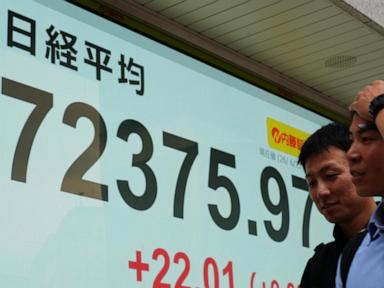
The simultaneous rise in Asian equity markets and the decline in global crude oil prices represent a classic manifestation of macro-economic rebalancing, driven by shifting risk premiums in the technology sector and changing supply-demand dynamics. Global capital flows are highly sensitive to two main variables: the cost of energy inputs and the projected earnings growth of high-multiplier technology firms. When technology shares rebound, they pull broader indices upward due to their heavy capitalization weighting. Concurrently, a drop in oil prices eases inflationary pressures, altering the discount rates applied to future corporate earnings. Understanding this dual movement requires analyzing the structural drivers of technology valuations alongside the specific supply-demand frictions governing the energy markets.
The Technology Multiplier and Index Capitalization Weights
The recovery in Asian equities is primarily a function of concentrated capital allocation within the semiconductor and hardware manufacturing ecosystems. In major Asian indices, such as the Taiwan Capitalization Weighted Stock Index (TAIEX) and the South Korean KOSPI, technology companies do not merely participate in the market; their market capitalization dictates the directional movement of the entire index.
This structural concentration creates a multiplier effect across the broader economy through three distinct transmission vectors:
- The Wealth Effect and Capital Expenditure: As the equity valuation of primary technology manufacturers increases, corporate balance sheets expand, unlocking credit facilities and accelerating capital expenditure (CapEx) cycles. This spending directly benefits secondary and tertiary suppliers in the industrial and logistics sectors.
- Foreign Institutional Investment (FII) Inflows: Global asset managers operating on systematic momentum or risk-parity frameworks automatically increase exposure to regions showing positive earnings revisions. Because technology represents the highest beta component of these markets, a localized rebound triggers automated, broad-based index buying.
- Currency Appreciation Dynamics: Heavy inflows of foreign capital to purchase domestic equities strengthen the local currency. A stronger domestic currency reduces the cost of imported raw materials, which artificially expands gross margins for non-technology manufacturing firms within the same geographic region.
The core vulnerability in this framework is the reliance on cyclical demand for hardware. A technology-led index rally can mask underlying stagnation in consumer staples, real estate, and financial sectors, creating an index that appears healthy while the broader domestic economy experiences compressed credit growth.
The Inverse Correlation of Energy Inputs and Equity Valuations
Crude oil acts as a foundational tax on global industrial productivity. A decline in oil prices operates as an immediate supply-side stimulus, lowering the marginal cost of production across every sector that relies on physical logistics, chemical processing, or high-energy manufacturing.
$$\Delta \text{Equity Valuation} \propto -\Delta \text{Energy Input Costs}$$
When energy prices contract, the mechanism alters equity valuations through two primary channels: the compression of discount rates and the expansion of operational cash flows.
Discount Rate Compression
Central banks determine monetary policy largely based on headline inflation metrics, of which energy is a volatile and significant component. High oil prices sustain elevated inflation expectations, forcing central banks to maintain higher terminal interest rates. This increases the weighted average cost of capital (WACC) for corporations. When oil prices fall, the implied threat of persistent inflation recedes. Market participants adjust their models to price in a lower path for interest rates, which compresses the discount rate applied to long-duration assets—specifically technology stocks with earnings projected far into the future.
Operational Margin Expansion
For non-energy corporations, energy costs represent a direct deduction from free cash flow to the firm (FCFF). The relationship between energy input reduction and net margin expansion is non-linear; industries with low pricing power experience immediate margin relief when their input costs drop, as they are not forced to pass the savings along to consumers instantaneously.
| Industry Sector | Sensitivity to Oil Price Reductions | Primary Transmission Mechanism |
|---|---|---|
| Technology (Hardware) | Moderate-Low | Reduced global distribution and logistics costs |
| Industrials / Manufacturing | High | Direct reduction in thermal and chemical processing costs |
| Transportation / Logistics | Critical | Immediate expansion of operating margins via fuel cost deflation |
| Consumer Discretionary | High | Increase in consumer disposable income |
Structural Drivers of the Crude Oil Downturn
The decline in oil prices is rarely a mono-causal event. It is almost always a simultaneous convergence of macroeconomic deceleration and structural supply expansions. To quantify the downward pressure on energy, the market must be broken down into its structural components: supply elasticity, demand destruction, and inventory accumulation cycles.
The primary driver is the expansion of non-OPEC+ production, particularly from American shale plays and emerging South American producers. These entities operate outside the quota frameworks established by national oil companies, creating a persistent supply overhang that invalidates artificial price floors. When non-OPEC+ production outpaces global demand growth, inventories accumulate at major trading hubs like Cushing, Oklahoma. This accumulation forces the futures curve into contango, where prompt-month delivery contracts trade at a discount to future months, signaling immediate physical oversupply.
On the demand side, economic deceleration in major industrial economies reduces the aggregate consumption of distillates. When industrial production indexes contract, transport volumes fall, leading to immediate demand destruction for diesel and jet fuel. This demand destruction is amplified by structural shifts toward electrification and efficiency gains in corporate logistics networks, meaning that even a partial recovery in economic activity no longer guarantees a linear recovery in oil consumption.
Portfolio Realignment Strategies
The current macroeconomic environment requires an immediate shift in capital allocation, moving away from defensive, inflation-hedged assets and toward growth-oriented, cost-sensitive sectors.
Investors should systematically reduce exposure to upstream energy exploration and production companies. These entities face compressed revenues from falling commodity prices alongside sticky capital expenditure costs driven by historical inflation. Capital should instead be rotated into high-conviction technology infrastructure and logistics firms. Logistics providers stand to capture a double benefit: increasing trade volumes driven by the technology sector's recovery and falling operational costs via lower fuel expenditures.
Simultaneously, regional allocation must favor net energy-importing economies within Asia over energy-exporting nations. Economies that rely heavily on foreign energy inputs experience a structural improvement in their current account balances when oil prices fall, which stabilizes domestic equity markets and provides a tailwind for domestic consumption growth.