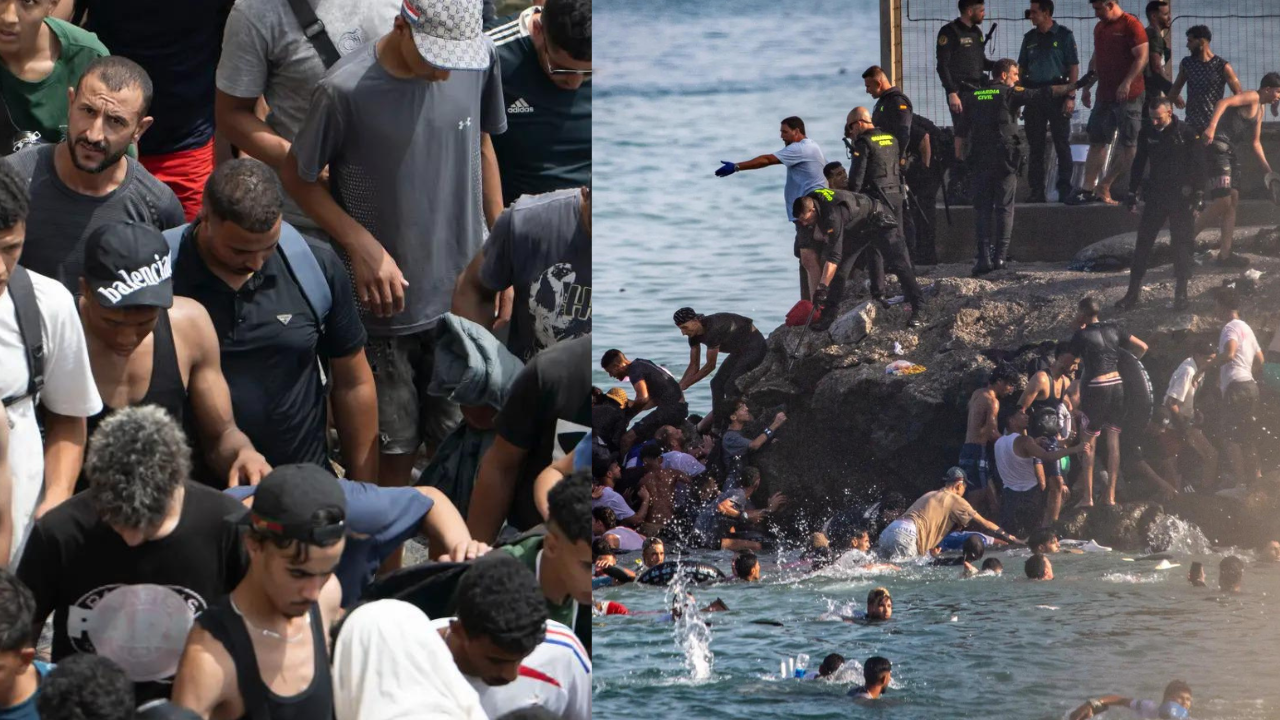
Geopolitical pressure points often operate through predictable behavioral incentives rather than random diplomatic friction. The recent movement of migrants toward the Spanish exclave of Ceuta through Moroccan-controlled transit corridors reveals a recurring systemic pattern. When border enforcement functions as a bilateral bargaining chip, physical barriers become secondary to administrative posture. Observers frequently misinterpret these surges as spontaneous security failures. In practice, they operate as calculated pressure tests within a broader diplomatic framework.
Understanding this dynamic requires shifting from episodic reporting to structural analysis. The frontier between Morocco and Spanish territories such as Ceuta and Melilla represents a high-stakes negotiation zone where migration management directly intersects with sovereignty claims, economic aid, and trade agreements.
The Bilateral Bargaining Architecture
Bilateral border enforcement relies on a transactional model. Sovereign states with external borders of the European Union frequently absorb the security externalities of maintaining fortress-like perimeter controls. For Morocco, managing thousands of kilometers of coastline and land borders incurs significant operational costs, including personnel allocation, intelligence gathering, and infrastructure maintenance.
When diplomatic tensions arise between Rabat and Madrid over issues ranging from trade access to the political status of Western Sahara, the economic and operational intensity of border patrols shifts. This shift is rarely binary. Instead, authorities calibrate enforcement capacity to signal dissatisfaction or to compel diplomatic concessions.
The mechanics of this signaling operate through observable operational variables. Intelligence sharing slows down. Patrol frequencies along specific coastal sectors drop. Administrative oversight of staging grounds near border fences relaxes. These adjustments lower the transaction costs for individuals attempting unauthorized entry.
The Operational Cost Function of Transit
For migrants assembled in northern Morocco, crossing into Ceuta is a function of cost, risk, and perceived opportunity. Migrants operate with imperfect information, relying on real-time signaling from peers and informal networks. When local security forces noticeably withdraw from key vantage points, the signal cascades rapidly through migrant camps.
This creates a sharp downward adjustment in the perceived risk of apprehension. The cost function shifts immediately:
- Risk of Detention: Reduced law enforcement visibility lowers the probability of interception prior to reaching the border fence or swimming around maritime breakwaters.
- Time Horizon: Staging periods shorten as movement restrictions lift, reducing the financial burn rate for individuals paying for temporary lodging in border towns like Fnideq.
- Physical Deterrence: Reduced use of crowd control measures by auxiliary forces creates an open pathway toward physical obstacles.
Migrants do not direct policy; they respond to the structural permissions established by state actors. When Moroccan authorities step aside or redirect transit flows toward specific sectors, they are effectively lowering the friction of movement to achieve a specific political outcome.
The European Union Security Externalization Dilemma
The broader European framework exacerbates this vulnerability. Brussels relies heavily on third-country partners to act as externalized border guards. This strategy creates a profound structural dependency.
By outsourcing containment to North African partners, the European Union ties its internal migration policy to external political stability and bilateral goodwill. This dependency introduces asymmetric leverage. The partner state holds the capacity to alter migration flows at will, while the receiving state must manage the domestic political fallout of sudden border arrivals.
Ceuta and Melilla amplify this asymmetry due to their unique geography. As the only physical European land borders on the African continent, they represent immediate, highly visible flashpoints. An influx of hundreds of individuals instantly strains municipal infrastructure, processing centers, and emergency services. This localized crisis generates disproportionate national media attention in Spain, which in turn compels diplomatic engagement from Madrid and Brussels.
Systemic Outcomes and Enforcement Limits
Efforts to secure these borders through physical reinforcement alone face diminishing marginal returns. Adding height to razor-wire fences or increasing the deployment of riot police addresses the symptom rather than the systemic driver. As long as border enforcement remains coupled to diplomatic leverage, physical barriers will be periodically undermined by administrative decisions taken miles away from the fence line.
The limits of this security model lie in its inherent instability. Externalizing border control to a state with its own regional ambitions and diplomatic grievances guarantees that migration will continue to be utilized as a strategic pressure valve.
To break this cycle, receiving nations must decouple long-term development aid and bilateral cooperation frameworks from short-term enforcement metrics. Until migration flows are treated as structural variables of international diplomacy rather than isolated law enforcement emergencies, border perimeters will remain vulnerable to administrative manipulation. Permanent border security requires insulating operational protocols from diplomatic disputes, an objective that remains unfulfilled within current bilateral frameworks.