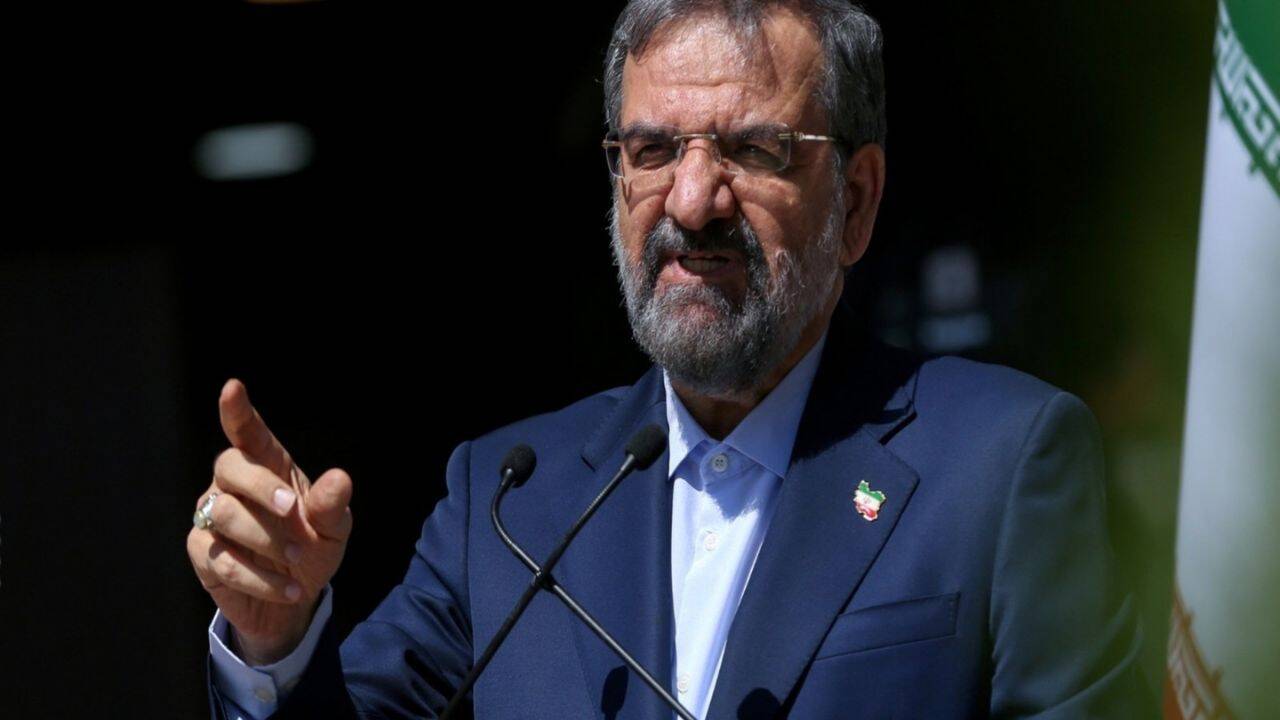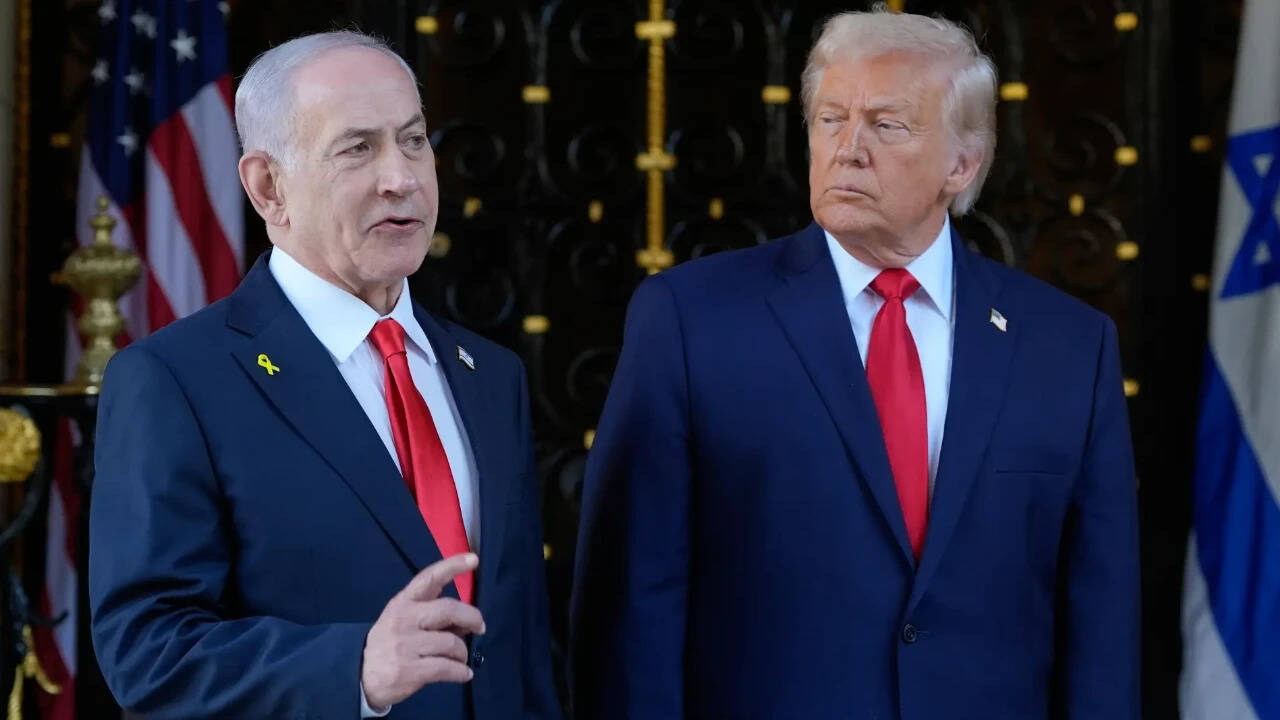
Bilateral consultations between Washington and Jerusalem regarding kinetic options against Tehran represent a calculated shift from passive containment to active coercive diplomacy. When the White House signals that fresh military strikes are under active consideration during direct leadership-level alignment with Israel, the communication itself functions as an operational instrument designed to alter Iranian risk calculations before a single munition is deployed.
Standard journalistic coverage of US-Israeli military consultations typically treats leadership phone calls as isolated diplomatic events or precursors to inevitable war. That framing misses the structural reality of modern deterrence. Strategic alignment between the United States and Israel operates as a dual-key escalation mechanism where diplomatic signaling, force posture adjustments, and target-set synchronization work in tandem to compress Tehran's decision-making timeline.
The Architecture of Dual-Key Signaling
Coercive diplomacy relies on credible threat generation. In the context of US-Iran relations, unilateral American threats often suffer from a credibility deficit due to domestic political constraints and historical reluctance to enter prolonged Middle Eastern ground conflicts. Direct coordination between the US President and the Israeli Prime Minister eliminates this ambiguity by linking American strategic reach with Israeli operational proximity and demonstrated willingness to strike high-value targets.
This synchronization alters the strategic calculus across three distinct operational layers:
- Intelligence and Target Deconfliction. Effective kinetic campaigns require real-time fusion of overhead imagery, signals intelligence, and human source reporting. Leadership-level alignment authorizes defense establishments to merge target folders—separating nuclear infrastructure, ballistic missile production facilities, and Islamic Revolutionary Guard Corps (IRGC) command nodes into tiered escalation ladders.
- Air Defense Integration. Any offensive strike against Iranian territory triggers an immediate defensive requirement across the Levant and the Persian Gulf. Coordinating offensive timelines ensures that Aegis ballistic missile defense destroyers, Terminal High Altitude Area Defense (THAAD) batteries, and Israeli multi-layered interception systems (Arrow, David's Sling, Iron Dome) achieve peak readiness simultaneously.
- Diplomatic Cover and Legitimacy. Publicizing leadership consultations prior to kinetic action establishes a shared political narrative. It signals to regional Gulf states and European allies that the action is coordinated rather than rogue, discouraging third-party mediation efforts that might otherwise stall operational momentum.
Distinguishing Verified Facts from Strategic Hypotheses
Rigorous geopolitical analysis requires separating documented operational realities from informed projections regarding intent.
Verified Operational Facts:
- Direct communication between US and Israeli executive leadership frequently precedes shifts in US Central Command (CENTCOM) force posture, including carrier strike group deployments and strategic bomber task force rotations.
- Both Washington and Jerusalem maintain standing contingency plans targeting Iran's nuclear enrichment facilities (such as Natanz and Fordow), drone manufacturing hubs, and energy export terminals.
- Previous exchanges of direct fire between Iran and Israel demonstrated that deeply buried facilities require specialized bunker-busting munitions—specifically the US-made GBU-57 Massive Ordnance Penetrator—which only American heavy bombers can deliver.
Educated Strategic Hypotheses:
- Leaks regarding "fresh military strikes" during leadership calls often serve as deliberate coercive signaling aimed at forcing Tehran into concessions without requiring actual kinetic execution.
- Washington's primary objective in weighing strikes is rarely regime change; rather, it is the restoration of deterrence thresholds that erode when proxy networks or ballistic missile salvos go unanswered at proportional scale.
- Jerusalem's strategic preference leans toward degrading core nuclear and missile production capabilities while Iranian air defenses remain degraded from prior engagements, viewing delay as an existential liability.
The Escalation Matrix and Target Selection Logic
When defense planners evaluate strike packages against Iran, they categorize options by the severity of systemic shock they inflict on the Iranian state and global markets. A strike is never merely a tactical event; it is an input into a complex economic and military system.
Tier 1: Peripheral and Proxy Nodes
Strikes focused on IRGC Quds Force logistics hubs, weapon depots in Syria or Iraq, or Houthi radar installations in Yemen carry low escalation risk. The mechanism here is attrition—raising the operational cost of Iran's forward defense doctrine without threatening regime survival inside Iranian borders. The limitation of Tier 1 strikes is diminishing returns; Tehran absorbs proxy losses as an acceptable cost of doing business.
Tier 2: Conventional Military and Missile Infrastructure
Targeting drone assembly plants, ballistic missile storage facilities, and air defense radar networks inside Iran represents a qualitative jump. This approach strips Tehran of its retaliatory capacity and exposes its airspace to follow-on operations. The cause-and-effect relationship is direct: degrading integrated air defense systems (IADS) forces Iran to choose between absorbing uncontested future strikes or launching its remaining missile inventory before it is destroyed on the ground—a classic "use it or lose it" instability trap.
Tier 3: Nuclear and Macroeconomic Chokepoints
Striking nuclear enrichment facilities or critical energy infrastructure—such as the Kharg Island oil terminal, which handles roughly 90 percent of Iran's crude exports—targets the regime's strategic crown jewels and fiscal solvency. While maximum-pressure advocates view this as decisive, the second-order effects include severe disruptions to Strait of Hormuz maritime traffic, spikes in global crude prices, and an immediate Iranian sprint toward a covert nuclear weapon breakout using residual, unmonitored centrifuge cascades.
The Cost Function of Kinetic Intervention
Decision-makers in Washington evaluate military options through an implicit cost function balancing immediate tactical degradation against long-term strategic blowback. Standard reporting treats the decision to strike as a binary choice—act or do nothing—ignoring the continuous variables that constrain executive action.
The first constraint is munition expenditure versus magazine depth. High-intensity air and missile defense operations consume interceptors far faster than defense industrial bases can replace them. Deploying SM-3 and SM-6 interceptors to defend against retaliatory ballistic missile barrages depletes stockpiles reserved for deterrence contingencies in the Indo-Pacific. Every kinetic exchange in the Middle East imposes an opportunity cost on global force readiness.
The second constraint is energy market sensitivity. Iran does not need to physically blockade the Strait of Hormuz to inflict economic pain; raising maritime insurance premiums through credible threats to commercial tankers achieves a similar inflationary effect. US administrations consistently weigh the domestic political cost of fuel price spikes against the strategic benefit of degrading Iranian military assets.
The third constraint is the nuclear threshold paradox. Military strikes can physically destroy above-ground centrifuge halls and set a nuclear program back by months or years, yet kinetic action cannot erase institutional scientific knowledge. If Tehran concludes that conventional deterrence has failed completely, its rational survival response shifts from maintaining a "threshold" nuclear capability to assembling a deliverable warhead in hardened, undisclosed underground tunnels.
Limitations of Coercive Airpower
History across multiple theaters demonstrates that airpower alone rarely compels a determined adversary to abandon core strategic doctrines. Operation Desert Fox in 1998 degraded Iraqi infrastructure but failed to alter Saddam Hussein's strategic ambiguity. Similarly, sustained airstrikes against Houthi positions in Yemen degraded launch capabilities without breaking the group's political will to target Red Sea shipping.
Applying this operational reality to Iran reveals a fundamental friction between American and Israeli strategic horizons:
- The American Horizon optimizes for regional stability, global market continuity, and avoiding protracted troop commitments. Washington uses the threat of strikes to enforce red lines and manage escalation cycles.
- The Israeli Horizon optimizes for permanent threat elimination along its perimeter. Having absorbed direct ballistic missile attacks and multi-front proxy attrition, Jerusalem views temporary deterrence restoration as insufficient if Iran retains the industrial base to rebuild its missile and nuclear arsenals.
When the US President and the Israeli Prime Minister consult on military strikes, the core negotiation is not merely whether to attack, but how to reconcile these divergent end-states. If Washington authorizes or participates in strikes calibrated for limited deterrence signaling while Jerusalem executes operations aimed at systemic regime degradation, the resulting misalignment creates dangerous operational gaps—leaving US regional bases exposed to asymmetric retaliation without a shared exit strategy.
Strategic Execution Protocol
To prevent coercive signaling from degenerating into an uncontrolled war of attrition, US defense and diplomatic planners must execute a synchronized containment-and-strike architecture rather than isolated punitive raids.
First, Washington must lock in unconditional target-set boundaries prior to granting operational green lights or intelligence support. If kinetic action is executed, strikes must remain strictly confined to hardened IRGC missile production facilities and air defense nodes, explicitly excluding Iranian domestic energy infrastructure to prevent Tehran from triggering a global oil shock and to deny the regime a unifying nationalist rally-around-the-flag effect.
Second, CENTCOM must pre-position asymmetric retaliatory buffers before any strike window opens. This requires shifting from static base defense—which bleeds expensive air defense interceptors against cheap one-way attack drones—to offensive cyber operations targeting IRGC command-and-control networks and naval interdiction of Iranian maritime intelligence vessels in the Red Sea and Persian Gulf.
Finally, diplomatic backchannels via Oman or Qatar must remain open during the kinetic window with a clear, non-negotiable off-ramp: immediate cessation of strikes in exchange for verifiable International Atomic Energy Agency (IAEA) access to all enrichment sites and a halt to ballistic missile transfers. Coercion only succeeds when the target sees a survivable path to compliance alongside the certainty of escalating destruction.