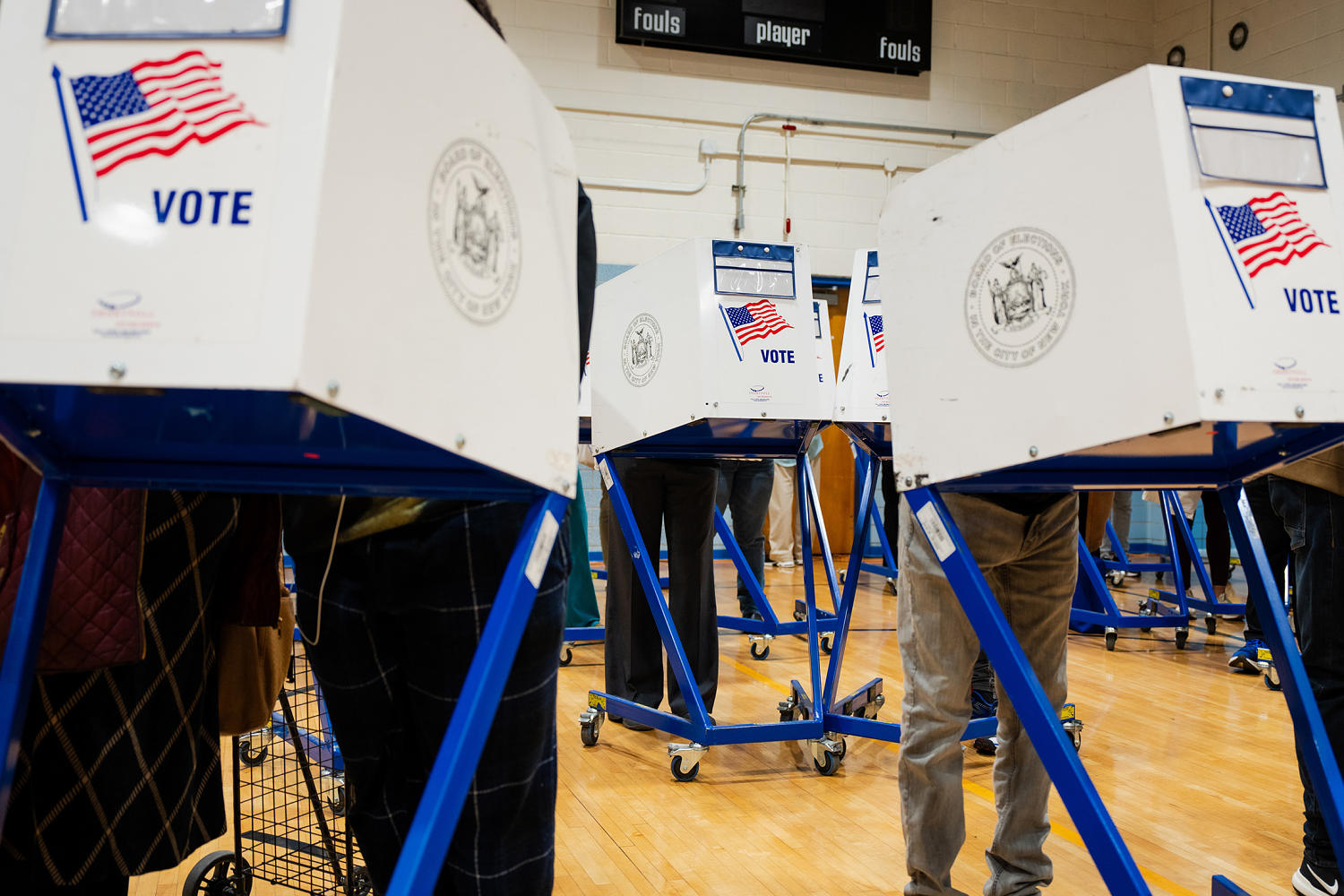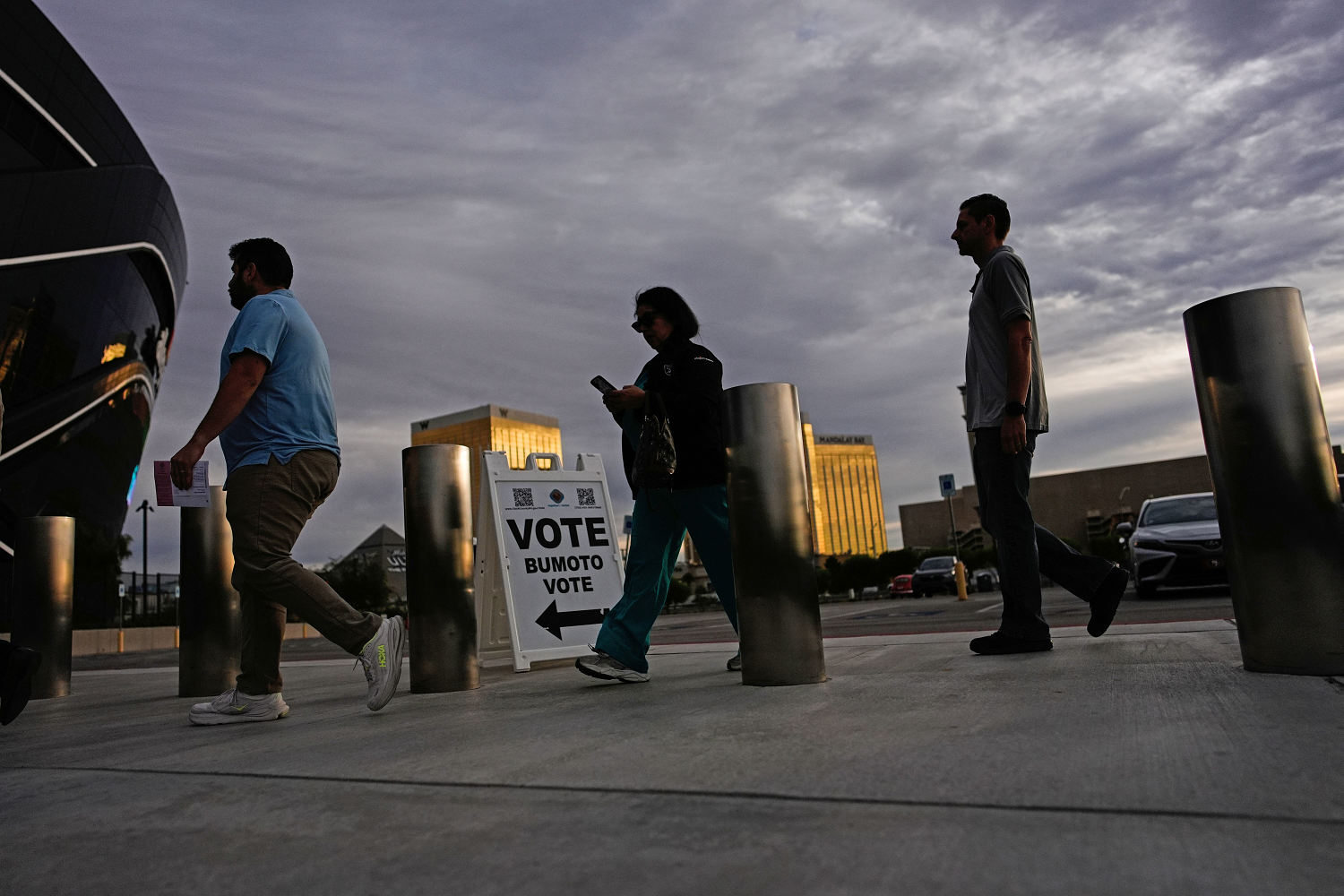
Modern American elections are rarely referendums on a candidate's forward-looking policy agenda; they are structural audits of voter dissatisfaction with the opposition. When exit polling indicates that a decisive share of the electorate cast ballots primarily against Donald Trump rather than for his opponent, standard political commentary frames the phenomenon as a unique personality quirk. That framing is analytically flawed. Negative voting is the predictable output of a matured political market defined by affective polarization, asymmetric media ecosystems, and the diminishing marginal utility of traditional party platforms.
To understand why an anti-candidate vote dominates exit poll metrics, analysts must separate the stated rationales of voters from the underlying behavioral economics driving their choices. Exit polls capture self-reported motivations at the precinct level, yet voters frequently rationalize complex, multi-variable decisions into simple binary narratives. Deconstructing an anti-Trump vote requires examining the structural incentives that turn a ballot into a defensive instrument rather than an aspirational endorsement. Meanwhile, you can read similar events here: What Most People Get Wrong About the 2026 US Midterm Elections.
The Architecture of Negative Partisanship
Political scientists Alan Abramowitz and Steven Webster formalized the concept of negative partisanship to explain why party loyalty remains rigid even as positive approval ratings for both major parties decline. In a high-polarization environment, the primary utility a voter derives from casting a ballot is preventing the out-party from acquiring state power. The perceived cost of the opposition winning exceeds the perceived benefit of the preferred candidate governing.
When exit pollsters ask respondents whether their vote was primarily in support of their chosen candidate or in opposition to the opponent, they are measuring the ratio of positive utility to defensive risk aversion. In elections featuring a polarizing figure like Trump, the risk-aversion variable spikes across three distinct voter cohorts: To understand the bigger picture, check out the detailed analysis by Al Jazeera.
- The Institutionalist Moderate: Voters who prioritize procedural norms, bureaucratic stability, and predictable governance over specific ideological outcomes. For this cohort, Trump represents systemic volatility, making an opposition vote a hedge against institutional disruption.
- The Cross-Pressured Suburbanite: Electors who may favor conservative fiscal policies—such as lower corporate tax rates or deregulation—but reject populist rhetoric and social conservatism. Their negative vote reflects a calculation that social and governance risks outweigh economic preferences.
- The Mobilized Base Opponent: Partisans whose primary political identity is forged in opposition to the opposing coalition. Threat perception, amplified by continuous media coverage, drives higher turnout efficiency than policy promises ever could.
The standard journalistic error lies in treating these three cohorts as a single ideological bloc. They do not share a unified vision for governance; they share a unified assessment of unacceptable risk. Consequently, an electoral victory built on negative partisanship creates an immediate governing paradox: the winning coalition is united by what it rejects, not by what it intends to build.
Methodological Limitations of Exit Poll Attribution
Relying strictly on exit poll phrasing to diagnose electorate behavior introduces significant measurement distortion. Exit polls rely on self-reporting immediately after the act of voting, a moment when cognitive dissonance reduction is at its peak. Voters seek coherent, socially acceptable explanations for complex choices.
First, the binary framing of "for Candidate A" versus "against Candidate B" forces a false dichotomy onto a continuous utility function. A voter might approve of the opposition candidate's judicial philosophy, feel neutral about their economic plan, and strongly oppose Trump's temperament. When forced to select a single primary driver on a survey instrument, the most salient emotional trigger—opposition to Trump—absorbs the entire weight of the decision.
Second, exit polling suffers from non-response bias that correlates with political trust. Voters who harbor deep skepticism toward media institutions and polling organizations—a demographic disproportionately aligned with Trump—historically participate in exit surveys at lower rates than college-educated, institutionally trusting voters. While pollsters apply demographic weighting to correct for sample skew, weighting cannot fully neutralize attitudinal differences within demographic cells. If anti-Trump voters within a specific demographic are more willing to stop and complete a questionnaire than pro-Trump voters in the same bracket, the resulting dataset will over-index on negative-vote rationales.
Third, exit polls measure expressed motivation rather than causal triggers. A voter citing opposition to Trump as their primary motivation may actually be reacting to downstream economic or social conditions—such as localized inflation, healthcare costs, or reproductive rights restrictions—that they attribute directly to his previous administration or judicial appointments. Attribution bias compresses a multi-step causal chain into a single proper noun.
Asymmetric Salience and the Attention Economy
To understand why Trump specifically generates outsized negative voting metrics compared to conventional political actors, one must examine the mechanics of asymmetric salience. Traditional political campaigns attempt to control salience—the prominence of specific issues in the voter's mind—by spending capital to highlight favorable topics and obscure unfavorable ones.
Trump operates outside this traditional cost-benefit framework by maximizing total attention volume regardless of valence. In media economics, this strategy lowers customer acquisition costs for political messaging; earned media replaces paid media. However, continuous saturation carries a severe structural liability: it eliminates the voter's ability to ignore the candidate.
In a standard election cycle, low-propensity and swing voters tune out political noise until the final weeks, allowing candidates to present curated, moderated versions of themselves. Continuous, high-salience coverage prevents this reset. Every controversial statement, legal challenge, or norm violation acts as a recurring reminder to hesitant voters of why they disliked the candidate previously. Instead of allowing grievance to decay over time—a natural psychological process known as affective habituation—constant salience refreshes the negative stimulus.
This dynamic alters the turnout equation. Political campaigns generally invest heavily in field operations to overcome voter apathy. When an opponent maintains permanent, high-intensity salience, they inadvertently subsidize the opposition's get-out-the-vote infrastructure. Voters do not need to be persuaded to care about the election; their aversion to the high-salience figure provides intrinsic motivation to overcome the friction costs of registration, mail-in ballot requests, or waiting in precinct lines.
The Cost Function of Coalition Management
Winning an election via negative partisanship alters the post-election operational environment. A mandate derived from opposition is structurally fragile because the winning party mistakes a rejection of the competitor for an endorsement of its own platform.
Consider the mechanics of legislative capital. When a president or congressional majority enters office on a wave of positive support for a specific policy—such as the New Deal in 1932 or the Reagan tax cuts in 1981—elected officials possess clear directional authority. Defectors within the ruling party face high political costs if they obstruct the core mandate.
Conversely, when a coalition is assembled primarily to stop an opponent, internal ideological fractures surface immediately upon taking power. The Cross-Pressured Suburbanite wants fiscal restraint; the progressive activist wants expanded social spending; the institutionalist wants bipartisan process. Because the binding agent was external threat rather than internal consensus, the ruling party lacks a shared hierarchy of priorities.
This dynamic produces predictable legislative bottlenecks:
- Agenda Paralysis: Leadership struggles to sequence bills because every major policy initiative alienates at least one sub-cohort of the anti-opposition coalition.
- Approval Rating Erosion: Once the disliked figure is out of power or temporarily sidelined, the salience of the threat diminishes. Voters shift from evaluating the ruling party against the feared alternative to evaluating them against an idealized standard of governance. Approval ratings inevitably regress toward the mean.
- Midterm Enthusiasm Gaps: The psychological urgency that drove anti-candidate turnout evaporates once the immediate threat is neutralized. Meanwhile, the defeated coalition retains high grievance salience, creating a structural turnout advantage for the out-party in subsequent off-year elections.
Strategic Implications for Campaign Modeling
Political strategists and campaign managers often misinterpret exit poll data showing high anti-Trump sentiment as evidence that candidate quality or policy substance no longer matters. This is a fatal misreading of the operational mechanics. Negative partisanship sets the floor for turnout, not the ceiling.
While aversion to an opponent reliably mobilizes high-propensity partisans and alienated moderates, it has diminishing returns among low-propensity, economically focused swing voters. These electors view both parties with cynicism and evaluate elections through a transactional lens: which administration will maximize household purchasing power and minimize daily disruption. For this segment, purely negative messaging induces disengagement rather than mobilization. If both options appear unacceptable, the rational choice is abstention.
Effective campaign architecture requires bifurcating messaging streams based on voter propensity and threat sensitivity:
- For High-Salience, Risk-Averse Cohorts: Maintain focus on institutional stability, predictability, and the tangible consequences of the opponent's return to power. Do not dilute the message with overly complex policy white papers; reinforce the contrast in temperament and governance style.
- For Transactional, Low-Propensity Voters: Pivot entirely away from character-based critiques of the opponent. These voters have already priced in the opponent's flaws. Allocate resources toward concrete, kitchen-table economic deliverables—housing affordability, energy costs, wage growth—that demonstrate active utility rather than mere defensive value.
Campaigns that rely exclusively on exit poll validation of anti-Trump sentiment optimize for the last war. A strategy built solely on being the lesser of two evils leaves the coalition permanently vulnerable to macroeconomic shifts, third-party spoilers, and differential turnout models. Political organizations must treat negative partisanship as an accelerant, not an engine—using opposition aversion to secure the base while constructing a durable, positive policy value proposition to retain marginal voters once the immediate threat recedes.