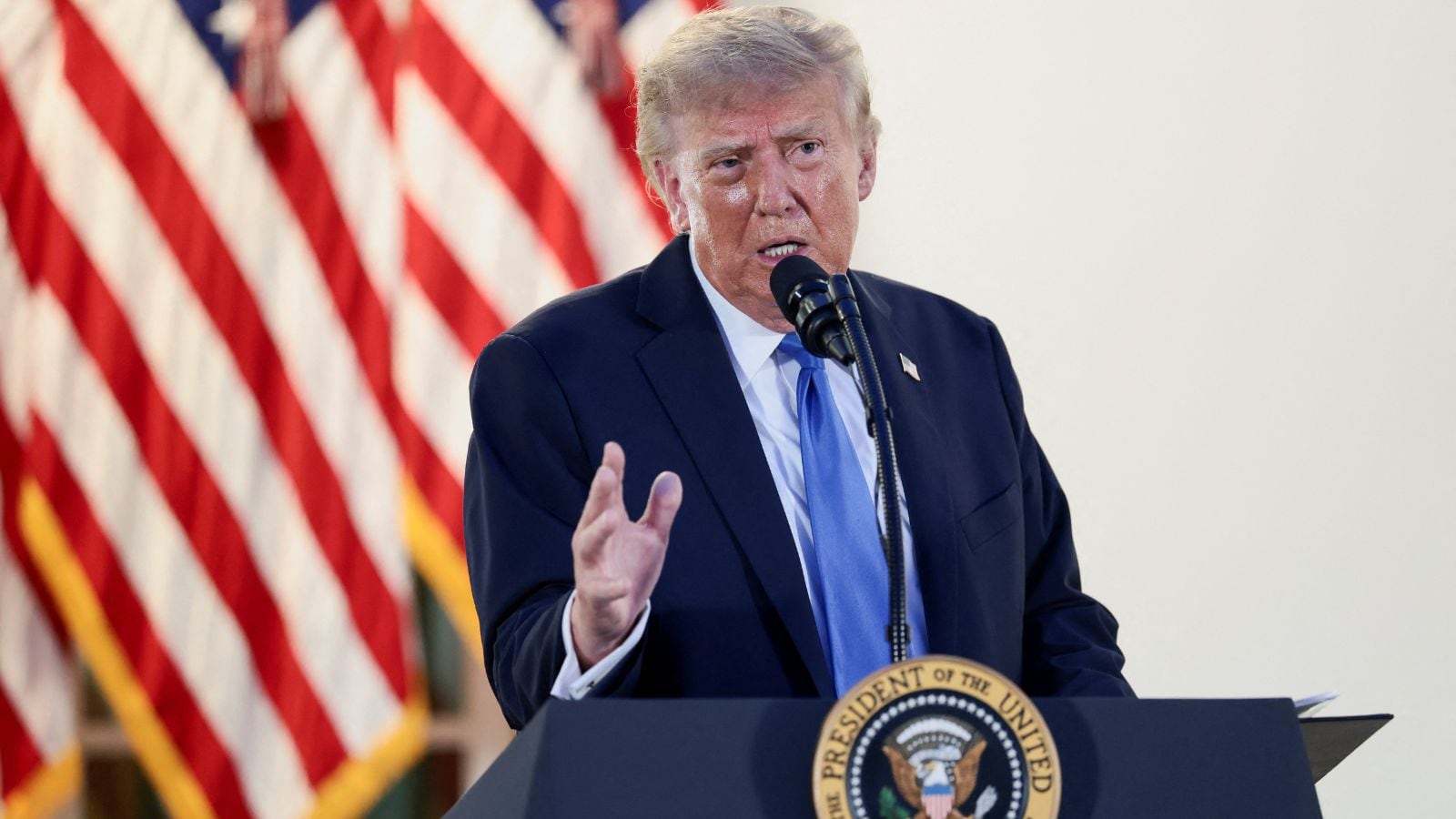
Political speech that appears erratic, vulgar, or undisciplined is rarely a simple failure of impulse control; it is an optimization strategy designed for a fragmented, low-trust media ecosystem. When political commentators catalog a speaker's threats, verbal slips, and crude tangents—such as Donald Trump’s late-campaign rally rhetoric referencing Arnold Palmer’s anatomy, violent retribution against critics, and incoherent teleprompter deviations—they typically frame the phenomenon as cognitive decline or strategic self-sabotage. That framing misses the structural incentives governing modern mass communication. In an environment where earned media is the scarcest resource, deviation from institutional norms functions as a high-yield distribution mechanism.
To understand why unconventional and transgressive rhetoric persists despite conventional wisdom predicting electoral penalties, analysts must separate aesthetic judgment from operational mechanics. Traditional political communication optimizes for message discipline, targeting the median voter through repetitive, risk-averse talking points. Transgressive political communication optimizes for attention capture and in-group signaling, deliberately inducing outrage in adversarial media to secure ubiquitous reach at zero marginal cost.
The Architecture of Transgressive Rhetoric
Standard media coverage treats verbal gaffes, violent metaphors, and off-script digressions as isolated incidents of dysfunction. A rigorous breakdown reveals three distinct operational categories, each serving a specific function within a high-variance communication model.
1. The Outrage Arbitrage Mechanism (Threats and Norm Violations)
When a political figure uses martial language—suggesting that internal political opponents are "the enemy from within" or floating the use of military force against domestic dissent—legacy media outlets treat the statement as an existential threat to democratic norms. This reaction is predictable and monetizable.
By crossing an established rhetorical boundary, the speaker forces every major news network, digital publisher, and social media algorithm to amplify the message. The speaker pays zero dollars in paid media placement while dominating the national news cycle for 48 to 72 hours. This is outrage arbitrage: converting the predictable moral indignation of institutional gatekeepers into free, high-volume distribution. The literal policy feasibility of the threat is secondary to its utility as a conversation monopoly.
2. The Authenticity Heuristic (Crude Tangents and Low-Register Humor)
References to male anatomy, bodily functions, or rambling anecdotes about deceased golfers violate the sanitized decorum expected of executive leadership. To high-information voters and institutionalists, these moments signal unfitness. To a populist base primed to distrust scripted politicians, the exact same behavior functions as an authenticity heuristic.
Traditional politicians rely on focus-grouped language that signals competence but reads as artificial. When a speaker abandons the teleprompter to tell a crude, unpolished story, the audience processes the lack of filter as proof of honesty. The logic follows a simple cognitive shortcut: A person willing to say something this socially unacceptable in public is not reading from a script written by consultants. The vulgarity becomes a feature, not a bug, establishing parasocial intimacy with voters who feel alienated by elite linguistic norms.
3. Cognitive Load and Speech Entropy (Gaffes and Structural Drift)
Not every deviation is strategic. Extended, unscripted speaking schedules—often exceeding 90 minutes per event across multiple states in a single day—introduce severe speech entropy. As fatigue accumulates, executive functioning degrades, leading to semantic satiation, name confusion, and syntax collapse.
Analysts must distinguish between intentional strategic ambiguity (making a claim vague enough that supporters can project their preferred meaning onto it) and genuine cognitive fatigue (losing the thread of a sentence or conflating historical figures). The critical insight is that in a polarized environment, the audience absorbs both identically. Supporters interpret verbal stumbles as playful improvisation or dismiss them as media nitpicking, while detractors point to them as clinical evidence of decline. Neither interpretation shifts baseline voting behavior because partisan priors are already locked.
The Attention Economy Cost Function
Conventional campaign management operates on a risk-minimization model. Every public statement is vetted to ensure it does not alienate undecided voters in swing districts. The underlying assumption is that a single major gaffe can fatally wound a candidacy—a dynamic that held true during the broadcast-era media monopoly (roughly 1960 to 2008), when three television networks controlled narrative framing.
That model is obsolete. In a decentralized information environment characterized by algorithmic feeds and partisan echo chambers, the primary threat to a political campaign is not backlash; it is irrelevance.
Consider the cost function of modern political messaging:
- The Cost of Discipline: Adhering to strict, policy-heavy scripts yields low algorithmic engagement. Legacy outlets ignore repetitive stump speeches, and social media platforms deprioritize content that fails to trigger strong emotional valence (anger, amusement, shock). A disciplined campaign must spend hundreds of millions of dollars in paid advertising simply to achieve baseline name recognition and message penetration.
- The Yield of Volatility: High-variance rhetoric generates immediate, high-arousal emotional reactions across the political spectrum. Detractors share clips to express horror; supporters share the exact same clips to signal defiance and humor. Both actions feed identical engagement signals to recommendation algorithms, driving exponential organic reach.
This creates a structural asymmetry. A traditional candidate pays a steep financial penalty for being boring, whereas a transgressive candidate pays a negligible electoral penalty for being offensive, provided their core coalition views the offense as an attack on shared cultural enemies.
Why Legacy Media Fact-Checking Fails to Deter Drift
When political rhetoric grows increasingly erratic, institutional journalism responds with escalating intensity: granular fact-checks, expert panels diagnosing psychological fitness, and front-page warnings about authoritarian drift. Operationally, this response fails to achieve its intended corrective effect due to three systemic bottlenecks.
The Streisand Amplification Loop
Fact-checking a wild tangent requires repeating the tangent. When major publications run headlines analyzing a candidate’s remarks about a golfer's physique or violent retribution, they validate the statement as a primary national news event. The correction rarely reaches the audience that consumed the original clip in a supportive context, while the sheer volume of coverage signals to low-propensity voters that the speaker is the central figure in American politics.
Epistemic Siloing and Trust Deficits
For journalistic scrutiny to impose a political cost on a candidate, the target audience must view the journalism as a neutral arbiter. When institutional trust falls below a critical threshold, criticism from legacy outlets is inverted: an attack from a mainstream editorial board is processed by the target demographic as an endorsement of the candidate's anti-establishment credentials. The sharper the critique, the stronger the defensive cohesion within the candidate's base.
The Desensitization Curve
Rhetorical shock follows the law of diminishing marginal returns. The first time a political leader violates a major democratic or social norm, the shock value is absolute. By the hundredth violation, the public and the press experience outrage fatigue. When every speech is framed as an unprecedented crisis, the audience loses the ability to differentiate between genuine policy threats (such as proposals to alter civil service protections or deploy tariffs) and pure theatrical trolling. The noise floor rises so high that substantive signals are drowned out.
The Strategic Vulnerability of High-Variance Communication
While transgressive rhetoric maximizes reach and base enthusiasm, it carries severe operational limitations. Treating this style as an invincible political cheat code ignores the specific conditions under which it fails.
- The Persuasion Ceiling: Outrage arbitrage is an exceptional tool for mobilization (getting existing supporters to turn out) and agenda-setting (forcing opponents to fight on your chosen terrain). It is a poor tool for persuasion. Swing voters who prioritize institutional stability, economic predictability, and executive competence experience high-variance rhetoric as exhausting. When a campaign relies entirely on escalation to maintain media oxygen, it caps its ceiling among moderate, college-educated, and suburban demographics.
- Narrative Hijacking: Unscripted tangents frequently cannibalize a campaign's own strategic messaging. If a candidate spends a week attempting to prosecute an opponent on inflation or border security, only to dominate the weekend news cycle with a crude anecdote or a threat against a political rival, the disciplined policy contrast is erased. The speaker wins the attention battle while losing the framing war.
- Escalation Trap: Because audiences desensitize quickly, maintaining the same level of media attention requires continuous escalation. What shocked the public in 2016 feels routine by 2024 and 2026. This forces the speaker to push further into extreme, bizarre, or aggressive territory simply to achieve the same baseline algorithmic lift, increasing the probability of an unforced error that alienates marginal coalition partners.
Operational Takeaways for Analysts and Strategists
Evaluating political communication requires abandoning superficial moralizing in favor of structural analysis. When tracking a high-variance political actor, observers and opposition strategists must adjust their analytical frameworks:
- Separate Signal from Spectacle: Treat crude humor, bizarre anecdotes, and off-the-cuff insults as distribution tactics rather than policy blueprints. Do not expend analytical capital treating obvious rhetorical trolling as literal legislative proposals. Reserve institutional alarm for repeated, structured policy commitments backed by legal or administrative mechanisms.
- Measure Reach Over Sentiment: In polarized elections, traditional sentiment analysis (measuring whether media coverage is "positive" or "negative") is a broken metric. Track share of voice and organic engagement velocity. If a candidate commands 70% of total media volume through negative coverage, they are winning the attention war regardless of the editorial tone.
- Starve the Arbitrage Loop: Opposition campaigns and media institutions attempting to counter transgressive rhetoric must break the predictable outrage cycle. Amplifying every verbal stumble hands the speaker free distribution. The only effective counter-strategy is asymmetric discipline: refusing to take the rhetorical bait while relentlessly hammering concrete, high-salience economic or governance failures that affect voters' material lives. When the spectacle stops generating disproportionate coverage, the incentive to escalate collapses.