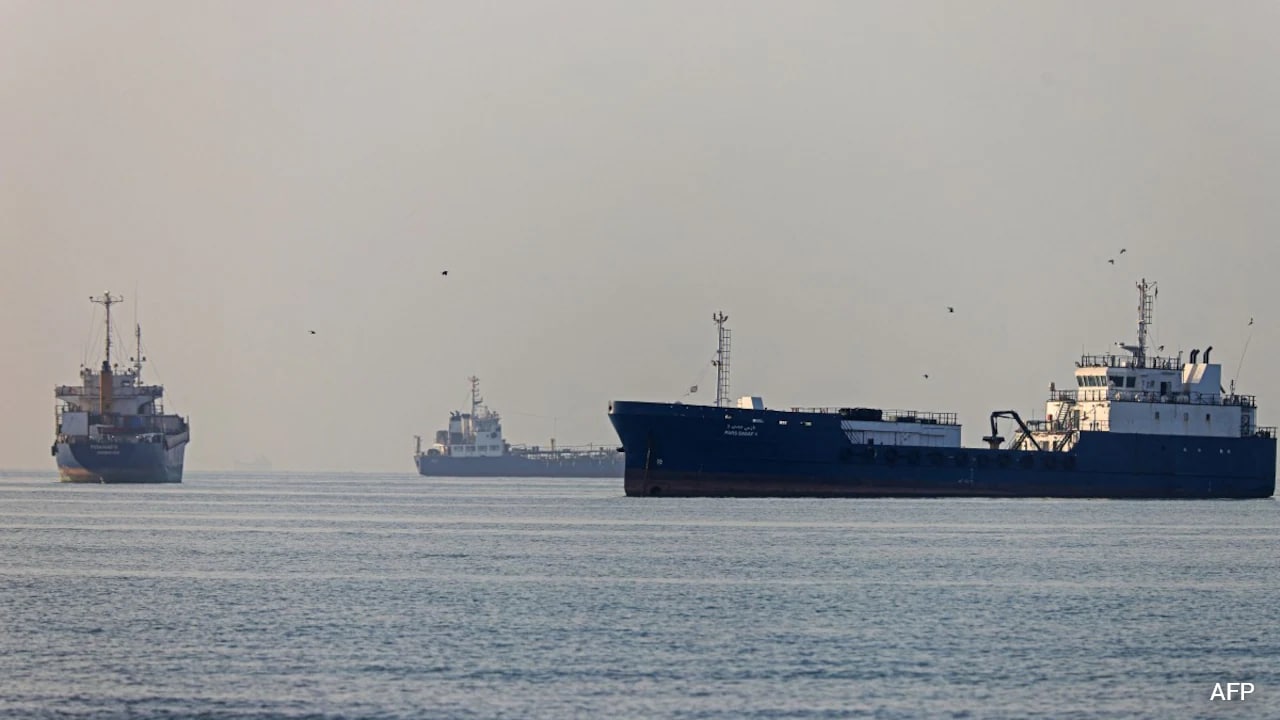
The revocation of US oil waivers following tanker attacks in the Strait of Hormuz establishes a new baseline for global energy security and geopolitical risk pricing. This decision terminates the Significant Reduction Exceptions (SREs) previously granted to select importing nations, shifting the geopolitical landscape from a regime of managed containment to one of active economic truncation. Understanding the strategic fallout requires analyzing the intersection of maritime choke points, supply elasticity, and the structural vulnerabilities of the global energy supply chain.
The Triad of Choke Point Vulnerability
The Strait of Hormuz is the single most critical maritime artery in the global energy infrastructure. Evaluating the disruption potential requires breaking the risk down into three distinct operational vectors.
1. Physical Throughput Constraints
The strait handles roughly 20% of global petroleum consumption, equating to more than 20 million barrels of crude oil and condensate per day. Because the navigable channel consists of only two two-mile-wide shipping lanes (one inbound, one outbound) separated by a two-mile buffer zone, it presents a hyper-concentrated geographic bottleneck. Unlike open-ocean transport, transit through the strait relies entirely on territorial waters governed by Oman and Iran under the transit passage regime of the United Nations Convention on the Law of the Sea (UNCLOS).
2. Kinetic Risk and Insurance Premium Escalation
Tanker attacks modify the cost structure of maritime logistics without requiring a complete closure of the waterway. War risk insurance premiums react exponentially to localized kinetic events. When a hull is damaged or threatened by limpet mines, drones, or state-backed seizures, underwriters adjust the Additional Premium (AP) applied to vessels entering the Persian Gulf. A tenfold increase in war risk premiums can add hundreds of thousands of dollars to a single voyage, altering the netback pricing for producers and forcing buyers to recalculate their sourcing matrices.
3. Alternative Routing Deficits
The structural flaw in relying on the Strait of Hormuz is the lack of redundant infrastructure. The primary bypass alternatives are limited in capacity and logistically rigid:
- The East-West Pipeline (Saudi Arabia): Operates with a nominal capacity of roughly 5 million barrels per day, but its actual available spare capacity to divert oil to the Red Sea is significantly lower during peak domestic operations.
- The Abu Dhabi Crude Oil Pipeline (UAE): Can divert approximately 1.5 million barrels per day directly to the port of Fujairah on the Gulf of Oman, bypassing the strait entirely.
Combined, these bypass routes can absorb less than 35% of the total volume typically transiting the strait. The remaining 65% of volume has no viable overland or alternative maritime exit, meaning any sustained operational stoppage creates an immediate, unmitigable global supply deficit.
The Economics of Zero Waiver Enforcement
The elimination of SREs removes the legal cushion that allowed major economies—primarily in Asia—to wind down their Iranian crude purchases gradually. This transition introduces structural friction into the refining sector and disrupts established trade flows.
[Revocation of SRE Waivers]
       │
       ▼
[Immediate Legality Shift for Buyers]
       │
       ├──► [Asiatic Refiners Suffer Yield Declines (Refinery Configuration Friction)]
       └──► [Illicit Supply Migration to Shadow Fleets (Discounted Dark Trade)]
Refinery Configuration Friction
Crude oil is not a homogenous commodity. Iranian crude grades, such as Iran Heavy, are predominantly sour, high-sulfur streams with specific API gravity profiles. Modern complex refineries, particularly those across India, China, and South Korea, are calibrated to process these specific chemical assays. Switching to alternative sweet or light crudes reduces refinery yield efficiency and increases processing costs. To match the yield of a sour-calibrated distillation unit, refiners must seek replacement barrels from alternative producers like Saudi Arabia, Iraq, or Kuwait, triggering a bidding war for medium-sour grades and driving up the sour crude premium relative to sweet benchmarks like Brent.
The Rise of Shadow Logistics
Enforcing a absolute zero-waiver policy does not eliminate Iranian exports; instead, it shifts the trade from transparent commercial channels to opaque, parallel networks. This displacement operates via specific tactical mechanisms:
- Ship-to-Ship (STS) Transfers: Executed in deep-water anchorages outside territorial jurisdictions, where transponders (Automatic Identification Systems) are systematically deactivated to obscure the origin of the cargo.
- Flag of Convenience Re-registration: Utilizing gray-market or shadow fleet tankers registered under jurisdictions with lax regulatory oversight.
- Financial Disintermediation: Bypassing the SWIFT network by clearing transactions through small, regional banks using non-reserve currencies or barter arrangements tied to physical goods.
The consequence is a bifurcated market where Iranian oil continues to flow to high-risk-tolerant buyers at steep steep discounts, undercutting the official selling prices (OSPs) of compliant OPEC producers.
Supply Elasticity and Global Buffers
The strategic viability of the US waiver revocation depends entirely on the supply elasticity of alternative producers to prevent an inflationary price shock.
Global Supply Buffer = OPEC Spare Capacity + US Shale Elasticity + Strategic Petroleum Reserves (SPR)
The global safety cushion rests on three main buffers.
OPEC Spare Capacity
Saudi Arabia holds the vast majority of the world's effective spare production capacity. Activating this capacity is not instantaneous. Bringing shut-in wells back online, stabilizing pressure headers, and organizing incremental tanker allocations requires an operational lead time of 30 to 90 days. If OPEC producers choose to withhold this spare capacity to defend higher price floors, the waiver revocation triggers immediate upward pressure on front-month futures contracts.
US Shale Responsiveness
While the United States has achieved crude independence on a net basis, light tight oil (LTO) from basins like the Permian cannot easily substitute for the lost Iranian heavy barrels due to the refinery mismatch noted previously. US shale operators operate under capital-discipline mandates driven by public equity markets. Unlike state-owned enterprises, these private operators cannot ramp up production by executive fiat; they require sustained price signals, rig availability, and fracture-crew mobilization, introducing a minimum six-month lag before new supply hits the water.
Strategic Petroleum Reserves (SPR)
OECD nations maintain strategic reserves to cushion against physical supply disruptions. Utilizing these stocks is a temporary, non-structural solution. Drawing down the SPR to offset structural policy shifts rather than short-term force majeure events depletes political capital and leaves Western economies exposed to subsequent, unexpected supply shocks.
Strategic Playbook for Global Energy Procurement
Navigating this structural shift requires energy consumers and market participants to abandon legacy procurement models and adopt a highly defensive operational posture.
- Execute Assay Diversification Audits: Refining teams must immediately test and certify secondary and tertiary crude blends that match the sulfur and API characteristics of Iranian grades. Do not rely on single-source replacement contracts from Middle Eastern national oil companies; instead, secure term agreements for West African or Latin American medium-sour alternatives, even if they carry higher freight costs.
- Structure Countercyclical Freight Hedging: Given that tanker attacks directly inflate war risk premiums and alter route economics, decouple commodity procurement from freight risk. Lock in long-term Time Charter Equivalent (TCE) contracts or utilize Forward Freight Agreements (FFAs) to insulate supply chains from sudden spikes in maritime shipping costs through the Persian Gulf.
- Establish Opaque Fleet Diligence Protocols: Regulatory compliance teams must implement real-time tracking of vessel ownership stacks. Avoid chartering any vessel that has engaged in STS operations in the South China Sea or the UAE coast within the last 24 months, minimizing the risk of secondary sanctions enforcement or asset freezing.
The geopolitical premium is no longer a temporary variable; it is a permanent cost input embedded in the global energy supply chain. Survival requires pricing this friction directly into your margin models rather than planning for a return to a normalized equilibrium.