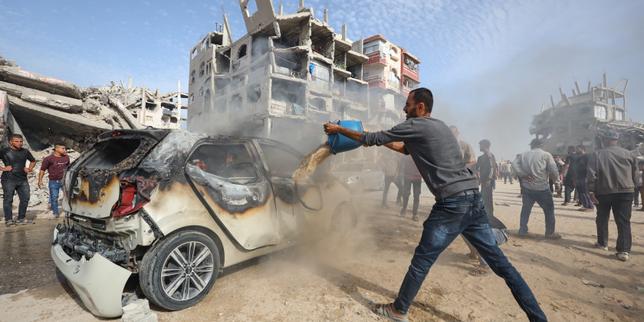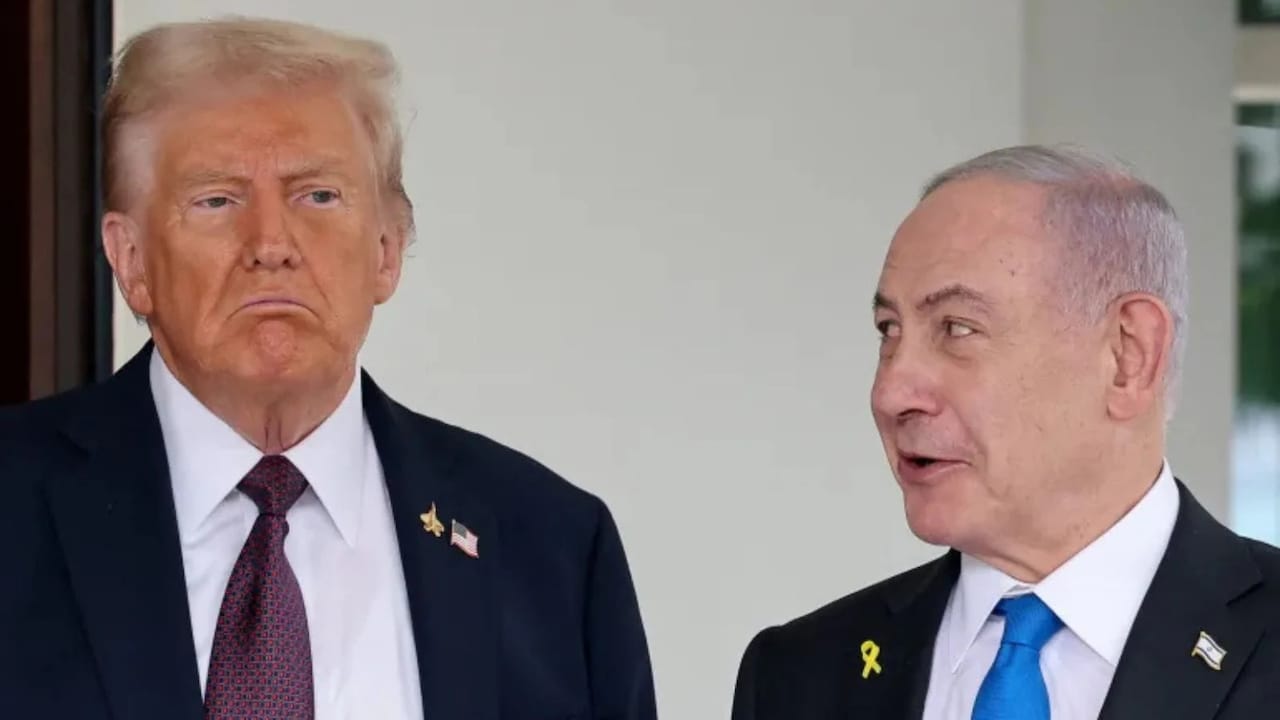
The beltway press corps loves a simple villain and an even simpler timeline. Right now, the prevailing narrative making the rounds in Washington and Tel Aviv is that Israeli Prime Minister Benjamin Netanyahu is quietly lobbying Donald Trump to launch a massive, joint military strike against Iran’s nuclear infrastructure the second the midterm elections conclude.
It makes for great cable news chyrons. It sells subscriptions. And it is fundamentally disconnected from how military logistics, domestic American politics, and Israeli strategic doctrine actually operate.
Pundits treat geopolitics like a scripted television drama where leaders simply check a box on a calendar and press a red button. They assume that once the domestic pressure of a midterm election cycle evaporates, the constraints on American military intervention vanish with it. That is the lazy consensus. It ignores the brutal realities of modern warfare, the structural limits of executive power, and the actual calculus happening inside both the White House and the Kirya in Tel Aviv.
If you want to understand what is really happening between Washington, Jerusalem, and Tehran, you have to throw away the calendar-watching journalism and look at the hard mechanics of deterrence, escalation dominance, and political capital.
The Myth of the Post-Midterm Free Pass
The core premise of the mainstream reporting relies on a massive logical fallacy: the idea that a president becomes unconstrained immediately after midterm elections.
In reality, the exact opposite occurs.
Historically, midterms strip the sitting president of legislative leverage and trigger the immediate opening of the next presidential primary cycle. When a president enters the second half of a term, every foreign policy decision is scrutinized through the lens of legacy and succession. Launching a major regional war in the Middle East is not a low-cost administrative task you slip into the schedule between Thanksgiving and New Year's.
Let us look at the actual requirements of a kinetic campaign against Iran's nuclear facilities. We are not talking about a single night of Tomahawk missile strikes like the 2017 Shayrat airbase operation in Syria. Iran’s nuclear program is hardened, dispersed, and buried beneath mountains at sites like Fordow. Destroying it requires sustained, multi-week bombing campaigns involving heavy bunker-busting munitions—specifically the GBU-57 Massive Ordnance Penetrator—delivered by B-2 Spirit stealth bombers.
You cannot execute that kind of operation quietly, and you certainly cannot contain it to a single weekend.
Imagine a scenario where the United States initiates a sustained air campaign against Iranian enrichment facilities in November or December. Within hours, ballistic missile salvos target American bases in Iraq, Syria, and the Persian Gulf. Maritime traffic through the Strait of Hormuz—through which roughly a fifth of the world’s petroleum liquids pass—grinds to a halt. Global crude prices spike past $130 a barrel overnight.
Does anyone seriously believe an administration obsessed with domestic energy prices and inflation metrics views a post-midterm window as a consequence-free zone for triggering a global oil shock?
The reporters pushing this narrative have never had to brief a cabinet on war-risk insurance rates in the Persian Gulf or explain to voters why gasoline just jumped two dollars a gallon in December. They mistake the absence of an immediate ballot box for the absence of political gravity.
What Netanyahu Actually Wants (And It Isn't What You Think)
To understand why the "Netanyahu is begging for a strike" storyline falls apart, you have to examine his actual track record rather than his rhetoric.
For over two decades, Netanyahu has been characterized by Western media as a trigger-happy warmonger perpetually 48 hours away from ordering an attack on Iran. Yet, look at the ledger. During his long tenure as Prime Minister, Netanyahu has consistently demonstrated extreme risk aversion when it comes to initiating full-scale, multi-front regional wars without guaranteed American backing and clear exit ramps.
He prefers gray-zone warfare. Cyber operations like Stuxnet. Targeted assassinations of nuclear scientists. Sabotage of centrifuge assembly facilities. Precision strikes on Iranian logistics hubs in Syria.
Why? Because covert action and limited kinetic strikes preserve escalation dominance without forcing Israel into a war of attrition that drains its economy and exhausts its air defense interceptors.
When reports leak that Netanyahu is "pressing" Trump for a post-midterm strike, you are not witnessing a secret war plan being hatched. You are witnessing coercive diplomacy conducted through the press.
Both leaders understand the value of strategic ambiguity. If Tehran believes that Trump is completely unwilling to use military force under any circumstances, Iran's leadership faces zero incentive to halt its nuclear breakout timeline or curb its regional proxies. Conversely, if Tehran believes that Netanyahu is actively convincing an unpredictable American president to greenlight a massive strike once the political coast is clear, the psychological pressure on the Iranian regime skyrockets.
The leak is the weapon.
By floating the idea of a post-midterm strike in the press, Jerusalem and Washington achieve two objectives without firing a single shot:
- They force Tehran to divert massive resources into air defense dispersal, hardened subterranean construction, and internal security paranoia.
- They signal to European allies and Gulf Arab states that the window for diplomatic stalling is closing, compelling them to fall in line behind maximum economic pressure.
Defining the Real Strategic Terms
To see past the noise, we need to strip away the pundit jargon and define the actual military concepts governing this standoff. Most journalists use these terms interchangeably, which is why their analysis consistently fails.
- Deterrence by Denial: Convincing an adversary that an attack or nuclear breakout will fail to achieve its objective because your defenses and preemptive capabilities are too strong.
- Deterrence by Punishment: Threatening catastrophic retaliation if an adversary crosses a specific red line, even if you cannot physically stop the initial act.
- Escalation Dominance: The ability to escalate a conflict at every level—from covert cyberattacks to conventional air strikes—while preventing the adversary from matching your moves without suffering unacceptable losses.
Right now, the West is not trying to buy time for a magical diplomatic breakthrough. They are trying to re-establish deterrence by punishment while maintaining escalation dominance.
The mainstream coverage gets this backward. It frames a potential strike as the starting gun of a strategy, when in reality, a massive military strike represents the failure of coercive deterrence. Once you drop the bombs, you lose the leverage of the threat. You trade controlled pressure for chaotic, unpredictable retaliation.
Dismantling the Common Questions
When narratives like this dominate the news cycle, readers naturally start asking the wrong questions. Let us break down the prevailing assumptions and look at the reality underneath.
Could Israel destroy Iran's nuclear program without American help?
No. Anyone telling you otherwise is selling fantasy. While the Israeli Air Force possesses unmatched regional capabilities, long-range strike packages, and elite intelligence, it lacks the heavy strategic bombers and specific ordnance required to collapse deeply buried facilities like Fordow on its own. Furthermore, conducting a sustained campaign over 1,000 miles away requires massive aerial refueling tankers and overflight permissions that turn a unilateral strike into a regional diplomatic crisis. Israel can set the program back by months or a couple of years through sabotage and targeted strikes, but total kinetic eradication requires the United States military.
Why wouldn't Trump just give Netanyahu the green light to look tough?
Because Trump’s entire foreign policy brand is built on avoiding protracted, expensive Middle Eastern quagmires while using unpredictable leverage to force favorable deals. I have watched administrations burn through billions of dollars and entire second terms trying to manage the fallout of "limited" interventions in the Middle East. Trump knows that entering a ground or sustained air war with a nation of nearly 90 million people destroys his core political appeal. He wants economic capitulation and a renegotiated, stricter framework—not a multi-year bombing campaign that tanks the stock market.
What happens if Iran crosses the nuclear threshold before any strike occurs?
This is the question analysts avoid because the answer is uncomfortable. If Tehran makes a sprint for a crude nuclear device, the strategic calculus shifts instantly from prevention to containment and regime destabilization. However, intelligence assessments from both the U.S. intelligence community and Israeli defense officials have repeatedly noted that Iran prefers to remain a threshold state—possessing all the technical capability, enriched uranium, and delivery systems to build a bomb within weeks, without actually assembling one and triggering an existential military response.
The Flaws in the Contrarian View
Intellectual honesty requires acknowledging where my own analysis could break down. Geopolitics is not a deterministic physics equation; human miscalculation ruins the best strategic models every single decade.
There are three specific scenarios where the conventional media narrative accidentally becomes reality:
- An Iranian Miscalculation: Tehran relies on calibrated proxy attacks to bleed its adversaries without triggering a direct war. If a Hezbollah, Houthi, or Iraqi militia rocket kills a large number of American service members or hits a major Israeli population center, the political demand for massive retaliation will override every careful strategic calculation in Washington and Jerusalem.
- A Covert Breakout: If Western intelligence detects that Iran has moved highly enriched uranium to an undeclared, secret facility to assemble a warhead, the "coercive diplomacy" phase ends immediately. At that point, the risk of inaction outweighs the catastrophic cost of a regional war.
- Internal Regime Collapse: If severe economic sanctions and domestic protests push the Islamic Republic to the brink of collapse, hardliners inside the Islamic Revolutionary Guard Corps (IRGC) might view a foreign war as the only way to rally nationalist sentiment and justify total martial law.
How to Actually Read Geopolitical Leaks
If you want to stop getting fooled by breathless reporting on Middle East flashpoints, stop reading the headlines as literal predictions and start reading them as information operations.
Whenever you see an anonymous senior official leaking a specific timeline for a military attack—whether it is "after the midterms," "by the spring," or "before the end of the year"—ask yourself three questions:
- Who benefits from this specific timeline being public? If a strike were actually imminent and tactical surprise mattered, the operational security would be airtight. Public timelines exist to scare the target, reassure an ally, or box in a political rival.
- Where are the logistics? You cannot hide the buildup required for a major air war against Iran. Before a single bomber launches, the Pentagon must move carrier strike groups, deploy additional Patriot and THAAD missile defense batteries to protect Gulf allies, position aerial refueling tankers across Europe and the Middle East, and evacuate non-essential diplomatic personnel. Until you see those steel assets moving on satellite imagery and ship trackers, the talk of an imminent attack is pure theater.
- What is the economic pain threshold? Look at global oil inventories and inflation numbers. Governments go to war when their domestic economies can absorb the shock, or when they face an existential threat so immediate that economic ruin becomes irrelevant.
The press corps will continue to treat every whisper from Washington as a countdown clock to Armageddon because fear keeps eyeballs glued to screens. Do not buy the hype. Watch the carrier groups, watch the oil markets, and ignore the calendar.