The modern entertainment press is remarkably easy to play. Give them a polished documentary, a timed book tour, or a rare sitting interview with a former First Lady, and the commentary machine immediately splits into two predictably lazy camps: the flattering fluff pieces that treat soft-focus PR as intimate revelation, and the cynical tear-downs that dismiss every word as staged optics.
Both takes are fundamentally wrong. They focus on the surface veneer while missing the real mechanics of celebrity image control in high-stakes political media.
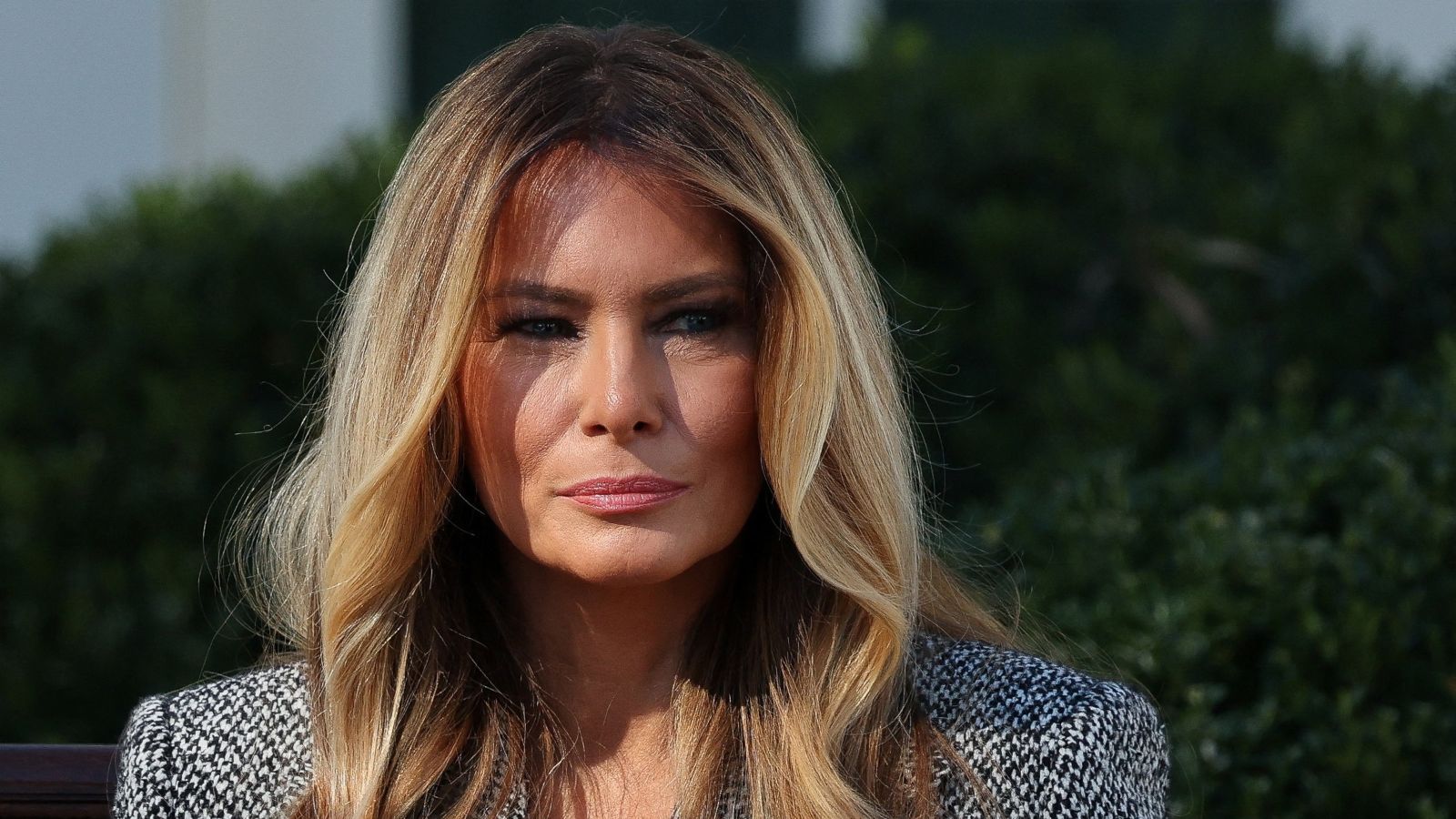
When Melania Trump steps in front of a camera to offer a "peek inside her marriage and motherhood," she isn't opening up out of a desire for authentic connection, nor is she simply running a routine promotional lap. She is executing a precise, disciplined exercise in narrative boundary enforcement. Understanding why this strategy works—and why traditional media continuously fails to parse it—requires looking past the talking points and dissecting how modern political celebrity actually functions.
The Illusion of Access vs. The Architecture of Control
Entertainment journalism thrives on the myth of access. Outlets routinely measure the value of a high-profile feature by how "unfiltered" or "candid" it purports to be. When a major figure discusses private matters like parenting, marriage dynamics, or life out of the public eye, commentators immediately evaluate the exchange on a scale of vulnerability.
This entire framework is flawed.
In high-profile public relations, "access" is rarely about revelation; it is about establishing boundaries. By deliberately releasing controlled, highly curated glimpses into private life, public figures effectively satisfy the market demand for personal detail while strictly defining the perimeter of what remains off-limits.
- The Fluff Trap: Friendly outlets mistake calculated openness for genuine intimacy, reproducing approved talking points without analyzing why specific topics were raised while others were omitted.
- The Cynic's Blindspot: Hostile commentary focuses entirely on the artificial nature of the presentation, failing to recognize that strategic curation is standard procedure for virtually every high-visibility figure in modern media.
- The Real Function: Controlled media appearances serve to reset the public narrative on the subject's terms, substituting engineered anecdotes for unscripted scrutiny.
I have watched public relations teams across media, politics, and corporate leadership spend vast sums trying to project raw, unscripted authenticity. Almost all of them fail because true vulnerability is an operational liability when every phrase is parsed for political leverage. The figures who succeed are those who understand that in the modern media ecosystem, you do not manage public perception by telling everything—you manage it by mastering the art of selective disclosure.
Why Motherhood and Family Are the Ultimate PR Shields
Whenever a public figure involved in polarizing political environments wants to reframe their public posture, the playbook almost always shifts toward personal narrative: family, parenting, and domestic life.
This isn't an accident. It is a tactical pivot designed to leverage fundamental human biases.
1. Depoliticization Through Domesticity
Political debates are messy, contentious, and inherently dividing. Family narratives, by contrast, rely on universal themes. By shifting the focus to motherhood and personal values, a public figure moves the conversation from policy and controversy to relatable, human-scale experiences. It creates a conversational space where conventional political critique feels jarring or out of place.
2. The Universal Relatability Defense
Every media consumer has an opinion on political strategy, but personal family dynamics carry an innate shield of privacy. Commentators who aggressively pick apart a policy stance hesitate when evaluating stories about raising children or navigating family life. It introduces a friction point that slows down negative media cycles.
3. Controlling the Pace of the Cycle
Unscripted press encounters put the subject on the defense, reacting to external agendas. A structured feature or biographical series flips the initiative. The subject sets the topics, controls the rhythm, and dictates the boundaries.
The mainstream press often frames these family-focused appearances as soft human-interest stories. That assessment completely misreads the room. In reality, deploying domestic narratives in high-stakes environments is a sophisticated defense mechanism designed to neutralize adversarial coverage while re-establishing authority over the narrative.
The Flawed Questions Media Keeps Asking
When analyzing coverage of high-profile political figures, standard media commentary typically circles around a few predictable questions. Because the premises of these questions are fundamentally flawed, the answers provided by commentators are almost always useless.
"Is this interview truly authentic?"
This is the wrong question to ask about any managed media appearance. Public interviews by major figures are not spontaneous conversations between friends; they are structured media products. Evaluating a televised feature on "authenticity" is like judging a corporate press release on its poetic value. The real question is: What strategic narrative is this appearance designed to establish, and what media narrative is it trying to replace?
"Why now?"
Commentators often treat the timing of media tours as deep, mysterious maneuvers. In reality, the timing of high-profile media rollouts usually follows straightforward commercial and political mechanics: book releases, project launches, or strategic calendar resets ahead of major public cycles. Looking for complex hidden triggers often misses the obvious operational drivers behind a rollout.
"Does this change public opinion?"
Media analysts routinely measure the success of an interview by whether it produces a massive, instantaneous shift in public polling or media sentiment. That is not how image management works. Strategic communications rarely achieve instant, sweeping conversions; instead, they operate through incremental normalization. The goal isn't to convert hardline critics, but to provide supporters and neutral observers with a clear, comfortable narrative to hold onto.
The Strategy of Strategic Distance
The most interesting aspect of Melania Trump's public posture over the years—and one that consistently confounds traditional political commentators—is her maintenance of strategic distance.
Most modern political figures and media personalities over-communicate. They tweet constantly, maintain continuous presence on social feeds, and attempt to stay inside every 24-hour news cycle. This approach generates constant noise, but it also accelerates audience fatigue and dramatically increases the rate of unforced errors.
Maintaining a low-frequency, high-impact media presence operates on entirely different principles:
- Scarcity Drives Value: When a public figure rarely speaks, every appearance automatically becomes an event. Media outlets grant better terms, wider coverage, and less adversarial staging simply to secure the appearance.
- Preservation of Mystery: Continuous visibility destroys mystique. By remaining selective, a public figure retains control over their public persona, preventing the media from flattening their image into a predictable daily trope.
- Low Exposure to Volatility: Staying out of the daily news grind shields a figure from the immediate fallouts of fluctuating news cycles. They are not forced to comment on every daily outrage, leaving them free to enter the conversation strictly on their own terms.
While media critics often interpret strategic absence as disinterest or detachment, it is frequently the most effective way to preserve long-term narrative leverage in a media environment saturated with over-exposure.
The Reality of High-Stakes Image Management
Skeptics will argue that viewers see right through polished media rollouts, claiming that audiences in 2026 are far too media-literate to buy into curated appearances.
That argument sounds good on paper, but it ignores how media consumption actually works.
Public perception is not formed by deep, critical analysis of individual interviews. It is built through the cumulative repetition of visual cues, key topics, and tone over time. A single sit-down feature might not change a critic's mind, but it successfully places specific images and themes into the broader cultural ecosystem. Months down the line, those curated elements form the backdrop of how the subject is discussed across mainstream outlets.
The takeaway for anyone watching media strategy in action is straightforward: stop looking at celebrity and political features as disclosures of truth, and stop dismissing them as meaningless optics.
They are operational tools. They are designed to set boundaries, dictate terms, and project control in an industry that profits from chaos. The figures who master this discipline don't need to win over their harshest critics—they just need to command the frame.