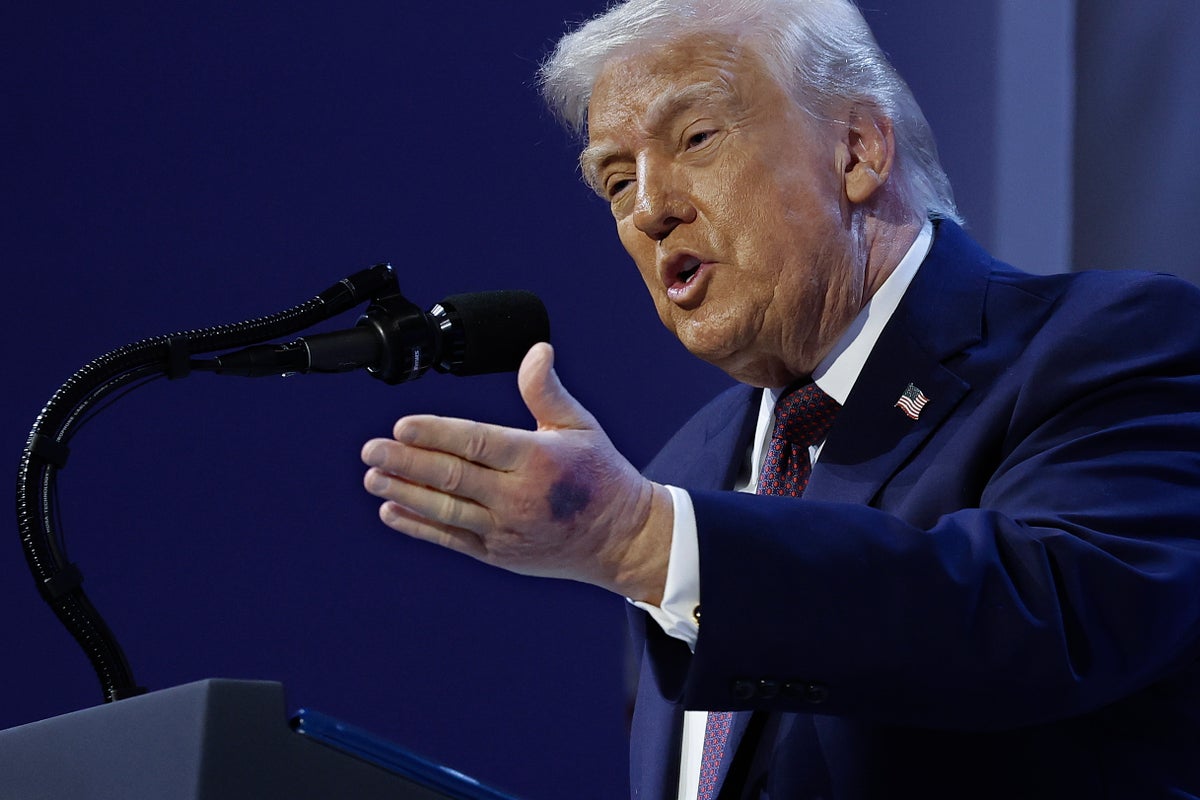
Questions regarding Donald Trump health status have triggered intense public scrutiny, amplified by calls from political figures like former Vice President Dick Cheney’s physician demanding total medical transparency from high-ranking officials. Behind the partisan noise lies a structural failure in how leadership wellness is communicated to the American public. A historical pattern of guarded disclosures and minimal data leaves voters guessing about presidential fitness.
The Anatomy of Political Medical Secrecy
Information control is a primary instinct in high-stakes politics. Leaders view vulnerability as an electoral liability. Medical reports released by presidential administrations often read like promotional brochures rather than objective clinical assessments. Vague phrases replace granular laboratory metrics. Vital signs are described in superlative terms instead of raw numbers. If you liked this piece, you might want to check out: this related article.
Consider the standard presidential physical examination. Military physicians tasked with examining commanders-in-chief walk a tightrope between patient confidentiality, military chain-of-command loyalty, and public duty. The resulting press letters routinely declare subjects to be in astonishingly good health for their age brackets. Observers outside the political bubble find these glowing summaries difficult to reconcile with observable physical stamina or advanced age.
Public skepticism is entirely rational. When official channels offer polished PR instead of verifiable data, speculation fills the void. Rumors regarding unexplained hospital visits or cognitive stamina spread rapidly across digital platforms. The absence of clear facts fuels a cycle of misinformation that damages institutional trust. For another angle on this event, refer to the recent update from TIME.
Historical Precedents of Concealment
American political history is riddled with medical cover-ups. Woodrow Wilson suffered a debilitating stroke in 1919 that left his wife and aides effectively running the executive branch behind closed doors. Franklin D. Roosevelt hid his advanced heart disease and failing health from a nation facing the final stages of World War II. Dwight D. Eisenhower minimized his heart attacks. John F. Kennedy masked his Addison's disease and chronic back pain with heavy pharmaceutical regimens.
Each instance shared a common justification. National security demanded stability. The public allegedly could not handle the unvarnished truth about a leader's physical decline.
Modern politics operates in a vastly different media ecosystem. 24-hour news cycles, instantaneous social media dissemination, and high-resolution video capture make absolute concealment nearly impossible. Yet, the playbook of evasion remains remarkably consistent. Spokespersons deny obvious physical struggles. Medical teams issue brief, unverified statements that raise more questions than they answer.
The strategy fails because the modern electorate demands authenticity. When a public figure stumbles, slurs words, or cancels public appearances due to unspecified fatigue, standard denials amplify suspicion. The cover-up invariably creates more political damage than the underlying medical reality would have caused.
The Role of Physicians in Political Public Relations
Doctors serving political figures face a profound ethical dilemma. The Hippocratic Oath binds a physician to the patient's well-being and truthfulness. Serving a political principal creates competing loyalties. When a physician signs off on an exaggerated health report, professional credibility is traded for political utility.
Dr. Jonathan Reiner, who served as Dick Cheney’s cardiologist, has pointed out repeatedly that public officials owe citizens a baseline of medical honesty. The argument rests on accountability. Voters entrust immense nuclear, economic, and legislative power to a single individual. Knowing whether that individual possesses the physical and cognitive stamina to execute the office is a matter of basic democratic survival.
When physicians act as spin doctors, the medical profession loses authority. Citizens stop believing clinical recommendations because political bias taints the white coat. Restoring integrity requires institutional reform in how medical disclosures are handled.
Independent panels of physicians could evaluate candidates and officeholders. Standardized reporting metrics could replace subjective evaluations. Mandatory disclosure of neurological screenings, cardiac imaging, and comprehensive blood panels would remove the guesswork.
The Cost of Information Vacuums
Silence breeds anxiety. When official sources refuse to address health concerns directly, public anxiety metastasizes. Markets react to whispers. Foreign adversaries exploit perceived weaknesses. Domestic opponents weaponize uncertainty.
Transparency is not a weakness. It is a stabilizing force. If a leader faces ordinary age-related conditions or manageable health challenges, acknowledging them humanizes the officeholder. Pretending perfection invites mockery and profound distrust.
The debate over Donald Trump health inquiries goes beyond partisan point-scoring. It exposes a systemic refusal by political elites to treat the public as adults capable of processing complex information. Until the political class abandons the outdated impulse to conceal infirmity, the nation will remain trapped in an endless loop of rumor, denial, and manufactured crisis. The answers Americans deserve will remain locked behind institutional walls.


