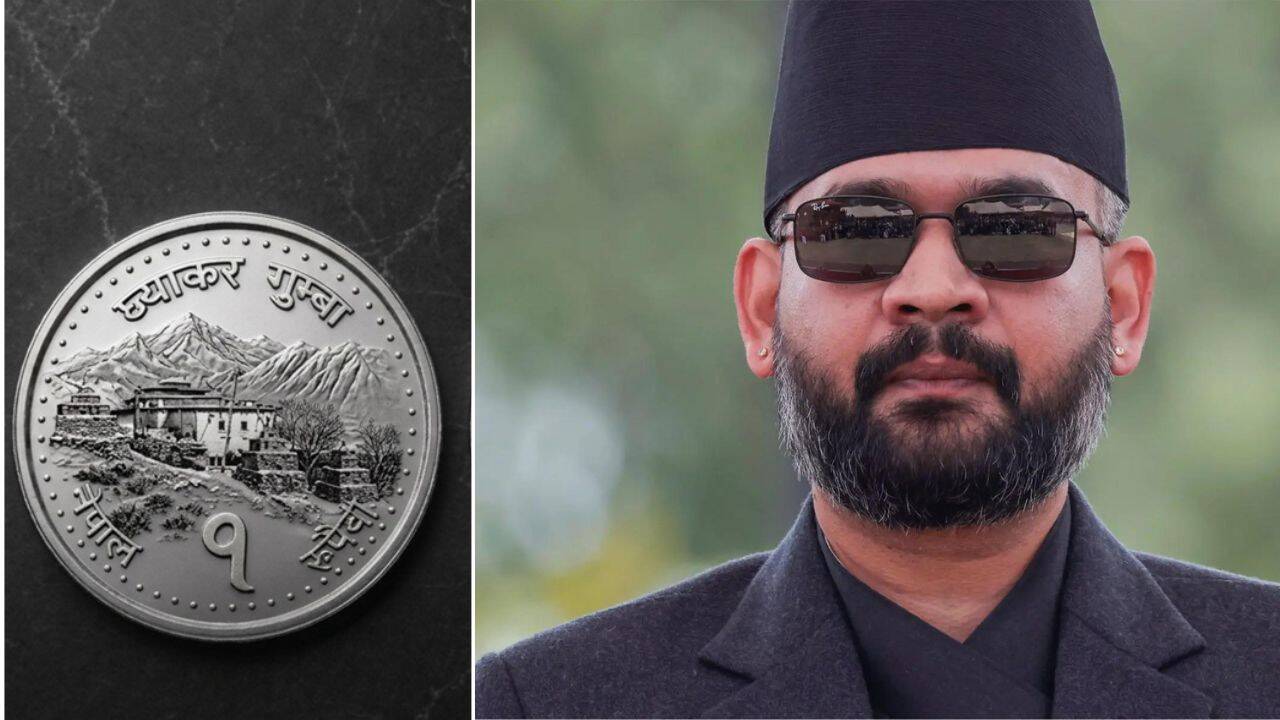
When you toss a small nickel-plated disc onto a wooden counter to pay for a cup of sweet tea in Kathmandu, you rarely look at the metal itself. Currency is designed to be invisible. We pass it hand to hand, relying on a shared agreement that this cold, stamped circle holds value.
Sometimes a coin ceases to be just money. It becomes a line drawn in the dirt.
In the high Himalayas, where oxygen thins and mountains scrape the heavens, three remote pockets of land—Kalapani, Lipulekh, and Limpiyadhura—have spent decades trapped in a quiet geopolitical tug-of-war between Nepal and India. For the villagers living near these rugged passes, the border isn't a solid line on paper. It is a lived reality of changing checkpoints, shifting administrative presence, and winter winds that care nothing for sovereignty.
Then came the decision to stamp that disputed geography onto the money itself.
A Pocket-Sized Statement of Sovereignty
In 2020, Nepal formally updated its official national map. The new cartography explicitly included the 335 square kilometers containing Kalapani, Lipulekh, and Limpiyadhura—territories long controlled by Indian border forces. To cement this claim in the public imagination, the government moved to feature this revised map on national currency, including the widely circulated Re 1 coin.
It was a bold symbol. Every time a citizen bought salt, paid bus fare, or handed pocket change to a child, they held a physical claim to the disputed frontier.
Nations have always used their mints to tell stories about who they are. Statues crumble and treaties fade into archives, but coins endure. They travel through market stalls, drift across international borders in tourist wallets, and sit quietly in jar collections thousands of miles away.
Power, however, is a fragile balance. Stamping a territorial dispute onto the primary unit of everyday exchange created an immediate, friction-filled reality.
The Quiet Retreat from the Nickel Frontier
Consider a hypothetical tea vendor named Ram Bahadur working near a border transit point. For years, currency moved fluidly across the permeable frontier. Merchants on both sides accepted small denomination coins with little friction. But when money doubles as a diplomatic challenge, the simple act of buying flour or kerosene suddenly carries political weight.
When currency makes everyday life more complicated rather than simpler, the state faces a choice.
Nepal's decision to remove the controversial map from the newly minted Re 1 coin marks a subtle, pragmatic recalibration. The official map remains unchanged in government halls, but the pocket-sized provocation has been quietly replaced. The redrawn metal coin now returns to simpler, less explosive iconography.
This was not a surrender of claims. It was a recognition of a simple truth: currency needs to function as money first and a battleground second.
The Weight of Small Denominations
diplomatic standoffs rarely happen in a vacuum. They echo through the lives of people who live along the fringes of state power.
In the high-altitude passes where these borders lie, winter snows isolate communities for six months of the year. Survival depends on trade, trust, and smooth passage across ridges that treaties tried to define two centuries ago under the Treaty of Sugauli in 1816. When cartography becomes rigid, the daily life of borderland communities hardens with it.
Nations often find that grand symbolic gestures at the capital level create unintended ripples at the periphery. A map on a coin might thrill nationalists in urban parliament halls, but on the ground, it complicates trade agreements, cross-border labor, and regional transit.
Removing the disputed territory from the Re 1 coin isn't a erase of history. It is a quiet admission that diplomacy requires room to maneuver. You cannot negotiate easily when millions of physical assertions of your absolute position are circulating in the pockets of your citizens every day.
The metal disc in your hand has gone silent again. It buys tea. It pays for a ride. It passes quietly from hand to hand across the mountain markets, carrying trade instead of tension.