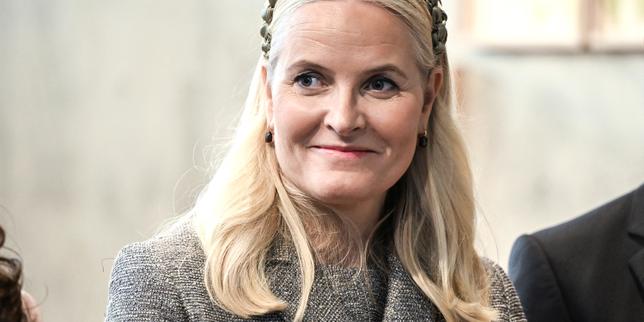
The lazy consensus from every tabloid desk in Europe paints Crown Princess Mette-Marit of Norway as a tragic, fragile figure. Commentators love the narrative of the sorrowful commoner crushed under the velvet weight of the house of Glücksburg. They point to her chronic pulmonary fibrosis, the unending chaos surrounding her eldest son from a previous relationship, and her tearful public confessions as proof of a monarchy system chewing up another outsider.
It is a neat story. It is also completely wrong.
Mette-Marit is not a victim of the crown. She is the most disruptive, politically resilient survivalist in modern European royal history. While other high-profile spouses spend decades playing the polite ornamental role, she weaponized her own vulnerability to rewrite the contract between an archaic institution and an increasingly cynical public.
Stop buying the fragility myth. Her story exposes a far more calculated reality.
The Manufacturing of Royal Fragility
Look at the standard coverage of Norway’s future queen. The French and British press treat her health diagnosis like a slow-motion tragedy. Chronic pulmonary fibrosis is a serious, debilitating condition, no doubt. But framing her medical battles as an existential crisis for the Norwegian throne completely misunderstands how modern institutional survival works.
Perfection is poison for contemporary monarchies. An immaculate, untouchable royal family belongs to the nineteenth century. In an age of radical transparency and populist skepticism, absolute flawlessness triggers immediate revulsion. People hate what they cannot relate to.
Mette-Marit did not stumble into public sympathy by accident. When she married Crown Prince Haakon in 2001, the establishment panicked. She was a single mother with a counter-cultural past and ties to Oslo's alternative scenes. The traditionalists predicted an institutional collapse. Instead of hiding her rough edges behind media consultants, she leaned into them. She cried on television before the wedding. She owned her past mistakes with a bluntness that left royal handlers sweating.
That was not weakness. That was a masterclass in inoculation. By exposing her flaws early and often, she rendered criticism toothless. You cannot scandalize a woman who already confessed to her worst chapters on national television.
The Marius Borg Høiby Problem and the Hypocrisy of the Watchdogs
Critics love to drag her through the mud over the recent legal and personal scandals involving her eldest son, Marius Borg Høiby. The narrative claims this is the ultimate proof of her failure as a mother and a senior royal.
This argument collapses under the weight of basic logic.
Marius is not a member of the royal house. He holds no title, carries no official duties, and receives no public apanage from the state. He is a private citizen navigating a messy life under an ungodly amount of media glare. Treating his personal actions as an indictment of Mette-Marit's fitness for public life is a cheap trick used by columnists desperate for clicks.
Imagine a scenario where the child of a corporate CEO or a sitting prime minister struggles with personal demons. Does the media demand the CEO step down? Do they analyze the prime minister's executive competence based on their adult stepson's private life? Of course not.
Yet royal watchers apply a bizarre double standard. They demand human representation from institutions that have historically demanded deities, and then punish those humans when they bleed. Mette-Marit’s refusal to abandon her son publicly, balanced against her strict adherence to keeping him outside the royal portfolio, is the only rational path available. It costs her PR points with the chattering classes, but it buys her integrity at home.
The Power of Radical Transparency
Traditional monarchies survive by maintaining a wall of silence. The British Windsor playbook relied on stiff upper lips and quiet institutional cover-ups for generations. That model is dead. It imploded under the weight of internet-era investigations and changing public expectations.
Mette-Marit threw out that playbook twenty years ago.
When her health forced her to scale back official duties, she did not issue vague, sterile palace statements about minor medical procedures. She released detailed updates. She talked openly about the psychological toll of living with a progressive lung disease.
This is where the observers miss the mark. They view her reduced calendar as a sign of fading influence. In reality, stepping back is the ultimate power move in a digital ecosystem that punishes overexposure. By making her appearances rare and intentional, she increased their value.
Think about how modern influence operates across industries. Scarcity drives demand. When Mette-Marit speaks or steps out for a literary event or an environmental initiative, it carries weight precisely because she is not plastered across every ribbon-cutting ceremony in the country. She protects her energy, manages her illness on her own terms, and forces the institution to adapt to her physical reality rather than the other way around.
The crown adapted because it had to. Haakon and Mette-Marit understand that an institution survives only by reflecting the society it claims to represent. Modern Norway is a nation obsessed with mental health, work-life balance, chronic illness management, and emotional intelligence. Mette-Marit embodies every single one of those cultural pillars.
Why the Critics Are Looking in the Wrong Direction
The commentators asking whether Mette-Marit can survive the throne are asking the wrong question entirely. The question is whether the Norwegian monarchy could survive without her.
Without her grounding presence, her literary intellect, and her proven ability to connect with working-class Norwegians who initially despised her background, the house of Glücksburg would look like every other stuffy, out-of-touch relic in Europe. She humanized the brand. She turned a potential PR disaster into the crown's greatest modern asset.
She does not need pity. She does not need protection. She outmaneuvered the traditionalists two decades ago, and she continues to dictate the terms of her engagement with history.
Stop confusing grace with fragility. She is still standing because she is tougher than all of them combined.