The headlines rarely capture the full weight of what is happening on the ground across the Middle East. Beneath the daily flashpoints of regional conflict, structural shifts are altering the balance of power, shipping lanes, and energy alliances. If you only look at the daily casualty reports, you miss the quiet economic warfare and grand geopolitical realignment taking place behind closed doors.
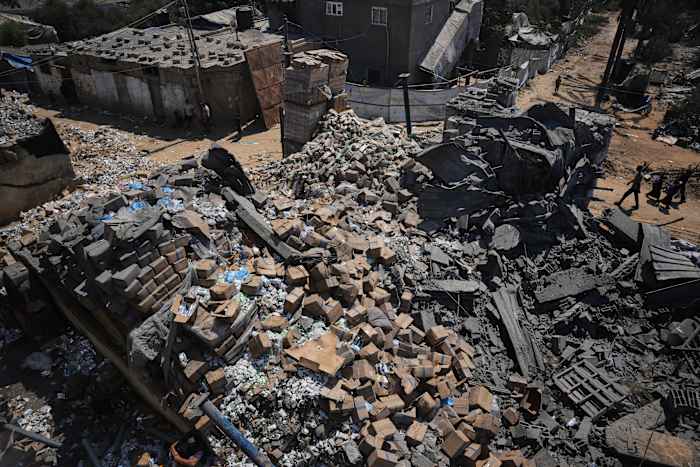
Recent Israeli airstrikes in Gaza and the West Bank have claimed multiple lives, exposing the extreme fragility of ongoing ceasefires. Local hospital authorities in Gaza reported that recent strikes outside Khan Younis and Gaza City killed five people, including two brothers and a relative. Meanwhile, military operations in Jenin left three more dead. These operations continue to stretch a hollowed-out cessation of hostilities to its absolute breaking point.
The death toll in Gaza since the initial outbreak of fighting has climbed past 1,303 Palestinians killed in localized strikes, even as broad military campaigns scaled back. Diplomatic tensions are also fracturing alliances over how to manage these zones. The United Kingdom recently issued a sharp warning to Israel after reports surfaced that British officials might be removed from the Gaza ceasefire coordination center. Israel has already expelled Dutch diplomats from the monitoring facility following policy disputes over trade bans, proving that diplomatic friction is spreading far beyond the immediate combat zones.
The Maritime Toll in the Persian Gulf
While the ground campaigns draw immediate attention, the ongoing war involving Iran has locked down critical commercial waterways with devastating economic consequences. The United Nations maritime agency reports that at least 19 seafarers have lost their lives since the conflict escalated, while roughly 6,000 sailors remain trapped on hundreds of merchant vessels unable to exit the Persian Gulf.
The International Maritime Organization has documented over 70 direct attacks on international shipping through the Strait of Hormuz. Before this conflict disrupted global commerce, about 20 percent of the world's traded oil and natural gas flowed through this narrow corridor. Leaving thousands of crew members stranded on floating cargo prisons creates an invisible humanitarian crisis that global markets have largely adapted to ignore, even as the threat to global supply chains persists.
Iran and Russia Push for Energy Integration
Facing intense financial isolation, Tehran is aggressively pursuing new survival strategies. Iran's ambassador to Russia announced plans to revive a stalled energy integration framework dating back to 2022.
Energy analysts, including George Mason University fellow Umud Shokri, note that the proposal aims to pipe 55 billion cubic meters of Russian natural gas annually into Iran through Azerbaijan. Tehran desperately needs this energy infusion to offset seasonal gas shortages and mitigate the crushing impact of Western sanctions. Building out the necessary cross-border pipeline architecture will require massive capital and years of labor. It remains a long-term strategic ambition rather than an immediate economic fix.
Washington is actively tightening the financial noose to counter these moves. The U.S. Treasury has targeted Banque Misr, Egypt's second-largest bank, aiming to sever its Emirati branches from the American financial system over alleged ties that provide an economic lifeline to Iran's leadership. U.S. Treasury Secretary Scott Bessent has doubled down on secondary sanctions, threatening any foreign entity that attempts to maintain business ties with Tehran.
Iran’s Foreign Ministry has dismissed these actions as economic terrorism, vowing to utilize every available countermeasure. Yet, as Washington weaponizes the U.S. dollar to enforce compliance, regional banks and governments find themselves caught in a high-stakes squeeze.
The Middle East is caught in a grinding cycle where local violence, maritime blockades, and sanctions reinforce one another. There is no clean resolution in sight. The friction points are multiplying daily, altering the economic and security architecture of the region for years to come.