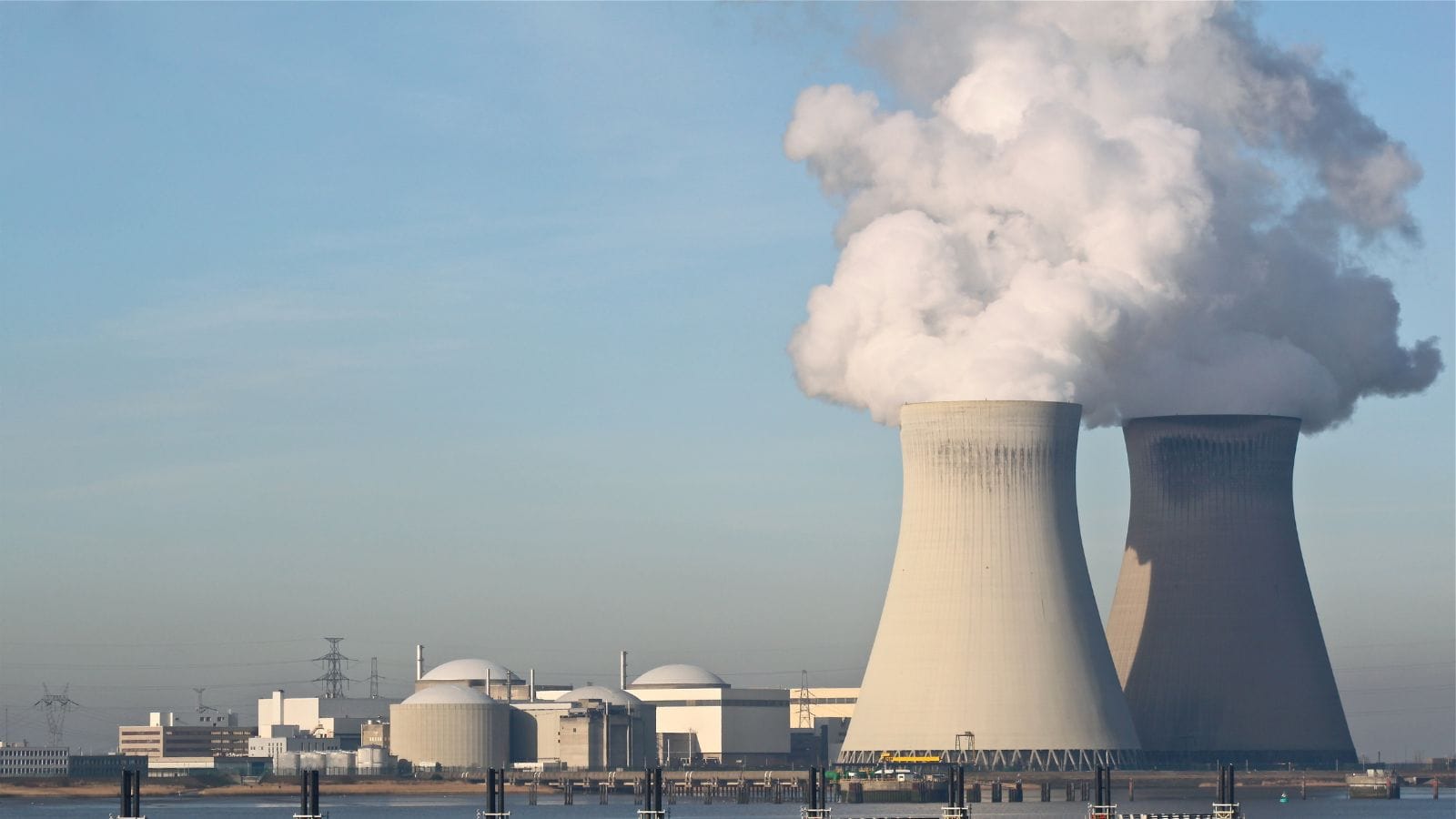
The strategic calculus behind Washington’s approval of a 30-year Section 123 civil nuclear agreement with Riyadh is governed by a single, uncompromising reality: power projection requires infrastructure. By sanctioning an agreement that establishes a framework for U.S. firms—including Westinghouse—to develop Saudi Arabia’s commercial nuclear energy sector and conduct a joint study on domestic uranium enrichment, the United States has restructured the geopolitical security architecture of the Middle East.
This arrangement detaches civil nuclear access from the condition of Israeli normalization under the Abraham Accords framework, prioritizing long-term commercial locking and non-proliferation containment over regional diplomatic integration. To assess whether this agreement enables Riyadh to achieve a breakout capacity, the mechanics must be evaluated through three distinct Analytical Vectors: industrial infrastructure dependencies, non-proliferation oversight mechanisms, and the strategic calculus of deterrence.
Vector 1: The Technical Mechanics of the Nuclear Fuel Cycle
A nation's path to an operational nuclear weapon is constrained by strict physics and chemical engineering standards, not political intent. The fuel cycle consists of three primary technical stages: extraction and conversion, isotope separation (enrichment), and weaponization engineering.
+------------------+     +-------------------+     +---------------------+
| Mining & Milling | --> | Uranium Conversion| --> | Isotope Separation  |
|  (Yellowcake U3O8) |     |  (Uranium Hex. UF6) |     |  (Gas Centrifuges)  |
+------------------+     +-------------------+     +---------------------+
                                                              |
                                                              v
+------------------+     +-------------------+     +---------------------+
|  Weaponization   | <-- | Metallurgy & Core | <-- | Enriched Material   |
|   Engineering    |     |    Fabrication    |     | (LEU 3-5% / HEU >90%)|
+------------------+     +-------------------+     +---------------------+
Conversion and Isotope Separation Mechanics
Commercial nuclear power plants operate on Low-Enriched Uranium (LEU), typically containing 3% to 5% Concentration of the fissile isotope Uranium-235 ($U^{235}$). Weapons-grade material, by contrast, requires Highly Enriched Uranium (HEU) enriched to $90%$ or greater $U^{235}$.
The technology used for both processes is identical: high-speed gas centrifuges operating in cascades. The physical effort required to enrich natural uranium ($0.7%$ $U^{235}$) up to $5%$ LEU accounts for roughly $75%$ to $80%$ of the total Separative Work Units (SWU) needed to reach $90%$ HEU.
Consequently, establishing a domestic, civil LEU enrichment facility inherently eliminates the vast majority of the technical and physical barriers to acquiring weapons-grade material.
The Black Box Containment Framework
To mitigate this inherent dual-use risk, the bilateral agreement introduces a "black box" operational structure for any future enrichment facilities built on Saudi soil. Under this mechanism:
- Ownership vs. Control: While Saudi Arabia funds and owns the physical assets, the critical infrastructure—including centrifuge design, operating software, and enrichment cascades—is owned, managed, and serviced exclusively by U.S. personnel.
- Access Restraints: Local technicians are prohibited from directly interacting with, servicing, or reverse-engineering sensitive enrichment technology.
- 10-Year Escalation Lock: If the initial two-year joint feasibility study rejects the economic or operational viability of domestic enrichment, Saudi Arabia is contractually barred from pursuing sovereign enrichment activities for a ten-year period under the agreement’s terms.
Without completing the subsequent, complex engineering steps—metal conversion, high-explosive lens design, neutron initiators, and missile-payload miniaturization—enriched material cannot function as a weapon. Enrichment provides the fissile core, but it does not equate to weaponization.
Vector 2: The Non-Proliferation Oversight Matrix
The structural friction between the U.S. executive decision and non-proliferation experts centers on the verification regime. Historical precedents dictate that non-proliferation is maintained either through strict operational bans or intrusive surveillance protocols.
The Deviation from Gold Standard Precedents
When the United Arab Emirates ratified its 123 Agreement with the United States to construct the Barakah Nuclear Energy Plant, it accepted what non-proliferation analysts term the "Gold Standard." The UAE legally renounced domestic uranium enrichment and spent-fuel reprocessing, agreeing to import all reactor fuel from international markets.
The U.S.-Saudi agreement explicitly circumvents this benchmark. It leaves the door open for domestic enrichment while omitting a requirement for Riyadh to sign the International Atomic Energy Agency (IAEA) Additional Protocol.
| Metric | UAE 123 Agreement (Gold Standard) | Proposed U.S.-Saudi Agreement | Impact on Breakout Risk |
|---|---|---|---|
| Domestic Enrichment | Explicitly Prohibited | Permitted subject to joint study | Reduces technical barrier to HEU production |
| Spent Fuel Reprocessing | Explicitly Prohibited | Undefined / Subject to bilateral terms | Retains theoretical pathway to plutonium separation |
| IAEA Safeguards | Comprehensive + Additional Protocol | Standard Comprehensive Safeguards | Eliminates unannounced snap inspections at undeclared sites |
| Operational Control | Vendor Construction / Local Oversight | Joint U.S. Managed "Black Box" | Leverages operational control to offset missing legal bans |
Regulatory and Oversight Deficits
Because the agreement relies on standard IAEA Comprehensive Safeguards rather than the Additional Protocol, international inspectors retain access to declared facilities but lose the legal authority to execute short-notice "snap" inspections at undeclared locations. Washington attempts to bridge this oversight gap through bilateral U.S.-Saudi monitoring systems rather than multilateral institutional mechanisms.
This creates a structural point of failure: compliance verification becomes subject to shifting political relationships between Washington and Riyadh rather than objective, institutional standards set by international bodies.
Vector 3: Geopolitical Arbitrage and Regional Deterrence
The timing of this agreement reflects a strategic imperative to prevent foreign powers from gaining a foothold in the region, combined with a necessity to maintain regional deterrence dynamics.
                                  +---------------------------------+
                                  | U.S. Strategic Objectives       |
                                  | - Commercial Lock-in ($10B+)    |
                                  | - Block China/Russia Expansion  |
                                  +---------------------------------+
                                                  |
                                                  v
+---------------------------------+     +---------------------------------+
| Saudi Arabia Strategic Leverage | --> | U.S.-Saudi 123 Agreement        |
| - Nuclear Parity Option         |     | - 30-Year Multibillion-Dollar   |
| - Defense Pact Alternative      |     |   Energy Partnership            |
+---------------------------------+     +---------------------------------+
                                                  |
                                                  v
                                  +---------------------------------+
                                  | Regional Impact                 |
                                  | - Recalibrates Iran Deterrence  |
                                  | - Displaces Competitor Tech     |
                                  +---------------------------------+
Displacing External Competitors
Had Washington rejected Riyadh's core demand for potential domestic enrichment rights, Saudi Arabia possessed ready alternatives. State-backed nuclear vendors—namely China National Nuclear Corporation (CNNC) and Russia’s Rosatom—were actively competing to secure the kingdom’s commercial nuclear tenders.
Accepting a Chinese or Russian nuclear buildout would have permanently excluded American technology, intelligence access, and commercial vendors from Saudi Arabia's energy sector for at least half a century.
Executing a Section 123 deal locks Saudi nuclear development into the Western industrial ecosystem, establishing supply chain dependencies on American nuclear components and fuel management systems that span decades.
Escalation Dynamics and External Hedging
The decision to separate civil nuclear cooperation from diplomatic recognition of Israel removes a major roadblock that had previously stalled negotiations. Concurrently, it redefines the deterrence matrix against regional adversaries.
Saudi Arabia’s strategic intent has remained consistent: achieving technical parity with regional competitors. By establishing a framework that allows for eventual fuel-cycle capabilities under U.S. supervision, Riyadh secures a functional nuclear option without violating international treaties.
Furthermore, the recent mutual defense agreement between Saudi Arabia and Pakistan introduces an additional layer of external hedging. While a domestic U.S.-backed nuclear program develops long-term civilian energy capacity, ties with existing nuclear-armed partners provide immediate strategic coverage during the multi-decade construction phase of nuclear power infrastructure.
Structural Execution and Congressional Review Requirements
The agreement must now pass through the legislative review process outlined in Section 123 of the U.S. Atomic Energy Act of 1954. Because the agreement permits a framework for potential enrichment without incorporating the standard non-proliferation "Gold Standard" or the IAEA Additional Protocol, it will encounter strong bipartisan scrutiny in Congress.
Under statutory procedures, Congress has a mandatory 90-day continuous session window to review the text. Blocking an agreement that does not contain explicit exemptions requires a joint resolution of disapproval capable of overriding a presidential veto.
Execution Blueprint for U.S. and Saudi Stakeholders
- Establish the Joint Feasibility Oversight Board: Form a joint U.S. Department of Energy and Saudi Ministry of Energy technical committee within 60 days to codify the operational parameters of the initial two-year enrichment study.
- Define Black Box Operational Security Standards: Complete the technical design specifications for physical separation, cryptographically secured control systems, and U.S.-only staffing protocols for any proposed conversion or enrichment facilities.
- Draft Bilateral Verification Protocols: Construct a custom, legally binding bilateral inspection agreement that mimics the intrusive capabilities of the IAEA Additional Protocol through direct U.S. technical monitoring. This step is necessary to secure congressional consensus and manage bipartisan proliferation concerns.
- Contractual Industrial Locking: Execute binding supply-chain contracts between state entities and primary U.S. commercial nuclear vendors (e.g., Westinghouse) for long-lead reactor components. This locks in domestic industrial benefits prior to any potential changes in congressional makeup or executive leadership.