At 3:14 in the morning in Brussels, the espresso machines inside the Europa building make a sound like a dying radiator.
I remember standing near one of those machines during an American midterm cycle years ago, watching a senior trade attaché stare at a county-level map of Pennsylvania on his iPad. He wasn't looking at the faces of the candidates. He didn't care about the local squabbles over property taxes in Lehigh County or the grainy attack ads running on television stations in Erie. He was looking at a razor-thin margin of four thousand votes, trying to calculate whether his country’s steel exports would survive the next twenty-four months.
In the United States, midterm elections are treated like a domestic sporting event—a noisy, exhausting referendum on a sitting president’s first two years, complete with pundits shouting over holographic maps and voters arguing across Thanksgiving tables. Yet the moment the polls close on the East Coast, the real audience reveals itself. Across oceans and time zones, prime ministers, central bankers, intelligence chiefs, and desperate opposition leaders pull up chairs to glowing screens.
They cannot cast a ballot in Ohio. They cannot knock on doors in Nevada. Still, the tremors that begin in American suburban precincts invariably shake the foundations of foreign ministries from Tallinn to Taipei.
The Illusion of a Local Vote
When standard news broadcasts package the global reaction to US midterm elections, they usually give you a sanitized montage. You see a brief clip of a European spokesperson offering polite platitudes about "strong democratic traditions." You read a boilerplate statement from an Asian ally reaffirming "unbreakable ties." It is sterile, diplomatic theater designed to conceal a much rawer truth.
Behind closed doors, world leaders react to American midterms not with polite detachment, but with white-knuckled anxiety.
Consider a hypothetical scenario—a composite of conversations I have witnessed in diplomatic corridors over the last decade. Picture a defense minister in an Eastern European capital, let us call her Elena. Elena’s country shares a tense, heavily militarized border with an aggressive neighbor. Her entire national security strategy rests on a single, fragile assumption: that the United States Congress will continue to approve billions of dollars in military aid and maintain troop rotations on NATO’s eastern flank.
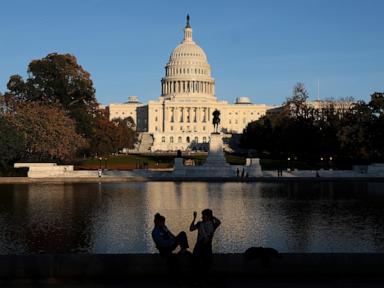
For Elena, the US midterm elections are not an abstract civic exercise. When a firebrand challenger in a rural American district wins a House seat by promising to "stop sending blank checks overseas," Elena feels the ground shift beneath her boots. Under the American constitutional system, the president may be Commander-in-Chief, yet Congress holds the power of the purse. A shift of just a handful of seats in the House of Representatives or the Senate can freeze appropriations, stall ambassadorial confirmations, and turn a roaring alliance into a bureaucratic whisper.
This is the invisible architecture of modern geopolitics. The rest of the world lives inside an American weather system, watching the barometric pressure drop in Washington while praying the storm doesn't hit their crops.
Why Foreign Capitals Obsess Over Two-Year Cycles
To understand why a mid-cycle election in the United States triggers emergency cabinet meetings thousands of miles away, you have to understand the peculiar fragility of American political commitments.
Think of the United States government as a massive cargo ship steered by two captains who rarely agree on the destination. The president stands on the bridge, charting a course through treaties, executive agreements, and personal diplomacy with foreign counterparts. Meanwhile, every two years, the crew mutinies—or threatens to—during the midterms, replacing the officers in the engine room and locking the fuel valves.
Historically, this pattern has broken the hearts of foreign statesmen. In 1919, Woodrow Wilson stood in Paris as the architect of a new world order, promising European leaders that the League of Nations would prevent another catastrophic war. Months earlier, Wilson’s party had lost control of the Senate in the 1918 midterms. Foreign leaders mistook the president’s voice for the nation’s binding word. When the Senate refused to ratify the Treaty of Versailles, the entire post-war architecture collapsed, leaving Europe exposed to the darkness that followed.
More than a century later, the ghost of 1919 haunts every bilateral summit.
When world leaders watch US midterm results roll in, they are searching for the answer to one terrifying question: Is the person sitting across the negotiating table from me still in charge?
If the sitting president’s party suffers a traditional "shellacking"—a phenomenon so common that the president’s party has lost House seats in nearly every midterm since the Civil War—foreign leaders immediately recalibrate. They stop making painful political concessions to Washington. Why should a prime minister in Tokyo or a president in Brasília burn domestic political capital to sign a climate accord or a trade pact with an American president who has just been rendered a lame duck?
The Quiet Panic in the Markets and Ministries
The morning after an American midterm election rarely brings immediate clarity. Instead, it brings a heavy, suffocating fog.
I once spent the Wednesday following a contested US midterm inside a currency trading desk in London. By 7:00 AM GMT, the room smelled of stale sweat and cold coffee. Nobody was celebrating. Markets hate uncertainty far more than they hate bad news, and split government in Washington guarantees two years of legislative gridlock, debt-ceiling brinkmanship, and government shutdown threats.
For central bankers in emerging economies, this gridlock is poison. When Washington cannot pass a budget, global investors panic and flee toward the perceived safety of the US dollar. As the dollar surges, the local currencies of countries like Turkey, Argentina, or Indonesia plummet. Suddenly, a baker in Istanbul pays twice as much for imported wheat, and a hospital in Jakarta struggles to afford foreign medical supplies—all because a few thousand undecided voters in Pennsylvania or Arizona swung toward divided government.
This is the butterfly effect of American democracy, stripped of all romanticism.
During these post-election hours, diplomatic cables fly back and forth with frantic urgency. Ambassadors stationed in Washington earn their keep not by attending cocktail parties, but by frantically explaining the quirks of the American system to bewildered bosses back home. They have to explain why a committee chairmanship in the House Ways and Means Committee suddenly matters more than a cabinet secretary’s promise. They have to translate the furious rhetoric of American cable news into actionable intelligence.
I have read some of those post-mortem assessments. They are rarely triumphant. Often, they are laced with a quiet, bewildered frustration—the realization that the fate of global trade, planetary climate targets, and regional wars hinges on the localized grievances of voters who rarely think about foreign policy at all.
The Autocrats' Applause
While democratic allies watch US midterms with clenched teeth, another group of leaders watches with cold, calculating satisfaction.
In Beijing, Moscow, and Tehran, state media outlets do not sleep on American election night. They broadcast images of long lines at polling stations, malfunctioning voting machines, and bitter partisan accusations as proof of a singular thesis: Western democracy is chaotic, self-absorbed, and terminally declining.
For an authoritarian leader, a deeply divided American Congress is a strategic gift. Autocrats operate on decades-long timelines; they build infrastructure, expand military footprints, and lock in resource monopolies while waiting out four-year presidential terms and two-year congressional cycles. When a US midterm election produces a paralyzed legislature consumed by internal investigations and ideological warfare, autocrats see an open window.
They calculate—often correctly—that a distracted Washington will lack the political bandwidth to respond decisively to gray-zone provocations in the South China Sea or cyber intrusions across European power grids. In the quiet war rooms of rival powers, the reaction to American midterm turbulence is not shock. It is an opportunist’s smile.
Living in the Shadow of Someone Else's Ballot
It is easy, if you hold an American passport, to feel overwhelmed by the relentless churn of your own politics. Every two years, the advertisements return. The text messages flood your phone. You are told, repeatedly, that this election is the most critical moment in history, until the sheer exhaustion makes you want to pull the curtains shut and ignore the noise.
Yet stepping outside the borders of the United States strips away that luxury of fatigue.
Years ago, while reporting in a small coastal town in Central America, I sat on a plastic chair outside a hardware store with a man named Mateo who fixed outboard boat engines for a living. A dusty television inside the shop was tuned to a Spanish-language broadcast covering the US congressional elections. Mateo watched the screen with the intense focus of a man watching a hurricane tracker.
When I asked him why he cared who won control of the US Senate, he wiped grease from his knuckles with a rag and looked at me as if I had asked why he cared about the tide. Two of his brothers lived in North Carolina, sending home the remittances that paid for his daughter’s school uniform and his mother’s insulin. A shift in American immigration enforcement or border policy, dictated by the incoming Congress, meant the difference between his family eating well or going hungry.
"You people vote," Mateo said softly, gesturing toward the flickering screen. "The rest of us just hold our breath."
The Mirror Held Up to Washington
Watch the footage of world leaders reacting to US midterm elections closely, and you will eventually notice something unsettling. You are not actually watching foreigners talk about America. You are watching a mirror being held up to the sheer, terrifying weight of American power.
Every hesitant compliment from a European prime minister, every cautious warning from an Asian diplomat, and every gloating editorial from a state-run newspaper in Beijing is a reminder that the United States does not belong solely to its citizens anymore. Its domestic fractures have become global fault lines. Its local anxieties dictate international realities.
When the final ballots are counted in the swing districts, and the television networks finally clear away their touchscreens, the noise inside America begins to fade. People go back to work. They complain about the weather, argue about football, and forget the names of the candidates who plastered their highways with yard signs.
Thousands of miles away, however, the lights in the foreign ministries stay on.
In a quiet office overlooking the Danube, a young diplomat deletes a draft treaty that no longer has a chance of passing the US Senate, closes her laptop, and walks out into the cold morning air, wondering what she will tell her minister when the sun comes up.